 how-to
How to Properly Store Organic Argan Oil
Table of Contents
- Why Proper Storage Preserves Argan Oil's Skin Benefits
- Should Argan Oil Be Refrigerated?
- How Long Does Argan Oil Last After Opening?
- How to Tell If Argan Oil Is Rancid
- The Best Container for Storing Argan Oil
- Light, Heat, and Air: The Three Enemies of Argan Oil
- A Simple Daily Storage Routine for Your Argan Oil
- Frequently Asked Questions
Last Updated: October 12, 2026
Why Proper Storage Preserves Argan Oil's Skin Benefits
Learning how to properly store organic argan oil is the difference between a bottle that stays golden and fresh for a year and one that turns rancid in a few months. Argan oil is rich in unsaturated fatty acids and vitamin E, and those nutrients are exactly what break down when oil meets light, heat, or air.
Storage is not a small detail. It decides whether your oil still delivers a glow or just smells off.
Here is the good news: protecting your oil takes almost no effort once you know the three things that damage it.
Should Argan Oil Be Refrigerated?
No, argan oil does not need refrigeration for daily use. A cool, dark cabinet at room temperature keeps it fresh just fine. Cold storage is optional, not required.
The reason is simple. Argan oil is mostly monounsaturated and saturated fat, so it holds up better than delicate oils like flaxseed. It does not spoil quickly at normal room temperature.
When the Refrigerator Helps and When It Hurts
Chill your oil if you live somewhere hot and humid, or if you bought a large bottle you will not finish for many months. Cold slows oxidation, which is the chemical process that turns oil rancid.
But there is a catch. Cold argan oil thickens and can turn cloudy or semi-solid. That makes it harder to pour and spread. If you refrigerate, take out only what you need and let it warm in your hands for a minute.
How Long Does Argan Oil Last After Opening?
Opened argan oil stays fresh for about 6 to 12 months when stored away from light and heat. Unopened bottles can last up to 2 years from the pressing date. Those ranges are not fixed, they are the outer edges of a window that storage conditions either protect or collapse.
The reason the window exists at all is oxidation. Argan oil is roughly 80 percent unsaturated fatty acids, and those double bonds react with oxygen. The reaction produces peroxides and eventually aldehydes and ketones, which is what you smell as rancidity.
That is why the same bottle can last a year in one kitchen and three months in another. Storage is the variable.
What Actually Shortens Shelf Life
| Factor | Effect on shelf life |
|---|---|
| Direct sunlight | Fastest single cause of breakdown; UV degrades vitamin E quickly |
| Sustained heat above about 77°F | Roughly doubles the oxidation rate for every 18°F increase |
| Headspace in a half-empty bottle | More air contact per use as the oil level drops |
| Repeated cap-off time | Each opening introduces fresh oxygen |
| Finger dipping | Adds skin oils, water, and bacteria that seed spoilage |
| Clear glass on a counter | Light exposure even without direct sun |
A bottle kept in a dark cabinet at 68-72°F will typically land near the top of the 6-to-12-month range. A bottle left on a sunny windowsill can turn in 8 to 12 weeks.
A Realistic Timeline You Can Track
Rather than guessing, mark the open date on the bottle with a piece of tape. Then check in at these intervals:
- Month 1-3: Fresh nutty scent, light golden color, thin consistency. This is peak quality.
- Month 4-6: Scent still mild but slightly less bright. Color may deepen a shade. Still fine to use.
- Month 7-9: Scent starts to flatten or turn faintly waxy. Use it up soon, especially on the body rather than the face.
- Month 10-12: Any sour, crayon-like, or sharp note means it is done. Discard.
If you bought a large bottle and cannot finish it within six months, decant a small working bottle and refrigerate the rest. Cold storage does not stop oxidation, but it slows it enough to buy you several extra months.
How to Tell If Argan Oil Is Rancid
Rancid argan oil smells sharp, sour, or like old nuts. Fresh argan oil has a mild, nutty scent and a light golden color. Rancidity is a chemical change you can detect with your senses before you ever put it on your skin.
The Smell Test and Other Warning Signs
Your nose is the fastest tool you have. Pour a drop on your wrist and smell it.
Watch for these signs:
- A sour, bitter, or crayon-like smell
- A darker or cloudy color
- A sticky or tacky feel instead of a smooth one
- Skin that feels irritated after you apply it
If the smell makes you wince, toss it. Rancid oil can irritate skin and clog pores, and it has lost most of the antioxidants that make argan oil worth using.
The Best Container for Storing Argan Oil
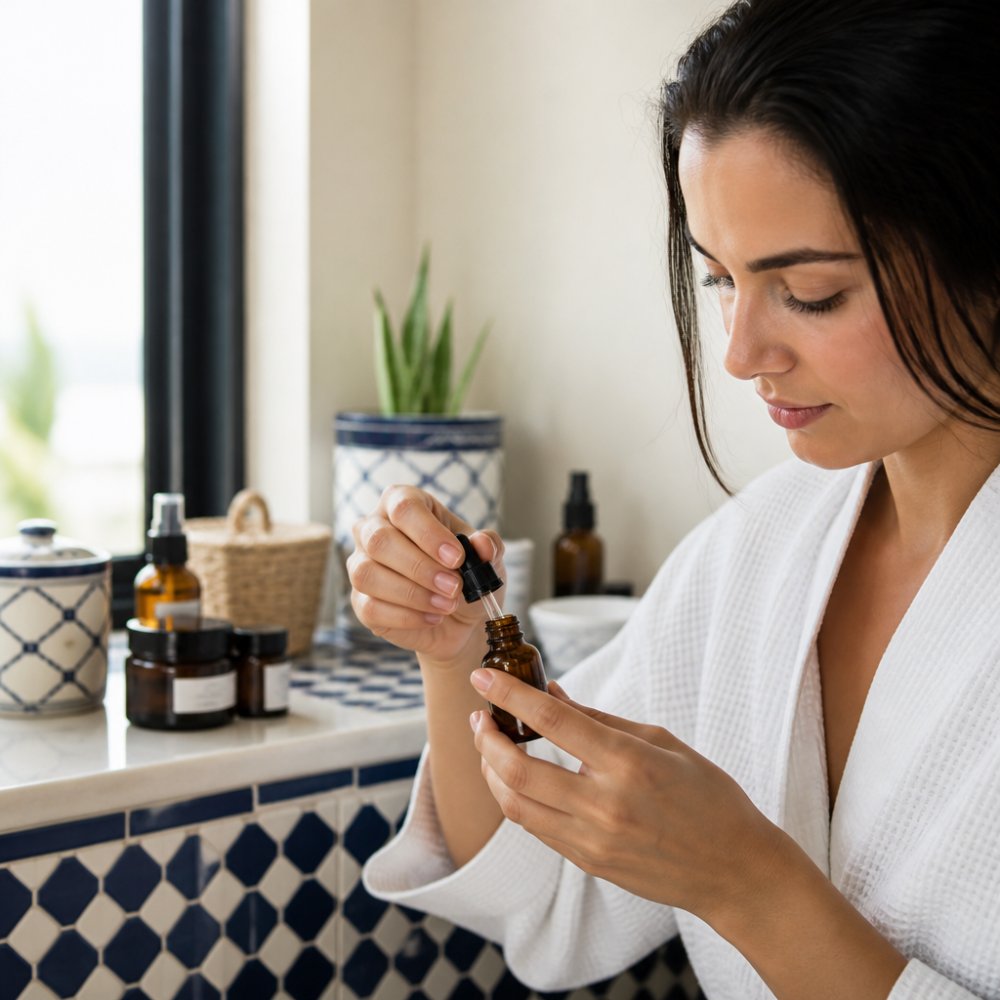
The best container for argan oil is dark amber or cobalt glass with a tight-fitting dropper or pump cap. Glass is chemically inert, so it will not leach or react with the oil, and the dark tint blocks the ultraviolet and visible light that degrades vitamin E and the unsaturated fatty acids.
Why Glass Beats Plastic, and When Plastic Is Acceptable
Plastic is not automatically unsafe, but it is a worse long-term choice for three reasons:
- Oxygen permeability. Many plastics allow a slow trickle of oxygen through the wall of the bottle. Over months, that adds up.
- Absorption. Oil can pull faint plastic or solvent notes out of the container, especially in warm conditions.
- Migration. Some plasticizers are oil-soluble, and while food-grade plastics are regulated for safety, glass removes the question entirely.
If you must use plastic, for travel, for example, choose a small opaque HDPE or PET bottle with a tight cap, use it within a few weeks, and transfer the oil back to glass when you get home.
Container Features That Actually Matter
- Dark amber or cobalt glass, not clear
- Airtight dropper, pump, or screw cap, not a flip-top that pops loose
- A small size you can finish within three to six months
- An opaque or UV-blocking outer box if you keep it on a shelf
- A label that lists the oil as pure, cold-pressed, and organic if that claim matters to you
Buying smaller bottles more often beats one giant bottle that sits half-used for a year. A 1-ounce bottle used daily on the face lasts roughly two to three months, which fits neatly inside the freshness window.
How to Verify You Actually Have Pure Argan Oil
Container quality is only half the story. Adulteration is common in the argan oil market, and a beautiful amber bottle can still hold a blend of argan, sunflower, and silicone.
A few practical checks:
- Ingredient list. It should read one item: Argania spinosa kernel oil. Anything else, fragrance, preservatives, carrier oils, means it is a blend.
- Scent. Pure argan oil has a mild, faintly nutty aroma. A strong perfume smell usually means added fragrance.
- Absorption. Real argan oil sinks in within a minute or two on most skin. A greasy film that lingers suggests a heavier carrier oil was added.
- Cold behavior. In a refrigerator, pure argan oil may thicken or cloud slightly. If it stays perfectly liquid at very cold temperatures, it may be cut with a more saturated oil.
- Price sanity. Argan oil is labor-intensive to produce. A very large bottle sold for a very low price is a signal to read the label carefully.
Once you have a genuinely pure bottle in dark glass, the container does most of the protective work for you. The rest is habit: cap it, darken it, cool it, and finish it within the window.
Light, Heat, and Air: The Three Enemies of Argan Oil
Light, heat, and air are the three main causes of argan oil going bad. Each one speeds up oxidation, the process that destroys fatty acids and vitamin E. Remove all three and your oil stays fresh far longer.
Here is how each one does damage:
| Enemy | What It Does | How to Block It |
|---|---|---|
| Light | Breaks down vitamin E and fatty acids | Use dark glass, store in a cabinet |
| Heat | Speeds up oxidation and spoilage | Keep away from stoves and sunny spots |
| Air | Adds oxygen every time you open the cap | Cap tightly, use a dropper |
The fix for all three is the same. Keep the bottle sealed, dark, and cool.
A Simple Daily Storage Routine for Your Argan Oil
A good routine takes seconds. Follow these steps every time you use your oil, and you will protect it without thinking about it.
- Store the bottle in a cool, dark cabinet away from the stove and window.
- Cap it tightly right after each use.
- Use a dropper instead of dipping your fingers in.
- Keep the bottle out of direct sunlight, even for short periods.
- Check the smell and color once a month.
- Move a backup bottle to the fridge if you bought a large size.
That is the whole routine. Small habits keep a pure oil pure.
When you are ready to restock, our pure Moroccan argan oil is pressed and bottled to stay fresh, and our FDA guidance on cosmetics and shelf life explains how personal care products should be stored and labeled. If you are unsure which bottle size fits your routine, you can book a Treatment Consultation with our team, or browse the Renaissance Online Shop to compare options side by side.
Frequently Asked Questions
Should argan oil be refrigerated to keep it fresh?
Refrigeration is not required for pure argan oil, but it can extend shelf life in hot, humid climates. Cold temperatures may cause the oil to thicken or cloud slightly, which is normal and reverses at room temperature. If you refrigerate, let the bottle sit out for a few minutes before applying to your skin or hair. The bigger priority is keeping it away from direct sunlight and heat sources, which degrade antioxidants and fatty acids faster than room temperature does.
How long does argan oil last after opening?
Once opened, a bottle of pure organic argan oil typically stays fresh for 6 to 12 months when stored correctly in a cool, dark place with the cap tightly closed. Unopened bottles can last up to 18 to 24 months. Vitamin E and antioxidants in the oil slow oxidation, but exposure to light, heat, and air speeds it up. Label your bottle with the opening date so you can track freshness and replace it before it turns.
How can you tell if argan oil has gone rancid?
Rancid argan oil gives off a sharp, sour, or paint-like smell instead of its usual mild, nutty scent. The color may darken or turn cloudy, and the texture can feel sticky rather than silky. If you notice any of these signs, stop using it on your skin. Rancid oil loses its antioxidant and moisturizing benefits and can trigger irritation, especially on sensitive or acne-prone skin. A quick sniff before each use is the easiest daily check.
What is the best container for storing argan oil?
Dark amber or cobalt glass bottles with airtight dropper caps are the best choice for storing argan oil. Glass does not react with the oil the way some plastics can, and the dark tint blocks UV light that breaks down vitamin E and fatty acids. Avoid clear bottles and wide-mouth jars, which expose more oil to air and light. If your argan oil came in a clear bottle, consider transferring it to a dark glass container or storing it inside a closed cabinet.
Argan oil rewards a little care. Store it dark, cool, and sealed, and it will keep delivering soft skin and shine for months. Renaissance de Beaute Argan Treatments offers pure organic argan oil and traditional Hammam-inspired essentials made to fit your daily self-care. Reach out for a personalized consultation, or browse our online shop to find the right bottle for your routine. Get started with Renaissance de Beaute Argan Treatments and keep every drop fresh.