 how-to
How to Identify Authentic Moroccan Argan Oil
Table of Contents
- What Authentic Moroccan Argan Oil Should Look Like
- Read the Ingredient Label and Certification Marks
- Pure Argan Oil Benefits for Hair and How They Indicate Quality
- Cold Pressed Argan Oil vs Refined: Understanding the Difference
- Signs of Fake Argan Oil: What to Avoid
- Verify Geographic Origin and Supply Chain Transparency
- Price and Packaging: Red Flags That Signal Counterfeit Products
- Frequently Asked Questions
Last Updated: September 2, 2026
What Authentic Moroccan Argan Oil Should Look Like
Pure argan oil displays a distinctive golden-amber to deep golden-yellow color that reflects light when held to a window. This rich hue comes from the natural roasting process of argan kernels before cold pressing. If the oil appears completely clear, nearly colorless, or has a suspicious orange tint, it has been heavily refined or adulterated.
Authentic cold-pressed argan oil should be translucent with visible, consistent color throughout the bottle. When tilted, the oil should move smoothly without visible particles or cloudiness. A small amount of sediment at the bottom is normal and indicates minimal processing, but excessive sediment or suspended particles suggest poor quality or contamination.
When applied to skin or hair, pure argan oil should absorb relatively quickly without leaving an overly greasy residue. High-quality argan oil has a silky, non-greasy finish. If the oil sits on your skin like a thick coating and doesn't absorb within minutes, the product likely contains filler oils or lower-grade argan mixed with cheaper alternatives.
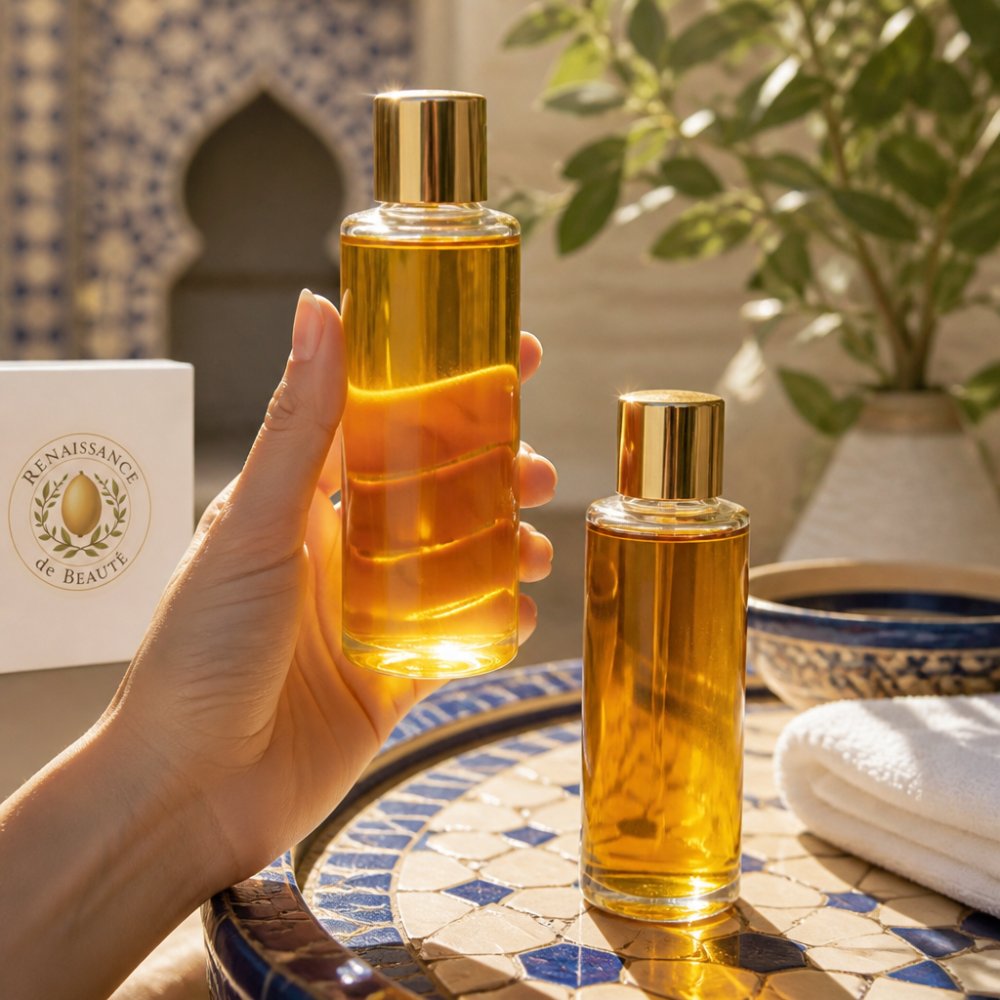
Authentic argan oil should have consistent viscosity without separation into layers over time. Some natural settling is acceptable, but dramatic layering or cloudiness that doesn't clear when gently shaken suggests additives or improper storage. The bottle should feel substantial; lightweight bottles with thin glass often indicate lower production standards.
Read the Ingredient Label and Certification Marks
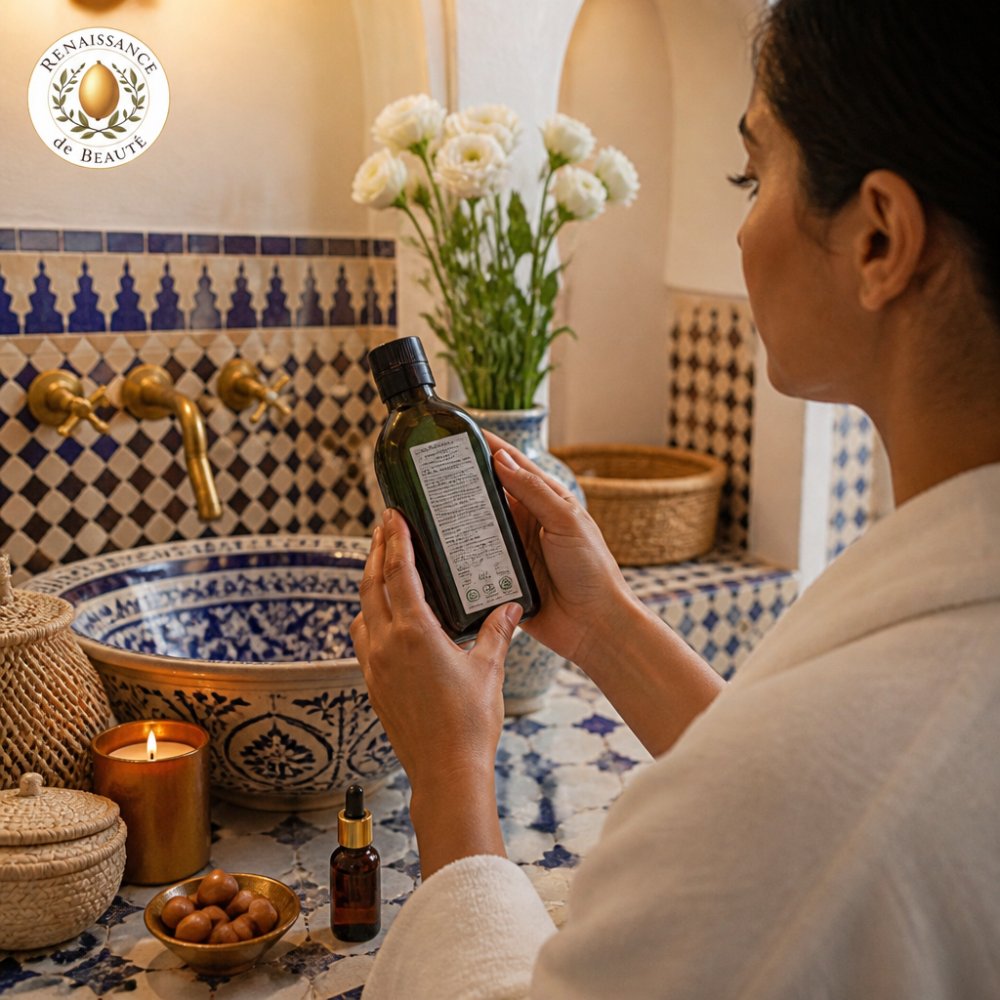
The ingredient list is your most reliable tool for identifying authentic moroccan argan oil. The first and ideally only ingredient should be "Argania Spinosa Kernel Oil" or simply "Argan Oil." If the label lists multiple oils, fillers, or synthetic ingredients before argan oil, you're not purchasing a pure product.
Look for the phrase "cold-pressed" or "unrefined" on the label. These terms indicate the oil was extracted without heat or chemicals, preserving natural fatty acids, tocopherols, and vitamin E. If the label says "refined" or uses vague language like "processed," the product has undergone treatments that reduce its potency.
Certification marks provide third-party verification of quality and authenticity. Look for organic certifications from recognized bodies, though understand that not all high-quality argan oil is certified organic. More importantly, check for certifications that verify the product's purity and origin. Reputable sellers display certifications prominently, and you can verify these by checking the certifying organization's website.
Be cautious of labels making exaggerated health claims. If a label promises to "cure" skin conditions or treat medical issues, the product is making illegal claims. Legitimate argan oil products use measured language: "may help improve skin hydration" or "supports hair health."
The ingredient list should be free of synthetic fragrances, parabens, and preservatives unless clearly listed and necessary. Pure argan oil has a naturally nutty, slightly earthy aroma. If the bottle smells strongly of artificial fragrance or has no scent at all, the product either contains additives or has been heavily processed.
Pure Argan Oil Benefits for Hair and How They Indicate Quality
High-quality argan oil provides measurable benefits for hair health: it improves moisture retention, reduces frizz, adds shine, and strengthens hair structure. These benefits come directly from the oil's natural composition of fatty acids and vitamin E. If you use authentic moroccan argan oil and notice no improvement in hair hydration or texture after consistent use over several weeks, the product likely lacks genuine potency.
Authentic cold-pressed argan oil penetrates the hair shaft relatively quickly without leaving a heavy, greasy coating. When applied to damp hair before styling, it should dry to a soft finish that enhances shine without creating a slick appearance. If the oil sits on your hair, making it look wet or weighed down hours after application, you're using a lower-quality product or one mixed with heavier carrier oils.
Hair treated with genuine argan oil develops a distinct silky texture and noticeable shine within days of regular use. The improvement is subtle but consistent, your hair feels smoother, tangles less easily, and has natural luster. Counterfeit products or heavily refined argan oil often fail to deliver these results.
Pure, cold-pressed argan oil has a warm, nutty aroma from the kernel roasting process. This scent is characteristic and consistent across batches from the same producer. If a product labeled as pure argan oil smells like coconut, perfume, or has no scent, it's either been heavily processed or blended with other oils.
Cold Pressed Argan Oil vs Refined: Understanding the Difference
Cold-pressed argan oil is extracted at low temperatures without chemical solvents, preserving the oil's natural composition of fatty acids, antioxidants, tocopherols, and vitamin E. This extraction method maintains the oil's nutty aroma, golden-amber color, and full nutritional profile. Cold-pressed oil is what most consumers should seek for skincare and hair care applications.
Refined argan oil undergoes heating and chemical processing to remove impurities and extend shelf life. This refinement process strips away much of the oil's natural beneficial compounds and removes its characteristic scent and color. Refined argan oil appears lighter, sometimes nearly clear, and has little to no aroma. While still technically argan oil, it lacks the potency and benefits of its cold-pressed counterpart.
The price difference between cold-pressed and refined argan oil is significant. Cold-pressed production requires careful temperature control, specialized equipment, and lower yield rates. If you encounter argan oil at an unusually low price point, it's almost certainly refined rather than cold-pressed.
When evaluating labels, cold-pressed products will explicitly state this on the packaging. Refined products may use vague language like "processed" or simply list "argan oil" without qualification. Some manufacturers blend cold-pressed and refined argan oil to reduce costs while maintaining some benefits, though this blending should be disclosed on the ingredient list.
Signs of Fake Argan Oil: What to Avoid
Counterfeit and adulterated argan oil products are common in the market, particularly in online retail. One obvious red flag is an unusually low price. Authentic, cold-pressed argan oil requires significant production investment, and genuine products reflect this cost. If you find argan oil priced substantially lower than comparable products from established brands, the product is likely counterfeit, heavily refined, or diluted with cheaper oils.
Packaging quality provides another clue to authenticity. Genuine argan oil producers invest in professional labeling, clear ingredient lists, and durable bottles. Counterfeit products often have spelling errors on labels, blurry printing, inconsistent branding, or hastily assembled packaging. Authentic argan oil is typically sold in dark glass bottles that protect the oil from light degradation. Clear plastic bottles or thin glass suggest lower-quality products.
Contact Us for Personalized Spa Packages →
The ingredient list on fake argan oil often reveals the deception immediately. Look for red flags like mineral oil, silicone, paraffin, or other synthetic fillers listed before or alongside argan oil. Some counterfeit products list "argan oil extract" or "argan oil complex" instead of pure argan oil, signaling dilution or adulteration.
Purchase argan oil from established retailers with clear return policies and customer reviews. Be wary of sellers who cannot provide information about where their argan oil is sourced or how it's produced. Legitimate producers are transparent about their supply chain. If a seller becomes defensive when asked about sourcing and production methods, that's a strong warning sign.
Authentic cold-pressed argan oil has a distinctive warm, nutty aroma. If a product labeled as pure argan oil smells like perfume, coconut, or has no scent, it's not authentic.
Verify Geographic Origin and Supply Chain Transparency
Authentic moroccan argan oil originates from the Argania Spinosa tree, which grows almost exclusively in the arid regions of Morocco. If a product claims to be argan oil but doesn't specify Morocco as its origin, it's either mislabeled or not genuine argan oil.
Legitimate producers are transparent about their supply chain. They can identify the specific cooperatives or farms where their argan oil is produced, the extraction methods used, and how the product is processed and bottled. When you contact a producer with questions about their supply chain, they should respond promptly with specific information rather than generic statements.
Look for producers who work directly with Moroccan women's cooperatives. Many authentic argan oil companies partner with these cooperatives, which traditionally harvest and process argan oil using time-honored methods. These partnerships support fair trade practices and ensure the oil is genuinely produced in Morocco by people with generations of expertise.
Third-party verification of origin can provide additional assurance. Some argan oil products carry certifications that verify their Moroccan origin and production methods. While not all authentic argan oil is certified, certification provides concrete evidence of authenticity.
Be cautious of sellers who claim to source argan oil from multiple countries or regions. The argan tree grows almost nowhere outside Morocco, so claims of argan oil from other origins are false.
Price and Packaging: Red Flags That Signal Counterfeit Products
Authentic, cold-pressed moroccan argan oil requires significant production investment, careful handling, and quality control measures. If you encounter argan oil priced suspiciously low, particularly if substantially cheaper than comparable products from established brands, treat it as a warning sign.
The relationship between price and bottle size also matters. A 1-ounce bottle of authentic argan oil should cost more per ounce than a larger 4-ounce bottle. If prices don't follow this logical progression, or if a large bottle costs less than expected, the product may be diluted or counterfeit.
Packaging quality reflects production standards. Authentic argan oil comes in professional, durable dark glass bottles with clear, well-printed labels. The label should include complete ingredient information, usage instructions, and producer contact details. Counterfeit products often arrive in flimsy packaging with blurry printing, spelling errors, or incomplete information.
Check the seal and closure carefully. Authentic products typically have tamper-evident seals or safety caps indicating the bottle hasn't been opened. If the seal is loose, damaged, or missing, the product may have been compromised.
Argan oil is sensitive to light and should be stored in dark glass bottles away from direct sunlight. If you receive a product stored in clear bottles or bright conditions, the oil may have oxidized and lost its beneficial properties.
Identifying authentic moroccan argan oil requires attention to multiple factors: appearance, ingredient labels, certifications, origin verification, and price consistency. Once you've selected a high-quality product, incorporating it into a comprehensive beauty routine can amplify its benefits. Our Renaissance Bath & Body Combos are thoughtfully designed to complement authentic argan oil treatments, creating a luxurious self-care experience that honors traditional Moroccan beauty practices. For personalized guidance on selecting the right argan oil product for your specific skin and hair needs and how to integrate it into your beauty regimen, contact us for a treatment consultation and discover how authentic argan oil can transform your daily routine.
| Authenticity Indicator | What to Look For | What to Avoid |
|---|---|---|
| Color | Golden-amber to deep golden-yellow, translucent | Clear, colorless, or orange-tinted |
| Scent | Warm, nutty, earthy aroma | Artificial fragrance or no scent |
| Texture | Silky, absorbs quickly, non-greasy finish | Heavy, greasy, slow to absorb |
| Ingredients | "Argania Spinosa Kernel Oil" listed first | Multiple oils, fillers, or unclear listing |
| Label | "Cold-pressed" or "unrefined" stated clearly | "Refined," vague language, or missing info |
| Origin | Specific Moroccan producer or cooperative named | Generic "imported from Morocco" only |
| Price | Consistent with other authentic brands | Suspiciously low compared to market |
| Bottle | Dark glass, professional labeling, sealed | Clear plastic, poor printing, damaged seal |
Frequently Asked Questions
How can I tell if argan oil is real or fake?
Authentic argan oil has a golden-amber color, absorbs quickly into skin without leaving a greasy residue, and carries a subtle nutty aroma. Examine the ingredient label, it should list only Argania Spinosa Kernel Oil or similar. Check for organic certifications and verify the product comes from a transparent supply chain. Fake oils often appear too clear, smell like synthetic fragrance, or contain additives listed on the label. Price points significantly below market rates are another warning sign of counterfeit products.
What color is authentic Moroccan argan oil?
Pure, cold-pressed argan oil ranges from golden yellow to golden amber, depending on the roasting level of the kernels. The oil should be translucent when held to light, never murky or opaque. Refined argan oil appears lighter and more pale, while unrefined oil displays deeper amber tones. If the oil looks colorless or too pale, it has likely been heavily processed or diluted with other oils.
What are the pure argan oil benefits for hair, and how do I know I have the real thing?
Authentic argan oil hydrates the scalp, reduces frizz, adds shine, and strengthens hair from root to tip due to its high fatty acid and vitamin E content. Real oil absorbs into hair quickly without leaving a heavy, oily coating. If the product sits on your hair surface, feels sticky, or leaves buildup after washing, it may be adulterated or of lower quality. Cold-pressed, unrefined argan oil delivers the strongest hydration benefits because it retains all natural tocopherols and nutrients.
Is cold pressed argan oil better than refined, and why does it matter for authenticity?
Cold-pressed argan oil is extracted without heat, preserving fatty acids, vitamin E, and natural antioxidants that deliver superior skin brightening and hair hydration. Refined argan oil undergoes chemical processing that removes some nutrients and may include synthetic additives. Cold-pressed oil costs more and has a shorter shelf life, but it is the truest form of authentic argan oil. Always check the label for 'cold-pressed' or 'unrefined' to ensure you are purchasing the highest-quality product.