 how-to
What Is Moroccan Beldi Soap and How to Use It at Home
Table of Contents
- What Moroccan Beldi Soap Is and Why It Belongs in Your Routine
- What's Inside: Ingredients and Product-Label Variations
- How to Use Moroccan Black Soap: A Step-by-Step Hammam Routine
- How Long to Leave Black Soap on Skin (and How Often to Exfoliate)
- How to Use a Kessa Glove for Smooth, Glowing Skin
- Moroccan Black Soap for Face: Safe Use and Sensitive Skin Tips
- Aftercare and Moisturizing: Locking In Soft Skin
- Common Mistakes to Avoid with Beldi Soap
- Frequently Asked Questions
Last Updated: October 5, 2026
What Moroccan Beldi Soap Is and Why It Belongs in Your Routine
Moroccan beldi soap is a soft, olive-based cleansing paste traditionally used in the hammam ritual to prepare skin for exfoliation.
Here's the short version: beldi soap softens dead skin so a kessa glove can lift it away. That's the whole point.
The ritual itself is simple.
Below, we'll show you each step in order, plus how often to exfoliate and which skin types should slow down.
What's Inside: Ingredients and Product-Label Variations
Traditional savon noir, also called sabon beldi, is built on just a few ingredients.
But labels vary more than people expect. Some versions add argan oil, vitamin E, or eucalyptus. Others are closer to Castile soap with a dark color added.
A few things to check:
- Olive or olive oil listed first
- Potash as the cleansing agent, not synthetic detergents
- No added dyes if you have sensitive skin
- A brownish paste texture, not a hard bar
The FDA guidance on cosmetic labeling explains how ingredients must be listed, which helps you spot what's actually inside.
How to Use Moroccan Black Soap: A Step-by-Step Hammam Routine
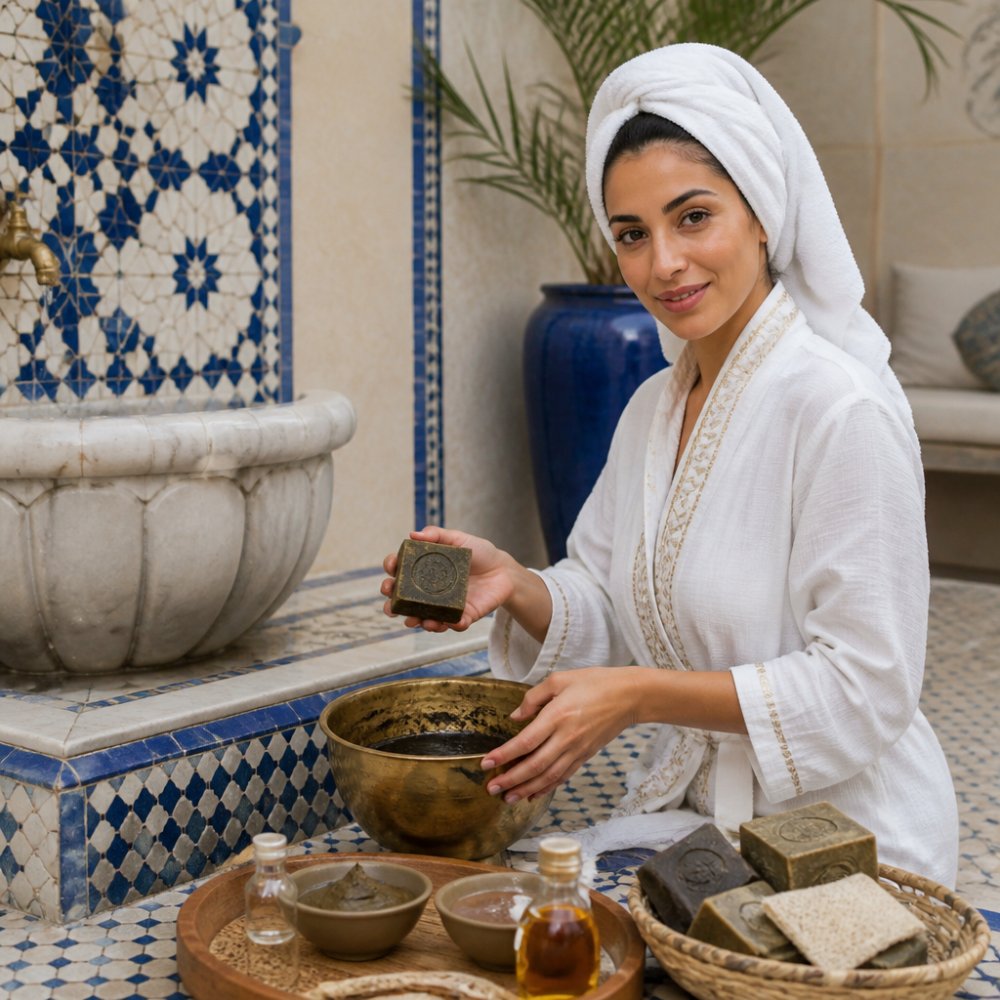
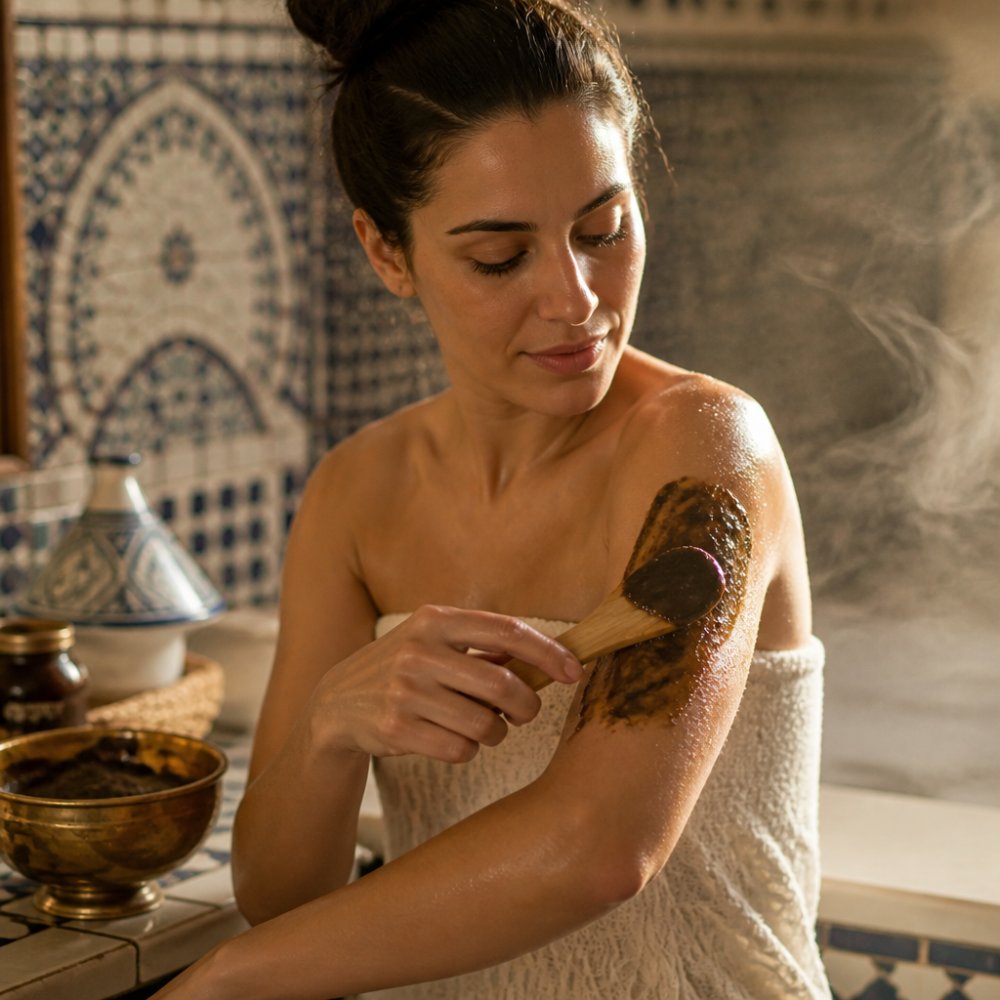
Learning how to use Moroccan black soap comes down to one rule: soap first, scrub second. The soap softens; the glove removes. Skip either and you miss the benefit.
Total time: 20-30 minutes Difficulty: Easy
What You'll Need Before You Start
- Beldi black soap
- A kessa exfoliating glove
- Warm water or a hot shower
- A towel and a rich moisturizer
Step 1: Warm Your Skin [Time: 5 minutes]
Take a hot shower or soak in a warm bath. Steam opens pores and softens skin. This step matters more than people think.
Step 2: Apply the Soap [Time: 3 minutes]
Spread a generous layer over wet skin. Use circular motions. Let the creamy texture sit.
Step 3: Leave It On [Time: 5-10 minutes]
Wait while the soap works. Rinse lightly, but keep skin damp.
Step 4: Exfoliate with the Kessa Glove [Time: 5 minutes]
Scrub in firm, upward strokes. You'll see dead skin roll off.
Expected result: Softer, brighter skin and a deep clean feeling.
How Long to Leave Black Soap on Skin (and How Often to Exfoliate)
Leave black soap on skin for five to ten minutes. That window gives the paste time to soften dead skin without drying you out. Longer isn't better here, the soap keeps working past ten minutes, but so does its drying effect, and the payoff stops improving.
How Often, by Skin Type
Once or twice a week is plenty for most people. Over-exfoliating strips your skin barrier and causes irritation. A practical starting point:
- Normal skin: once a week
- Oily or congested skin: twice a week, spaced at least three days apart
- Dry skin: every 10 days, and moisturize immediately after
- Sensitive or reactive skin: every two weeks, with a patch test first
- After any reaction: pause for two weeks before trying again
If you are new to beldi soap, start at the low end of your range for the first month. Tolerance builds gradually, and the people who get the best long-term results are usually the ones who started slow.
Signs You Are Over-Exfoliating
Over-exfoliation rarely announces itself as pain. It shows up as a cluster of smaller signals that are easy to dismiss:
- Skin feels tight or squeaky after rinsing, even after moisturizing
- Stinging when you apply a moisturizer or serum that normally feels fine
- Persistent redness or warmth in the scrubbed areas
- Flaking or rough patches that appear a day or two after exfoliating
- New sensitivity to products you have used for months
- Breakouts along the jaw, hairline, or chest after a scrub
If two or more of these show up, you have your answer. Cut the frequency in half, drop the kessa glove entirely for a couple of weeks, and stick to gentle cleansing and moisturizing.
Recovery Protocol
When skin is irritated, the goal is to stop adding stress, not to scrub harder to "fix" it:
- Skip the soap and glove for at least 10 to 14 days
- Use lukewarm, not hot, water
- Cleanse with a mild, fragrance-free wash
- Moisturize twice a day, ideally with a fragrance-free cream or an oil like argan
- Avoid acids, retinoids, and physical scrubs until skin feels normal again
- If irritation persists beyond two weeks, or you see blistering, oozing, or spreading redness, see a dermatologist
Why the Glove Matters More Than the Soap
The soap softens; the glove removes. That means the glove is where most damage happens. A firm five-minute scrub on softened skin is effective. A firm five-minute scrub done three days in a row is not three times as effective, it is a barrier injury waiting to happen. Treat the scrub as the intense part of the routine and the soap as the gentle part, and the schedule above will hold up.
How to Use a Kessa Glove for Smooth, Glowing Skin
A kessa glove is a coarse, loosely woven exfoliating mitt, traditionally made from viscose or a cotton-viscose blend. Its crinkled weave is what creates the friction that lifts softened dead skin. How you use it, and how you care for it, decides your results.
Technique
- Soak the glove in warm water for a minute or two so the fibers soften
- Wring it out; a dripping glove dilutes the soap film on your skin
- Scrub in long, upward strokes, working one area at a time: arms, legs, back, then chest
- Keep pressure firm but even, you are sweeping, not grinding
- Rinse the glove under warm water whenever it loads up with gray, pill-like debris
- Stop if skin turns red, hot, or sore
New to this? Start with light pressure and short strokes. You can always add more next time.
Why Nothing Is Rolling Off
If your scrub produces no visible debris, the problem is almost never the glove. It is one of these:
- Skin wasn't softened enough. The soap needs its full five to ten minutes on warm, wet skin. Rushing this step is the most common cause.
- Skin was too dry when you started. Apply the soap to skin that is already damp from a warm shower or soak, not to dry skin.
- The glove is worn out. A kessa that has gone flat and smooth has lost its grip. Most people replace theirs every few months with regular weekly use.
- You're scrubbing a spot you already exfoliated. Freshly scrubbed skin won't shed again for several days.
Cleaning, Drying, and Storage
A damp kessa glove left in a shower caddy is a breeding ground for odor and mildew. After every use:
- Rinse it thoroughly under warm water until the water runs clear
- Wring it out firmly
- Hang it to air-dry somewhere with moving air, not folded over a hook or left in a sealed bag
- Once it is fully dry, store it loose in a drawer or hang it in a dry spot
Wash the glove itself every week or two with a mild soap and warm water, rinse well, and air-dry completely. Skip the washing machine, heat and agitation break down the weave and shorten its life. If the glove smells musty even after washing, or the fabric has gone slick and shiny, replace it.
One Glove Per Person
Kessa gloves are not a shared item. The coarse weave traps skin cells and moisture, so using the same glove on two people is a straightforward way to pass along irritation and breakouts.
The American Academy of Dermatology guidance on exfoliation notes that gentle, regular exfoliation supports skin health, while aggressive scrubbing causes irritation. The glove is a tool, not a test of endurance.
Moroccan Black Soap for Face: Safe Use and Sensitive Skin Tips
Moroccan black soap for face use needs more care than the body.
If you want to try it, patch test first. Apply a small amount behind your ear or on your jaw. Wait 24 hours. No reaction means you're likely fine.
For the face:
- Use a thin layer, not a thick one
- Leave it on for two to three minutes only
- Rinse with lukewarm water
- Skip the kessa glove on your face
- Moisturize right after
Sensitive skin types should test any new product, and anyone under a dermatologist's care should ask before adding a new step.
Aftercare and Moisturizing: Locking In Soft Skin
Aftercare is where most routines fall apart. You've just removed dead skin, so fresh skin is exposed and thirsty. Moisturize within a few minutes of patting dry.
Reach for a rich oil or cream. Argan oil works well here because it absorbs quickly and adds vitamin E, which supports soft, hydrated skin.
A simple aftercare routine:
- Pat skin dry, don't rub
- Apply argan oil or a thick moisturizer while skin is damp
- Drink water to stay hydrated
- Avoid hot showers right after
Do this and that soft, glowing skin lasts for days instead of hours.
Common Mistakes to Avoid with Beldi Soap
Most bad experiences with beldi soap trace back to a few repeat mistakes. Avoid these and the ritual works as intended.
The big ones:
- Applying soap to dry skin, so it never softens anything
- Scrubbing too hard or too often
- Skipping moisturizer after
- Using it on broken or sunburned skin
- Ignoring a patch test on sensitive skin
If you want authentic, spa-quality beldi soap and argan oil for your home ritual, Renaissance de Beaute Argan Treatments offers traditional Hammam-inspired essentials made with pure organic ingredients. Our Beldi Black Soap, pure Argan Oil, and Ghassoul are crafted for deep cleansing, detoxification, and skin, scalp, and hair revitalization. You can browse the full range in our Renaissance Online Shop, or if you would like personalized guidance on which products and routine suit your skin, book a Treatment Consultation with our team.
Frequently Asked Questions
What is Moroccan beldi soap made of?
Traditional beldi soap is made from crushed olives and olive oil combined with potash and salt, which gives it a soft, brownish paste texture. Some versions add argan oil or vitamin E. Because recipes vary, check the label: a short ingredient list with olive oil near the top usually signals a more authentic, less processed product than one with added fragrances or fillers.
How long should you leave Moroccan black soap on your skin?
Most routines call for leaving it on for five to ten minutes. That gives the warm water and soap time to soften dead skin so a kessa glove can lift it away without harsh scrubbing. If your skin is sensitive, start with two to three minutes and build up. Rinsing thoroughly afterward matters as much as the timing.
Can you use Moroccan beldi soap on your face?
You can, but with care. Beldi soap is strong, so use it on the face at most once a week, and patch test on your jawline first. People with dry or reactive skin may do better keeping beldi soap for the body and using a gentler cleanser on the face. Stop if you notice redness, stinging, or tightness.
How often should you use Moroccan black soap?
Once or twice a week suits most people. Exfoliating more often can strip your skin barrier and cause irritation, especially if you use a kessa glove each time. If your skin feels tight, raw, or overly dry after a session, space your treatments further apart and follow with a rich moisturizer or argan oil.
Building a real hammam ritual at home takes the right products, not just the right steps. Renaissance de Beaute Argan Treatments brings you authentic Beldi Black Soap, pure Argan Oil, and traditional Hammam-inspired essentials made with organic ingredients from Morocco. Our products are designed for deep cleansing, detoxification, and everyday revitalization of skin, scalp, and hair. Get started with Renaissance de Beaute Argan Treatments and bring spa-quality care into your own routine.