 how-to
Best Way to Use Argan Oil for Split Ends
Table of Contents
- What Argan Oil Can and Cannot Do for Split Ends
- Pure Argan Oil Benefits for Hair
- How to Apply Argan Oil to Hair Ends
- Argan Oil Hair Treatment Routine for Lasting Results
- Ingredient Compatibility: What to Mix and What to Avoid
- Choosing a Quality Argan Oil for Split Ends
- Frequently Asked Questions
Last Updated: September 23, 2026
What Argan Oil Can and Cannot Do for Split Ends
Argan oil for split ends works best as a sealant that smooths the hair cuticle and prevents further damage, not as a repair treatment. Here is the honest truth: no oil can fuse a split end back together once the hair shaft has frayed.
Split ends, also called trichoptilosis, happen when the protective outer layer of the hair wears away. The inner fibers then unravel like a rope left out in the sun. Once that happens, the strand is permanently damaged.
This guide from Renaissance de Beaute Argan Treatments covers what argan oil actually does, how to apply it correctly, and how to build a routine that keeps your ends looking healthy between trims.
The Repair Myth vs. Prevention
Most guides promise that argan oil will "repair" your split ends. That claim does not hold up.
What argan oil really does is coat the hair shaft and seal the cuticle. This makes frayed ends look smoother and feel softer. It also helps stop the split from traveling further up the strand.
Think of it like a bandage, not a cure. A bandage protects a wound while it heals. Argan oil protects your ends while you wait for your next trim.
So the best way to use argan oil for split ends is simple: apply it to prevent damage and disguise existing splits, then get regular haircuts to remove what oil cannot fix.
Pure Argan Oil Benefits for Hair
Pure argan oil benefits for hair come down to its natural makeup. It is rich in fatty acids, vitamin E, and antioxidants, which nourish the hair shaft and support moisture retention.
Here is what that means in practice:
- Fatty acids coat the cuticle and lock in hydration
- Vitamin E helps protect against environmental stress
- Antioxidants support overall hair health
- Lightweight texture absorbs without leaving a greasy film
Unlike heavy oils, pure argan oil is non-greasy and sinks in quickly. That makes it a good fit for most hair textures, from fine to coarse.
Contact Us for Personalized Spa Packages →
Hair Porosity Considerations
Hair porosity decides how much oil your strands can actually absorb. This is the detail most guides skip.
- Low porosity hair: The cuticle lies flat and resists moisture. Use just one or two drops, or oil will sit on top and look greasy.
- Medium porosity hair: Your hair absorbs oil with ease. Two to three drops is usually plenty.
- High porosity hair: The cuticle is raised and loses moisture fast. Your hair can handle more oil and may benefit from a heavier hand.
To test your porosity, drop a clean strand of hair into a glass of water. If it floats, you have low porosity. If it sinks slowly, it is medium. If it sinks fast, it is high.
Match your dosage to your porosity and you will get far better results.
How to Apply Argan Oil to Hair Ends
To apply argan oil to hair ends, warm two to three drops between your palms and smooth them over the last few inches of your hair. Focus on the mid-lengths and tips, never the roots.
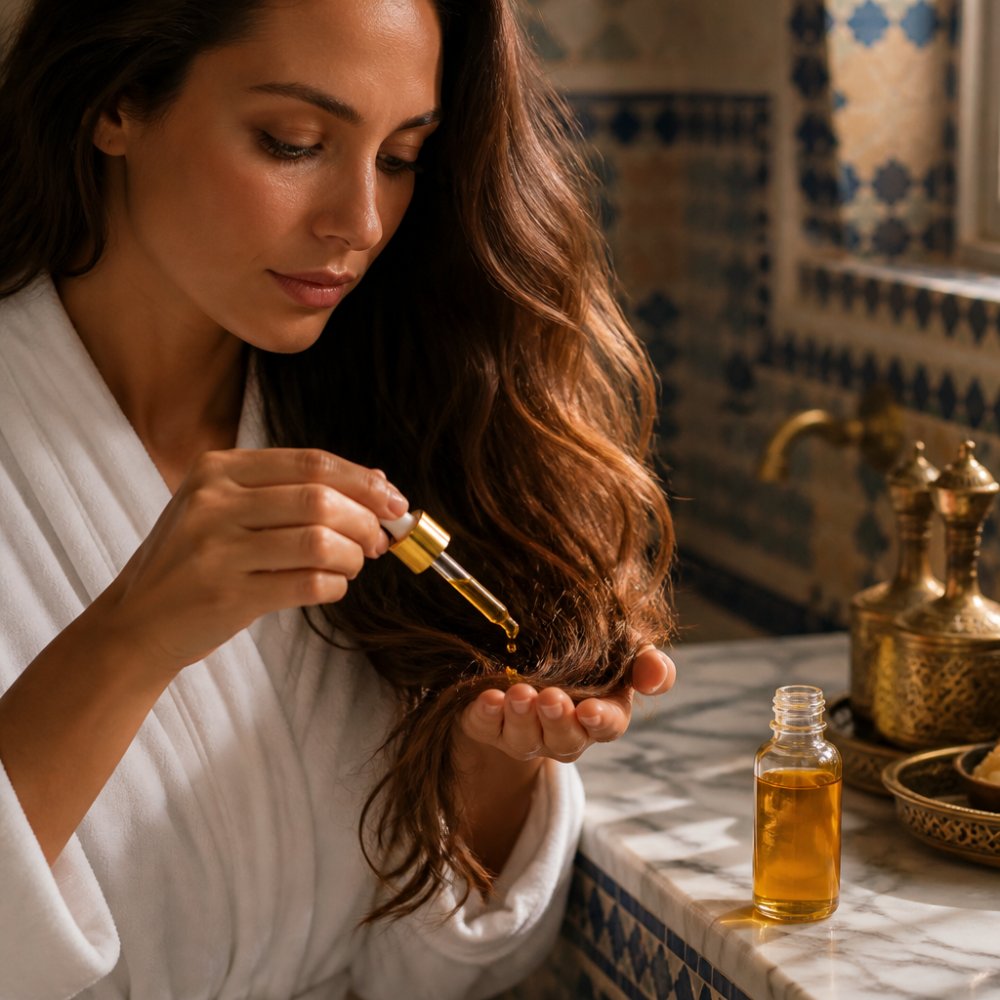
Here is the step-by-step method that most stylists teach:
- Start with clean, product-free hands. Residue from styling cream or hand lotion can clump the oil and leave streaks.
- Dispense two to three drops into one palm. For fine hair, start with one. For thick or coarse hair, up to four.
- Rub your palms together for five to ten seconds. The friction warms the oil so it spreads more evenly and absorbs faster.
- Section your hair first. Clip the top half up and work on the bottom layer, then release and repeat. This prevents the oil from sitting only on the surface strands.
- Use the praying-hands method. Place your hair between your flat palms and slide your hands down from mid-length to tip. This coats the strand evenly without tugging.
- Scrunch the ends. Cup the tips in your palms and squeeze gently upward. This pushes the oil into the frayed cuticle rather than letting it sit on top.
- Comb through with a wide-tooth comb to distribute any excess.
- Add one more drop only if your ends still feel dry after the first pass.
Damp vs. Dry Hair Application
The best time to apply argan oil depends on your goal. Both damp and dry application work, but they do different jobs.
- Damp hair: Apply after towel-drying, before styling. This locks in moisture and helps with frizz control. The cuticle is slightly raised when damp, so the oil can slip into the gaps and smooth them down.
- Dry hair: Apply to finished styles for shine enhancement and to smooth flyaways. On dry hair, the oil sits mostly on the surface, so it is better for appearance than for prevention.
Pre-Cleanse vs. Leave-In Treatment
A pre-cleanse treatment means applying oil before you shampoo. A leave-in treatment means applying it after and leaving it in.
Here is how they compare:
| Method | When to Apply | Best For | Rinse? |
|---|---|---|---|
| Pre-cleanse | 30 minutes before washing | Deep nourishment | Yes |
| Leave-in | After washing, on damp hair | Sealing and shine | No |
Argan Oil Hair Treatment Routine for Lasting Results
An argan oil hair treatment routine works best when you keep it simple and consistent. You do not need ten products. You need the right amount, applied at the right time, and matched to how your hair actually absorbs oil.
Here is a routine that fits most people:
- Pre-cleanse (once a week): Massage oil into your ends 30 minutes before washing. This gives the oil time to coat the cuticle before shampoo strips it away.
- Wash and condition as usual. Rinse with cool water if you can, since heat lifts the cuticle and lets moisture escape.
- Leave-in (two to three times a week): Apply two drops to damp ends. This is your main defense against new splits.
- Daily touch-up: One drop on dry tips as needed, especially on days with dry indoor air or after heat styling.
- Trim: Book a cut every 8 to 12 weeks. Oil can mask splits, but it cannot remove them, so trims are non-negotiable.
Frequency of Use and Recommended Dosage
Use argan oil two to three times a week for maintenance, and daily if your ends are very dry. The right dosage depends on your hair texture and porosity.
Contact Us for Personalized Spa Packages →
Here is a quick guide:
- Fine hair: 1 drop, once a day at most
- Medium hair: 2 drops, two to three times a week
- Thick or coarse hair: 3 to 4 drops, up to daily
- High porosity hair: Add one extra drop for deep conditioning
- Low porosity hair: Use half the recommended amount and apply to damp hair only, since low porosity strands resist absorption and oil can sit on top
Ingredient Compatibility: What to Mix and What to Avoid
Argan oil plays well with some ingredients and clashes with others. Getting this right protects both your hair and your results.
Safe to mix with argan oil:
- Leave-in conditioners
- Other plant oils like coconut or jojoba
- Heat protectants
- Deep conditioning masks
Better to avoid mixing:
- Strong chemical treatments right after application
- Silicone-heavy serums, which can cause buildup
- Products with high alcohol content, which dry out the hair
Choosing a Quality Argan Oil for Split Ends
The best argan oil for split ends is 100% pure, cold-pressed, and free from added silicones or synthetic fragrance. Cold pressing keeps the nutrients intact.
Check the label for these signs of quality:
- "100% argan oil" or "pure argan oil" as the only ingredient
- Cold-pressed on the packaging
- Dark glass bottle to protect the oil from light
- No added fragrance or mineral oil
- USDA Organic certification when possible
Frequently Asked Questions
Can argan oil actually repair split ends?
No, argan oil cannot permanently repair split ends once the hair cuticle has separated. The only true fix is a trim. However, argan oil can temporarily seal the split, making it less visible and preventing it from worsening. Regular use of pure argan oil for split ends also improves moisture retention and elasticity, which helps prevent new splits from forming along the hair shaft.
How often should I apply argan oil to my hair ends?
For most hair types, applying 2 to 3 drops of argan oil to your ends every day or every other day works well. If your hair is very dry or porous, you can apply it twice daily. For a deeper argan oil hair treatment routine, use a more generous amount as a pre-cleanse mask once a week, leaving it on for 30 minutes before washing.
Is it better to apply argan oil to wet or dry hair for split ends?
Both methods work, but they serve different purposes. Applying argan oil to damp hair after washing helps lock in moisture and makes combing easier, which reduces breakage. Applying it to dry hair is better for taming frizz and adding shine between washes. For the best way to use argan oil for split ends, try a leave-in treatment on damp hair and a small touch-up on dry ends as needed.
Does argan oil make hair greasy if used on ends?
Argan oil is lightweight and non-greasy when used in the right amount. Start with 1 to 2 drops, rub the oil between your palms to emulsify it, and smooth it over your mid-lengths and tips only. Avoid the roots. If your hair still looks greasy, you used too much. Fine hair may need just one drop, while thick or coarse hair can handle three or more.