 how-to
Prevent Stretch Marks With Pure Argan Oil
Table of Contents
- How Pure Argan Oil Prevents Stretch Marks
- Natural Oils for Stretch Marks: Why Argan Oil Stands Out
- How to Apply Argan Oil to Skin for Maximum Effectiveness
- Pregnancy Stretch Mark Prevention With Argan Oil
- Building Your Stretch Mark Skin Care Routine
- Identifying Pure Argan Oil and Safe Use
- Prevention Versus Treatment: What Argan Oil Can and Cannot Do
- Frequently Asked Questions
Last Updated: October 10, 2026
How Pure Argan Oil Prevents Stretch Marks
Using prevent stretch marks argan oil works by deeply hydrating your skin and improving its elasticity. When skin stays well-moisturized, it stretches more easily without tearing. The oil's fatty acids and vitamin E work together to strengthen your skin's barrier and support collagen production, which keeps skin supple during periods of rapid growth or weight changes.
Dry, dehydrated skin tears more easily during rapid stretching. Pure argan oil provides the moisture and nutrients your skin needs to expand without damage.
Consistency matters most. Daily argan oil application during pregnancy, weight gain, or muscle-building phases significantly reduces or prevents new stretch marks from forming.
Natural Oils for Stretch Marks: Why Argan Oil Stands Out
Many natural oils claim to help with stretch marks. Understanding what argan oil actually does helps you make an informed choice.
What the Research Shows About Argan Oil
Argan oil contains approximately 80% unsaturated fatty acids (linoleic and oleic acid), plus vitamin E and polyphenols. Linoleic acid improves skin hydration and barrier function. Oleic acid enhances penetration. Vitamin E protects skin cells from oxidative stress during stretching.
These ingredients work together to improve skin hydration and barrier integrity. While no large-scale clinical trial has definitively proven that topical argan oil prevents stretch marks, the evidence is based on argan oil's documented ability to improve hydration and elasticity, which reduce tearing.
How Argan Oil Compares to Other Natural Oils
Other oils used for stretch-mark care offer different profiles:
- Coconut oil has higher saturated fat content and absorbs more slowly than argan oil.
- Rosehip oil supports collagen production but oxidizes quickly, reducing efficacy.
- Jojoba oil mimics skin's natural sebum but lacks argan oil's polyphenol content.
Argan oil's high linoleic acid, fast absorption, and polyphenol content make it practical for daily use on large body areas. It works on all skin types because it is non-comedogenic and gentle.
The Limits of Topical Oil for Existing Stretch Marks
Argan oil's hydrating properties are most effective before stretch marks form. Once stretch marks mature (6-12 months after formation), they are scars with disrupted collagen, and topical oils have minimal effect. Newer stretch marks (red or purple, less than 3 months old) may show modest improvement because they're still in an active inflammatory phase.
For existing mature stretch marks, professional treatments are often considered more effective than topical oils.
How to Apply Argan Oil to Skin for Maximum Effectiveness
Daily Application Steps
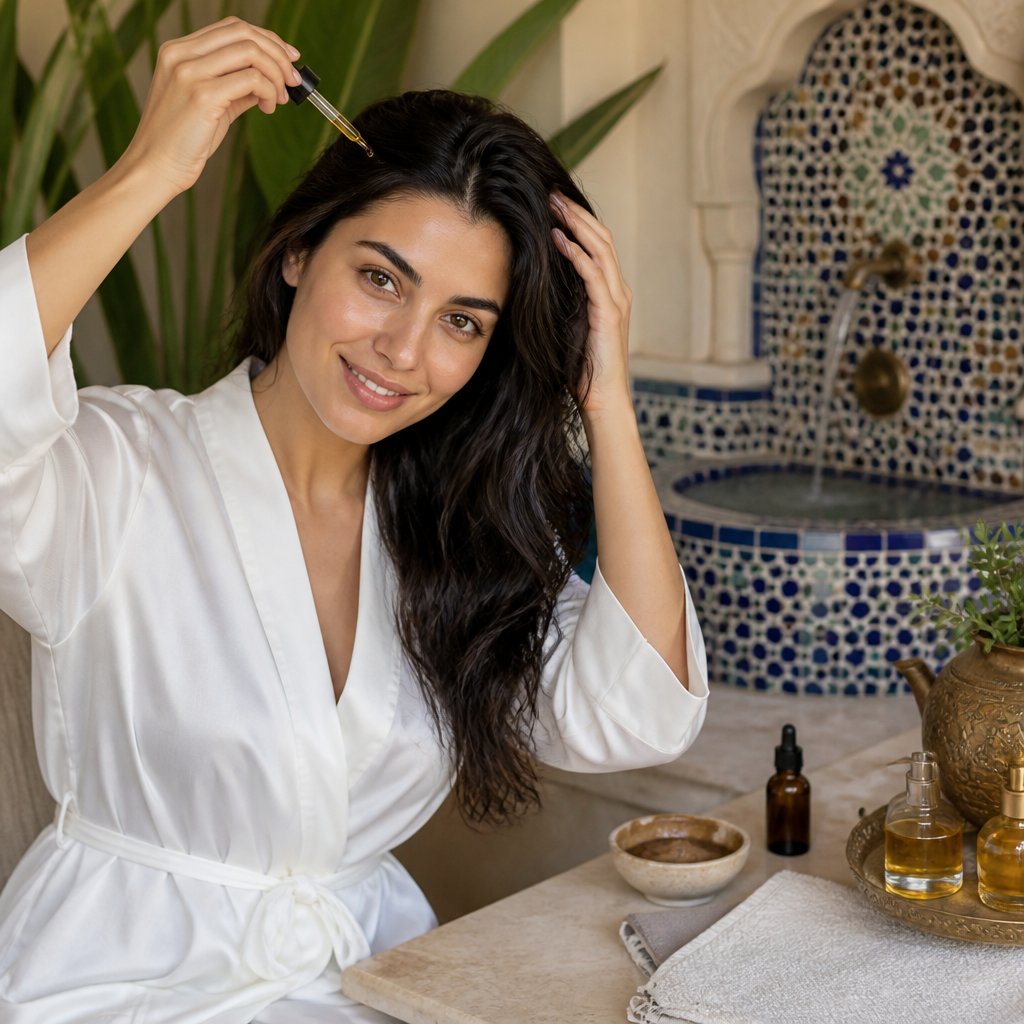
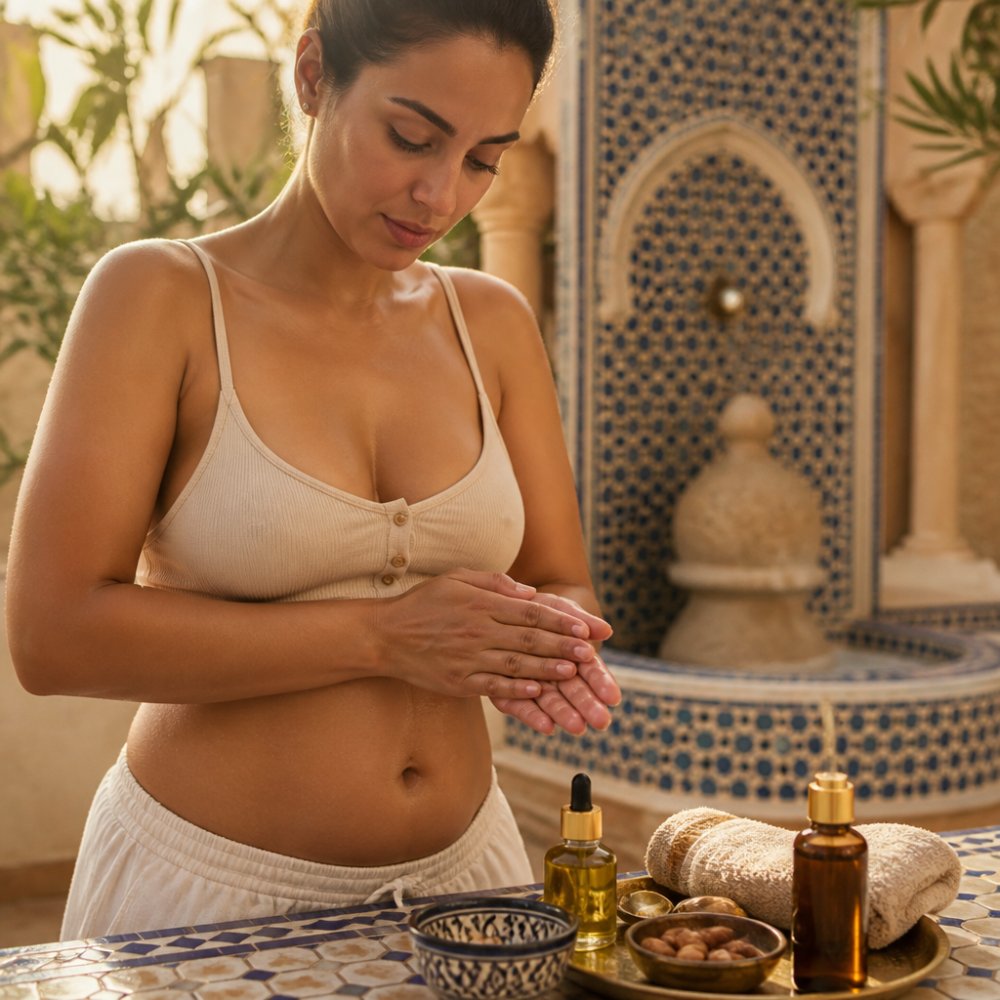
Apply argan oil to clean, damp skin. Warm a few drops between your palms, then massage into prone areas with gentle circular motions for 2-3 minutes. Wait 5-10 minutes before dressing. Apply twice daily, morning and night, for maximum effectiveness.
Identifying Prone Areas
Focus argan oil application on high-risk zones: abdomen, hips, thighs, breasts, upper arms, and lower back.
To prevent stretch marks argan oil should be applied to these areas even if you don't see stretch marks yet. Prevention works best when you start before stretching begins.
Pregnancy Stretch Mark Prevention With Argan Oil
Pregnancy causes rapid skin stretching, making it the most common time for stretch marks to develop. Starting argan oil application early in pregnancy gives your skin the best chance to adapt without tearing.
Begin using pure argan oil around week 12 of pregnancy, when your belly begins expanding noticeably. Apply it daily to your abdomen, hips, thighs, and breasts, all areas that stretch significantly during pregnancy. The oil's hydrating properties help your skin maintain elasticity as it stretches to accommodate your growing baby.
Many pregnant people worry about product safety. Pure argan oil is pregnancy-safe because it's a natural, topical product with no systemic absorption. It contains no harmful chemicals or ingredients that would affect your baby. Always verify you're using pure argan oil with no added fragrances or synthetic ingredients.
Continue using argan oil throughout pregnancy and for several months postpartum. Your skin continues changing after delivery, and maintaining hydration helps prevent stretch marks from forming during this period too.
Building Your Stretch Mark Skin Care Routine
Pure argan oil works best as part of a complete hydration routine. While argan oil is powerful on its own, combining it with other hydrating practices amplifies results.
Start with internal hydration. Drink plenty of water daily, aim for at least 8-10 glasses. Hydrated skin from the inside out stretches more easily and recovers better. Skin that's dehydrated internally stays tight and inflexible, making tearing more likely.
Layer your skincare strategically. Apply argan oil to damp skin, then follow with a lightweight moisturizer if your skin feels dry. This layering technique, called the "sandwich method", locks moisture in more effectively than either product alone.
The Renaissance Bath & Body Combos offer curated collections designed to work together for enhanced hydration and skin care results.
Avoid products that dry your skin, especially during high-risk periods like pregnancy or rapid weight gain. Stick with gentle, hydrating cleansers.
Identifying Pure Argan Oil and Safe Use
Not all argan oil products are created equal. Many brands dilute pure argan oil with cheaper oils, add synthetic fragrances, or sell oxidized oil that has lost its beneficial compounds. Because the active ingredients, linoleic acid, oleic acid, vitamin E, and polyphenols, degrade over time and with exposure to light and heat, purity and freshness directly affect whether the oil will actually improve your skin's hydration and elasticity.
How to Identify Genuine Pure Argan Oil
On the label:
- "100% pure argan oil" or "100% argan oil (Argania spinosa kernel oil)", No blends, no added oils, no dilution. If the label says "argan oil blend" or lists other oils, it is not pure.
- INCI name: The ingredient list should show only "Argania Spinosa Kernel Oil" (or "Argania Spinosa Oil"). If other oils are listed, the product is blended.
- Cold-pressed or expeller-pressed, These mechanical methods preserve nutrients.
- Organic certification, Look for USDA Organic, ECOCERT, or equivalent certification. Certified organic argan oil meets strict purity and pesticide standards.
By appearance and smell:
- Dark amber or golden color, Pure argan oil has a distinctive warm, honey-like tone. Clear, pale, or colorless oil is either diluted or degraded.
- Subtle, nutty scent, Genuine argan oil has a faint, natural aroma reminiscent of toasted nuts. Strong perfume or fruity smells indicate added fragrance, which serves no skincare purpose and may irritate sensitive skin.
- No cloudiness or sediment, Pure argan oil should be clear and uniform. Cloudiness may indicate contamination or improper storage.
Packaging and storage:
- Dark glass bottles only, Argan oil degrades in plastic and clear glass. Reputable brands use opaque or dark amber glass to protect the oil from light exposure.
- Sealed, airtight cap, Exposure to air causes oxidation, which breaks down vitamin E and polyphenols. A poor seal compromises the product before you even open it.
- Batch or lot number, Legitimate brands track production dates. Absence of a lot number is a red flag.
Why Purity and Freshness Matter
Argan oil's efficacy depends on its active compounds remaining intact. Oxidation, the breakdown of fatty acids and antioxidants when exposed to light, heat, or air, renders the oil less effective. An oxidized argan oil may still feel moisturizing because of its fatty acid content, but it has lost much of its polyphenol and vitamin E potency, reducing its ability to support skin elasticity and protect against stretching.
Diluted argan oil (mixed with cheaper oils like mineral oil or sunflower oil) contains fewer of the beneficial compounds per application. You would need to use significantly more of a diluted product to achieve the same benefit, making it less economical and less practical for daily use.
Patch Testing and Safe Use
Before applying argan oil to large areas, always patch test on a small section of skin:
- Apply a few drops to your inner arm or behind your ear.
- Wait 24 hours and observe for redness, itching, burning, or swelling.
- If no irritation appears, the oil is safe for you.
Even pure, high-quality argan oil can irritate sensitive skin in rare cases. If irritation persists, discontinue use and consult a dermatologist.
Storage and Shelf Life
To preserve the oil's potency:
- Store in a cool, dark place, Keep the bottle away from direct sunlight, heat sources, and humidity. A bathroom cabinet away from the shower is ideal; a sunny windowsill is not.
- Keep the cap tightly sealed, Exposure to air accelerates oxidation.
- Use within 12-18 months of opening, Once opened, argan oil's active compounds gradually degrade. Mark the opening date on the bottle.
- Discard if the scent changes, A rancid or off smell indicates oxidation and means the oil has lost efficacy.
Prevention Versus Treatment: What Argan Oil Can and Cannot Do
Understanding argan oil's limits helps you set realistic expectations. Pure argan oil excels at prevention but has limited power to fade existing stretch marks.
What argan oil does well:
- Prevents new stretch marks from forming during pregnancy, weight gain, or muscle building
- Improves skin hydration and elasticity
- Reduces the appearance of very recent stretch marks (less than 3 months old)
- Softens and smooths skin texture
- Supports overall skin health
What argan oil cannot do:
- Erase old, established stretch marks (those older than 6-12 months)
- Fade white or silvery stretch marks that have fully matured
- Replace professional treatments like laser therapy or microdermabrasion
- Work overnight or produce results in days
Newer stretch marks, those that are still red or purple, respond better to argan oil because they're still in an active healing phase. Once stretch marks turn white and mature, they're essentially scars, and topical oils have minimal effect.
If you have existing mature stretch marks you want to fade, argan oil can improve overall skin appearance and texture. Combining argan oil with professional treatments may produce a beneficial outcome.
The real power of argan oil lies in prevention. Starting early, before stretch marks form, gives you the best chance of avoiding them entirely.
Preventing stretch marks starts with understanding your skin's needs during periods of rapid change. Pure argan oil is your most effective natural tool for keeping skin hydrated, elastic, and resilient. Our authentic argan oil products deliver the fatty acids, vitamin E, and polyphenols your skin needs to stretch without tearing. Start your prevention routine today with consistent daily application to prone areas, and explore our Renaissance Online Shop to find the right products for your skin type. For personalized guidance on building your stretch mark prevention routine, contact us for a treatment consultation to discover which products work best for your specific concerns.
Frequently Asked Questions
Can pure argan oil actually prevent stretch marks?
Pure argan oil supports stretch-mark prevention by delivering fatty acids, linoleic acid, and vitamin E that strengthen skin elasticity and maintain moisture retention. It works best as a preventive measure, applied consistently before stretch marks form, rather than eliminating existing ones. Results depend on consistent application, individual skin differences, genetics, and overall hydration. Argan oil is most effective when combined with adequate water intake and used during periods of rapid skin change, such as pregnancy.
Is argan oil safe to use during pregnancy?
Pure argan oil is pregnancy-safe for topical application. It contains no harmful chemicals. Always perform a patch test on a small area first to check for individual sensitivity. If you are taking medications or have existing skin conditions, consult your healthcare provider before adding any new skincare product to your routine, even natural oils.
How often should you apply argan oil to prevent stretch marks?
Apply pure argan oil twice daily, morning and evening, to prone areas including the abdomen, hips, thighs, and breasts. Use a small amount (about 3-5 drops) warmed between your palms and massage gently in circular motions for 1-2 minutes per area. Consistency is key; daily application over weeks and months builds the skin barrier and maintains elasticity. Skipping applications reduces effectiveness, so establish a routine you can maintain long-term.
How do I know if argan oil is pure and safe for my sensitive skin?
Pure argan oil should be cold-pressed, organic, and amber-colored in a dark glass bottle. Check labels for 100% argan oil with no added ingredients or fillers. Test it on a small patch of skin first, especially if you have sensitive skin prone to reactions. Watch for redness, itching, or irritation over 24-48 hours. Individual skin differences mean patch testing is always wise.