 how-to
How Long Does a Hammam Ritual Take at Home?
Table of Contents
- How Long Does a Hammam Ritual Take at Home? The Short Answer
- At-Home Hammam Steps: A Realistic Timed Schedule
- How to Adapt Steaming Safely at Home
- How Long to Leave Black Soap On (and Why Timing Matters)
- The Ghassoul Clay Mask: Timing by Skin Type
- Argan Oil After Exfoliation: The Final Step
- How Often Should You Do a Hammam Ritual?
- Conclusion: Building Your Own Hammam Ritual
- Frequently Asked Questions
Last Updated: October 8, 2026
How Long Does a Hammam Ritual Take at Home? The Short Answer
A full hammam ritual at home takes 60 to 90 minutes from the first steam to the final rinse. The core sequence (steam, black soap, exfoliation, clay, oil) fits into about 45 minutes if you move quickly. That number surprises people.
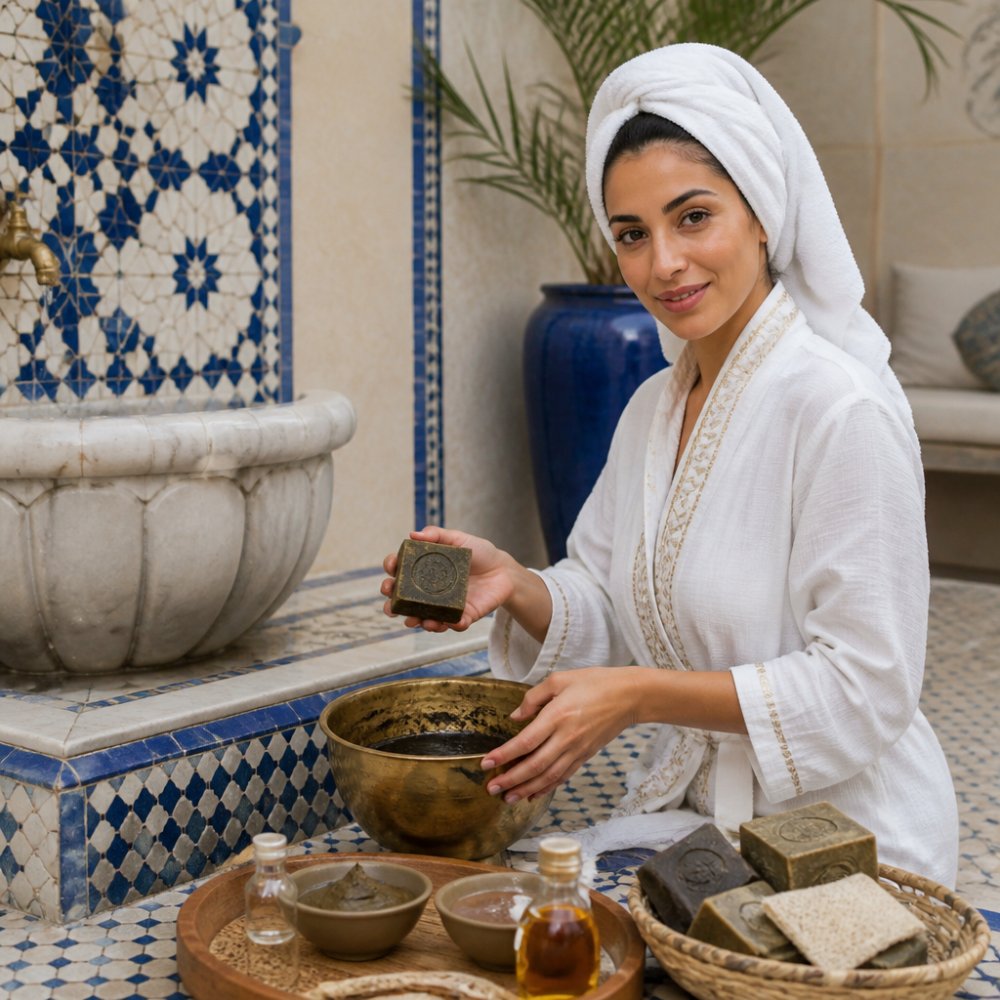
A hammam ritual is a traditional Moroccan bathing practice built around warm steam, black soap, exfoliation with a kessa glove, and a clay mask. At Renaissance de Beaute Argan Treatments, we offer a curated collection of organic Argan treatments and traditional Hammam-inspired essentials, meticulously crafted to revitalize your skin, scalp, and hair, delivering deep cleansing, detoxification, and remarkable anti-aging benefits.
Below, we break down a realistic, minute-by-minute schedule, plus short and extended versions for different days.
At-Home Hammam Steps: A Realistic Timed Schedule
Most guides give you a list of steps and a vague "about an hour." That does not help you plan a Tuesday evening. Here is a minute-by-minute schedule you can actually follow, plus the reasoning behind each block of time.
The total runs 60 to 90 minutes for a full ritual. The core sequence (steam, black soap, exfoliation, clay, oil) fits into about 45 minutes of active time if you move efficiently.
The Full Timed Schedule
| Clock | Step | Time | What You Do |
|---|---|---|---|
| 0:00-0:12 | Warm the room | 10-15 min | Run the shower on hot, close the door, let humidity build. Prep your tools while you wait. |
| 0:12-0:25 | Steam the body | 10-15 min | Sit in the warm humidity. Breathe slowly. Let muscles loosen and pores open. |
| 0:25-0:30 | Apply black soap | 5 min | Spread a thin layer over damp skin, working from shoulders down. |
| 0:30-0:38 | Let soap soften skin | 5-10 min | Stay in the steam. The soap loosens dead cells; it does not scrub them off. |
| 0:38-0:48 | Exfoliate with kessa glove | 5-10 min | Rinse soap, then scrub in firm upward strokes. Work limbs before torso. |
| 0:48-1:03 | Rinse and apply ghassoul clay | 10-15 min | Mask face and body. Let it dry slightly, not to a hard crust. |
| 1:03-1:08 | Rinse and massage in argan oil | 5 min | Press oil into damp skin. Focus on elbows, knees, rough patches. |
Total: roughly 60 to 90 minutes, including waiting time. Active hands-on time is closer to 25 minutes.
Why Each Block Takes That Long
- Warming the room (10-15 min): A standard bathroom needs 10 to 15 minutes of running hot water to reach a comfortable steam level. Less than that and the air stays dry.
- Steaming the body (10-15 min): This is the minimum window for pores to open and skin to soften. Longer than 15 minutes in one sitting raises the risk of lightheadedness.
- Black soap (5-10 min): The soap needs contact time to loosen dead cells. Five minutes suits most skin; ten suits very dry or thick skin.
- Kessa exfoliation (5-10 min): Firm strokes across the whole body take 5 minutes minimum. Ten minutes lets you go slowly and cover every zone.
- Ghassoul clay (10-15 min): Clay needs to draw oil and buildup from pores. Rinse before it fully cracks.
- Argan oil (5 min): Pressing oil into damp skin takes a few minutes to cover the body evenly.
Short, Standard, and Extended Ritual Options
Not every week allows for the full version. Pick the one that fits your day:
- Short (30 minutes): Steam 10 minutes, black soap 5 minutes, exfoliate 5 minutes, rinse, oil. Skip the clay. This still delivers softened skin and gentle exfoliation.
- Standard (60-75 minutes): The full table above. This is the sweet spot for most people and matches the traditional sequence.
- Extended (up to two hours): Add a hair oil treatment before steaming, a longer clay mask, and a slow body massage at the end. Reserve this for a weekend or a day off.
What Changes the Total Time
- Bathroom size: A small bathroom steams up faster than a large one, shaving 3-5 minutes off the warm-up.
- Water heater recovery: If your hot water runs out mid-ritual, you will lose time refilling the steam.
- Skin type: Dry or sensitive skin may need shorter soap and clay windows, trimming 5-10 minutes off the total.
- Hair treatment: Adding a pre-steam hair oil adds 15-20 minutes.
How to Adapt Steaming Safely at Home
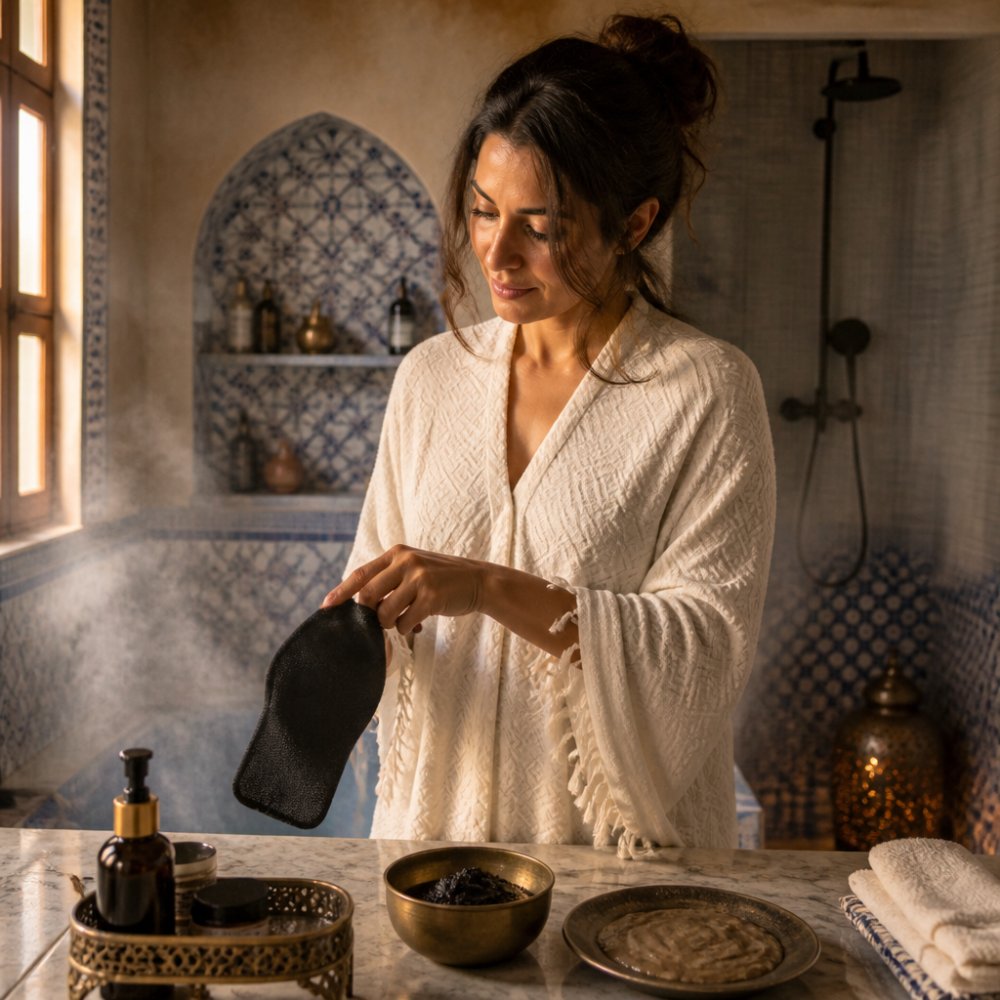
You do not need a dedicated steam room to get the benefits of a hammam steam. A closed bathroom with a hot shower running produces enough humidity for the ritual. The trick is controlling temperature, ventilation, and duration so the steam softens skin without overheating you.
Building Steam Without a Steam Room
- Run the shower on the hottest setting for 5-10 minutes with the door closed. This raises the room's humidity to a comfortable level.
- Keep the water running on low during the ritual to maintain humidity. You do not need a heavy cloud of steam, warm, moist air is enough.
- Skip essential oils in the water if you have sensitive skin or respiratory issues. Plain steam is effective on its own.
- A small bowl of hot water placed near where you sit can add localized steam without raising the whole room's temperature.
Temperature and Ventilation
- Target a warm, not scalding, room. If the air feels uncomfortable to breathe, it is too hot.
- Crack the door or a window for 30 seconds every 5 minutes to let fresh air in. This prevents the room from becoming suffocating.
- Keep a towel within reach to wipe your face if condensation builds up.
- Never seal the room completely. Air circulation matters more than maximum heat.
When to Stop
Stop the steam session immediately if you notice:
- Dizziness, lightheadedness, or a sudden headache
- Nausea or a racing heartbeat
- Difficulty breathing or a feeling of tightness in the chest
- Skin turning bright red or feeling painful
Step out, sit down, and drink cool water. Do not push through these signals.
How Long Is Safe
- 10-15 minutes per steam session is the standard window for most adults.
- Split longer rituals into two steam blocks with a break in between rather than one long session.
- First-time users should start with 5-7 minutes and build up over several sessions.
Who Should Skip or Modify Steaming
- Pregnant individuals: Talk to your doctor before any extended steam session. Overheating is a real concern.
- Heart conditions or low blood pressure: Steam can cause blood pressure to drop. Get medical clearance first.
- Asthma or respiratory conditions: Humidity can help or hurt depending on the person. Test briefly and stop if breathing feels harder.
- Broken, sunburned, or irritated skin: Skip the ritual entirely. Steam and exfoliation will make it worse.
Hydration and Recovery
- Drink a full glass of water before you start steaming.
- Drink another glass after the ritual to replace what you lost through sweat.
- Rest for 10-15 minutes after the ritual before doing anything strenuous.
- Avoid alcohol before or during the ritual. It increases dehydration and dizziness risk.
Adapting for Small Bathrooms
A small bathroom steams up faster but also gets hotter faster. If your bathroom is small:
- Cut the warm-up time to 5 minutes.
- Crack the door more often, every 3-4 minutes.
- Keep the steam session to 8-10 minutes instead of 15.
A larger bathroom takes longer to steam but stays comfortable longer. Adjust the warm-up to 12-15 minutes and you can extend the steam block slightly.
How Long to Leave Black Soap On (and Why Timing Matters)
Leave black soap on for 5 to 10 minutes.
Moroccan black soap, also called beldi soap, is a soft, plant-based cleanser made with olive oil and potash.
Here is the part most people get wrong: black soap is not a scrub. It loosens. The kessa glove does the removing.
Rinse with warm water before you exfoliate. The glove needs a clean surface to grip.
The Ghassoul Clay Mask: Timing by Skin Type
Ghassoul clay, also spelled rhassoul, comes from Morocco and pulls oil and buildup from pores. How long you leave it on depends on your skin.
- Oily skin: 10-15 minutes. Let it dry most of the way.
- Combination skin: 10 minutes. Rinse before it fully cracks.
- Dry skin: 5-7 minutes. Remove while still slightly damp.
- Sensitive skin: 5 minutes, and patch test first.
Never let the mask dry to a hard crust. That pulls moisture out of your skin instead of just cleansing it. Rinse with warm water and a soft cloth.
Argan Oil After Exfoliation: The Final Step
Argan oil goes on last, within a few minutes of your final rinse. Skin absorbs it best while still damp.
Warm a few drops between your palms and press them into your skin. Focus on elbows, knees, and any rough patches.
This step matters more than people think. Exfoliation removes dead skin and opens pores. Oil seals in moisture before it escapes. Skip it and you may feel dry an hour later.
For a complete routine, our Renaissance Bath & Body Combos pair black soap, ghassoul, and pure argan oil in one set.
How Often Should You Do a Hammam Ritual?
Once a week suits most people. Every 10 to 14 days works well for dry or sensitive skin.
Your skin needs time to recover between deep exfoliation sessions. Scrub too often and you strip your skin barrier, which leads to redness and irritation. Space it out and you get the glow without the damage.
A few signs you are overdoing it:
- Skin feels tight or stings after the ritual
- Redness that lasts more than an hour
- Flaking or peeling between sessions
If any of those show up, wait an extra week before your next one.
Conclusion: Building Your Own Hammam Ritual
The real challenge is not time. It is having the right products on hand so you can start without a shopping trip. Renaissance de Beaute Argan Treatments offers authentic Moroccan black soap, ghassoul clay, and pure organic argan oil, all made for home rituals. Our products focus on deep cleansing, skin and hair revitalization, and anti-aging care with plant-based ingredients. Browse our online shop or contact us for personal guidance on building your routine.
Frequently Asked Questions
How long does a hammam take?
A full hammam ritual runs 45 to 90 minutes from start to finish, with some extended versions reaching up to two hours. A short at-home version can be done in about 30 minutes if you trim the steaming and clay steps. The bulk of the time goes to warming the body, letting black soap and ghassoul clay sit, and rinsing between each stage.
Can you do a hammam ritual at home in 30 minutes?
Yes. A 30-minute version works by shortening each stage: 8 minutes of warm steam, 5 minutes with black soap, a quick kessa exfoliation, and a brief ghassoul clay mask. You skip the long relaxation pauses but still get deep cleansing and softer skin. It suits busy weeknights when you want the core benefits without the full timeline.
How long should Beldi black soap stay on the skin?
Leave Beldi black soap on for 5 to 10 minutes. Apply it to damp skin in the warm steam, let it soften the surface, then rinse before exfoliating. Sensitive skin should stay closer to 5 minutes, while normal or oily skin can handle the full 10. Going longer rarely adds benefit and can leave skin feeling tight.
How often should you do a Moroccan hammam ritual?
Once a week suits most people, with a lighter session every 10 to 14 days for sensitive or dry skin. Exfoliating more than twice a week can strip the skin barrier and cause irritation. Give your skin a recovery day between rituals, and always follow with a nourishing oil like Argan oil to restore moisture after exfoliation.