 how-to
Argan Oil for Damaged Hair and Scalp: 2026 How-To Guide
Table of Contents
- Why Argan Oil Works on Damaged Hair and Scalp
- How to Apply Argan Oil to Scalp Without Over-Saturating
- Argan Oil Benefits for Hair Growth and Scalp Inflammation
- Best Way to Use Argan Oil for Split Ends and Frizz Control
- Choosing Pure Argan Oil: Purity Indicators and Ingredient Quality
- Pairing Argan Oil With Other Hair Products and Treatments
- Common Mistakes That Undermine Results
- Frequently Asked Questions
Last Updated: September 16, 2026
Why Argan Oil Works on Damaged Hair and Scalp
Argan oil for damaged hair and scalp earns its "liquid gold" nickname because its molecular structure actually fits what hair and skin need. This guide from Renaissance de Beaute Argan Treatments breaks down how to use it correctly, how much to apply, and where most people go wrong.
What Cold-Pressed Argan Oil Contains
Cold-pressed extraction preserves the oil's essential nutrients. Heat-based processing can strip out much of the vitamin E and antioxidant content that makes argan oil useful for repair.
What remains in a quality cold-pressed bottle:
- Oleic and linoleic fatty acids that soften coarse hair
- Vitamin E, which supports hair elasticity and shine enhancement
- Antioxidants that help defend the hair follicle from environmental stress
- Plant sterols that support scalp comfort
How It Interacts With the Hair Cuticle and Scalp
Argan oil works on two fronts. On the hair shaft, it fills gaps in a raised or damaged cuticle, which reduces frizz and helps prevent split ends from worsening. On the scalp, it supports sebum regulation, meaning it can calm dryness without triggering the overproduction that follows harsh stripping products.
How to Apply Argan Oil to Scalp Without Over-Saturating
The biggest mistake with argan oil is treating it like a conditioner and pouring it on. A little goes a long way, and the scalp needs far less than the ends.
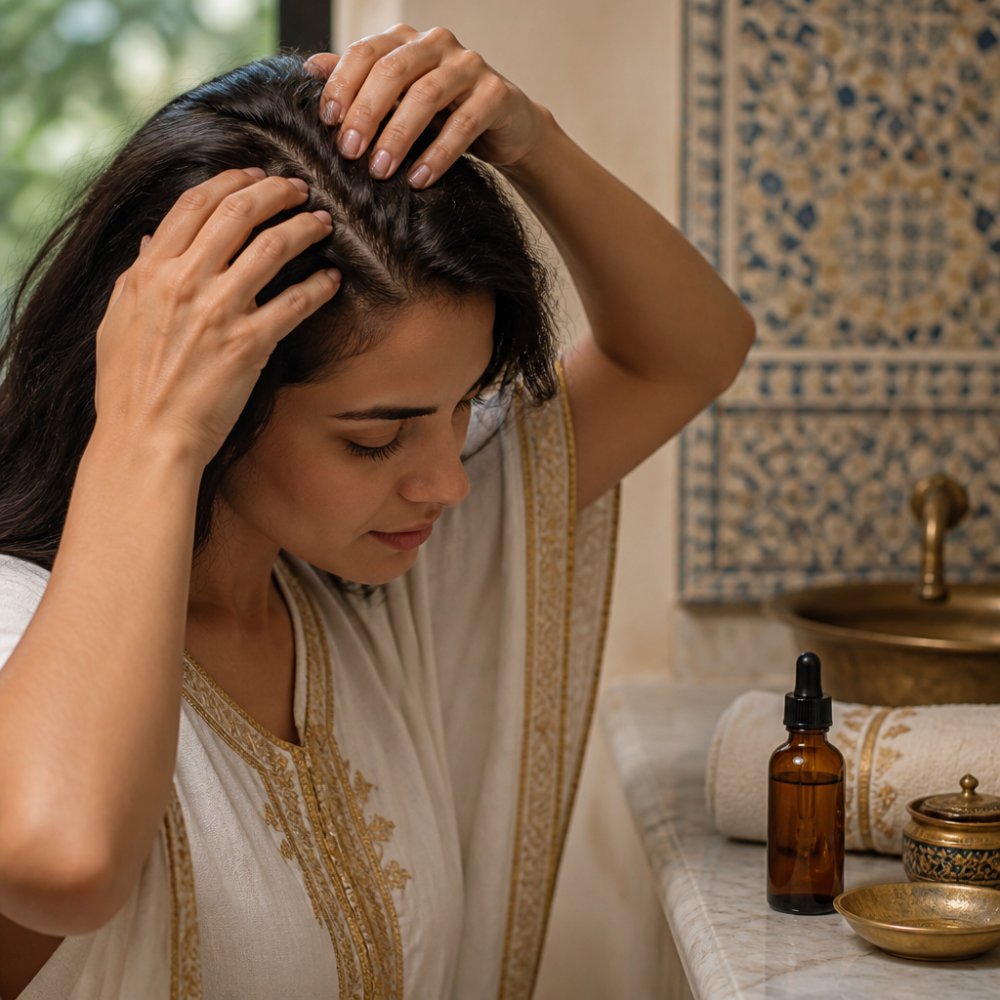
Follow these steps:
- Warm 3-5 drops between your palms for a full scalp application
- Part your hair in sections, exposing the scalp in rows
- Press fingertips (not nails) along each part line, working the oil into the skin
- Massage in slow circles for two to three minutes to support circulation
- Leave on for 30 minutes, or overnight for very dry scalps
- Wash out with a gentle cleanser, then condition the ends
Sectioning and Dosage for Dry Scalp and Dandruff
For a dry, flaky scalp, dosage matters more than frequency. Start with 3-4 drops total and add one more drop per section only if the skin still feels tight after 24 hours. Dandruff linked to dryness often improves with this approach; dandruff caused by a fungal overgrowth will not, and needs a different treatment.
How Often to Apply and Signs You've Used Too Much
Once or twice a week suits most people. Fine or low porosity hair does better with once weekly or every ten days.
Signs you have over-saturated:
Contact Us for Personalized Spa Packages →
- Hair looks stringy even after washing
- Scalp feels heavy or itchy within a day
- Product builds up at the roots and dulls shine
Argan Oil Benefits for Hair Growth and Scalp Inflammation
Argan oil does not directly grow hair, but it supports the conditions hair needs to grow well. A calm, moisturized scalp with healthy circulation gives the hair follicle a better environment, and reduced breakage means the length you already have survives longer.
Best Way to Use Argan Oil for Split Ends and Frizz Control
The best way to use argan oil for split ends is as a leave-in finishing treatment on the ends, not the roots. Split ends cannot be permanently repaired, the cuticle has already separated and the cortex is exposed, but argan oil coats the frayed edges and slows the split from traveling further up the shaft. Think of it as a seal, not a fix.
Wet vs. Dry Hair Application Methods
Both methods work, but they do different jobs.
| Method | Best For | How Much | Result |
|---|---|---|---|
| Wet hair | High porosity, coarse hair | 2-3 drops on ends | Deep moisture retention |
| Dry hair | Frizz control, shine touch-ups | 1 drop, palms only | Smoothing and shine |
| Overnight scalp | Dry scalp, dandruff | 3-5 drops on scalp | Soothing and hydration |
Wet application lets the oil absorb into the hair shaft as it dries. Dry application works more like a finishing serum, adding shine enhancement and taming flyaways without weighing hair down.
How Often to Apply to Ends, and the Over-Saturation Trap
Most guides tell you to use argan oil but skip the part that actually causes problems: how often and how much. For ends, once or twice a week is enough for most people. Fine or low porosity hair does better with once weekly or every ten days, because the cuticle is already tight and does not need much help sealing.
Signs you have over-saturated the ends:
- Hair looks stringy or clumped even after washing
- Ends feel coated rather than soft
- Product builds up and dulls shine within a day
Why Split Ends Keep Coming Back
Argan oil slows the spread of a split, but it cannot undo mechanical damage. If you are heat styling daily, brushing wet hair from the roots down, or using a rough cotton pillowcase, new splits will form faster than the oil can seal them. Pair the oil with a wide-tooth comb on damp hair and a heat protectant before any hot tool.
Choosing Pure Argan Oil: Purity Indicators and Ingredient Quality
Purity is where most argan oil purchases go wrong. The label "argan oil" can legally cover a blend of mostly silicone and a splash of the real thing. A bottle that costs a fraction of the genuine article usually signals dilution.
Indicators of a pure product:
Contact Us for Personalized Spa Packages →
- "100% argan oil" or "pure argan oil" listed as the only ingredient
- Cold-pressed noted on the label
- Deep golden color with a faint nutty scent
- Lightweight, non-greasy feel that absorbs within minutes
Pairing Argan Oil With Other Hair Products and Treatments
Argan oil layers well with most routines, but order and timing change the result. This is the part most guides skip, and it is where a good routine quietly falls apart.
A sensible sequence:
- Cleanse and condition as usual
- Apply leave-in products to damp hair
- Finish with argan oil on the ends
- Style as normal
What Layers Well, and What Fights It
- Leave-in conditioner: Apply first, oil second. The conditioner adds water-soluble moisture; the oil seals it in.
- Styling gel or mousse: Apply gel first, then a single drop of oil on the ends only. Oil over the whole head will break down the hold gel is designed to create.
- Heat protectant: Always before the oil, never after. A heat protectant needs to bond to the hair to work; an oil film on top can interfere.
- Silicone-based serums: Do not stack these with argan oil. You will get a heavy, coated feel and no added benefit, because both are doing the same smoothing job.
- Sulfate-heavy shampoo: If you use one, expect to strip the oil faster. A sulfate-free cleanser lets a weekly treatment actually last between washes.
Timing Around Chemical Treatments
Avoid mixing argan oil with strong chemical treatments on the same day. If you color, relax, or keratin-treat your hair, wait several days before resuming oil treatments so the cuticle can settle first. Oil applied too soon can interfere with how a color or relaxer develops and can leave the cuticle uneven.
A Note on Consistency Over Intensity
One heavy treatment will not transform damaged hair, and it will likely leave you greasy. Weekly use over several weeks, small amounts, applied in the right order, is what shows results. The routine matters more than the bottle size.
Common Mistakes That Undermine Results
Most disappointing argan oil results trace back to one of four errors.
- Using too much. Over-saturation flattens hair and clogs the scalp. Start with fewer drops than you think you need.
- Buying diluted oil. Silicone blends deliver temporary shine and no real repair. Read the ingredient list.
- Applying to the roots with oily scalps. This traps sebum and worsens buildup. Keep oil on the ends.
- Skipping consistency. One treatment will not transform damaged hair. Weekly use over several weeks is what shows results.
Frequently Asked Questions
Does argan oil actually repair damaged hair?
Argan oil cannot reverse structural damage to the hair shaft, but its fatty acids and vitamin E coat the cuticle, reduce breakage, and improve elasticity so hair looks and feels healthier. For split ends, it temporarily seals them and prevents them from traveling up the strand. Regular use as a leave-in treatment supports moisture retention and shine enhancement, but trims are still needed for permanent split-end removal.
What are the downsides of using argan oil on hair?
Over-application is the most common problem. Too much oil weighs down fine or low-porosity hair, attracts dust, and can leave a greasy film that builds up on the scalp. Some commercial products labeled 'argan oil' contain mostly silicones and mineral oil, which coat the hair without delivering the fatty acids and antioxidants that make pure argan oil useful. Patch test if you have sensitive skin or a history of reactions.
How often should I apply argan oil to my scalp?
For a dry or itchy scalp, two to three times per week is usually enough. Massage a few drops into a clean, parted scalp and leave it for 20 to 30 minutes before washing, or overnight for a deeper treatment. If your scalp is oily or prone to buildup, once a week or every other week works better. Watch for itching, flakes, or heaviness, which signal you are applying too much or too often.
How do I choose high-quality, pure argan oil?
Look for cold-pressed, unrefined argan oil sold in dark glass bottles, which protect the oil from light damage. The ingredient list should read 'Argania Spinosa Kernel Oil' and nothing else. Pure argan oil has a light nutty scent, a golden color, and absorbs without a greasy finish. If a product smells strongly perfumed or feels silicone-slick, it is likely diluted. Independent third-party testing or organic certification adds another layer of confidence.