 ultimate-guide
Benefits of Ghassoul Clay for Sensitive Skin Care
Table of Contents
- What Makes Ghassoul Clay Gentle Enough for Sensitive Skin
- Rhassoul Clay vs Bentonite Clay for Sensitive Skin
- How Often to Use Clay Masks on Sensitive Skin
- Ghassoul Clay Mask Recipe for Sensitive Skin
- Patch Testing and Ingredient Pairing for Reactive Skin
- Supporting Your Skin Barrier After a Clay Mask
- Frequently Asked Questions
Last Updated: September 27, 2026
What Makes Ghassoul Clay Gentle Enough for Sensitive Skin
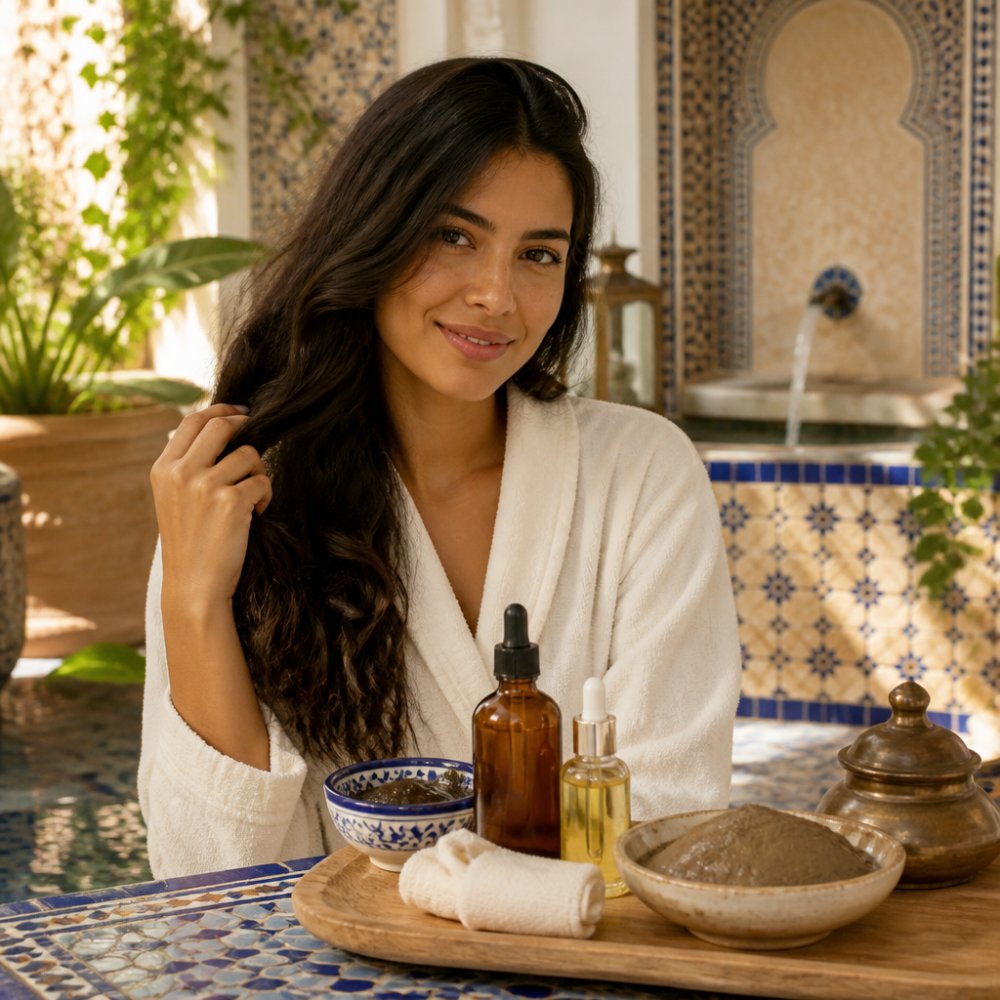
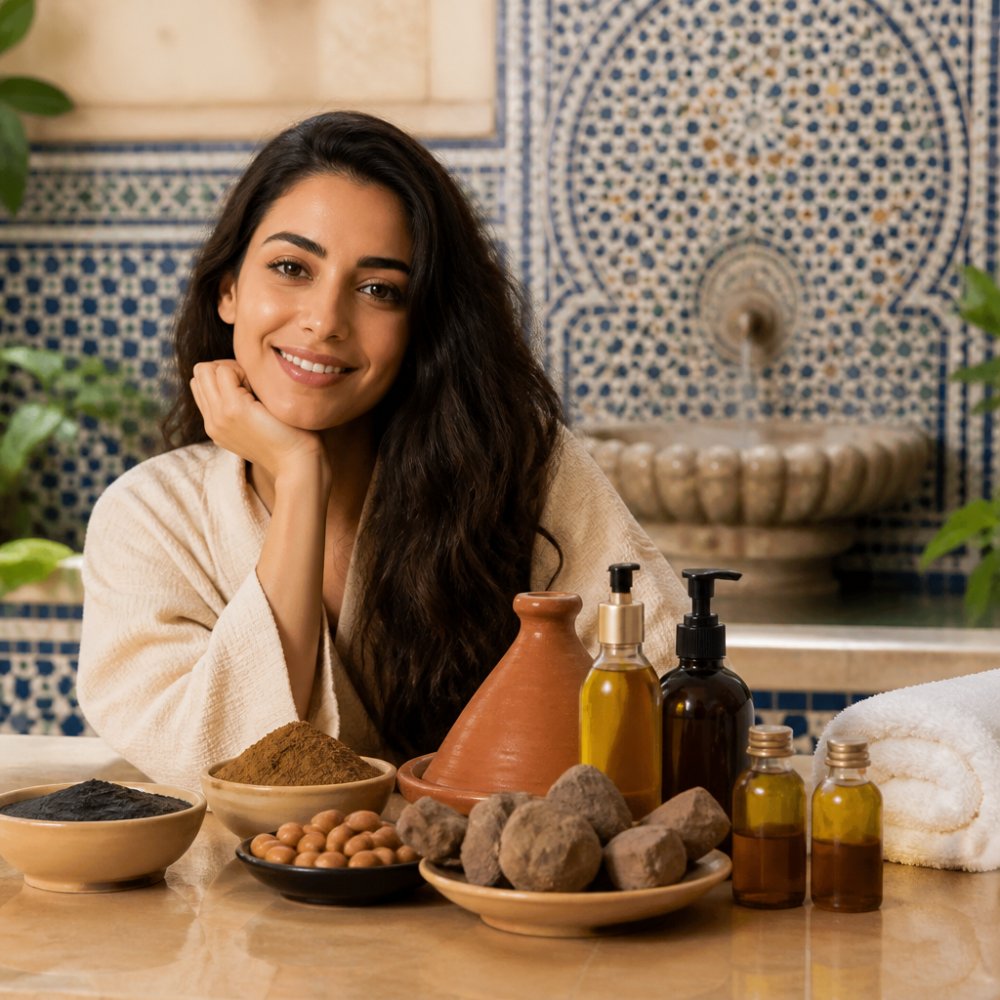
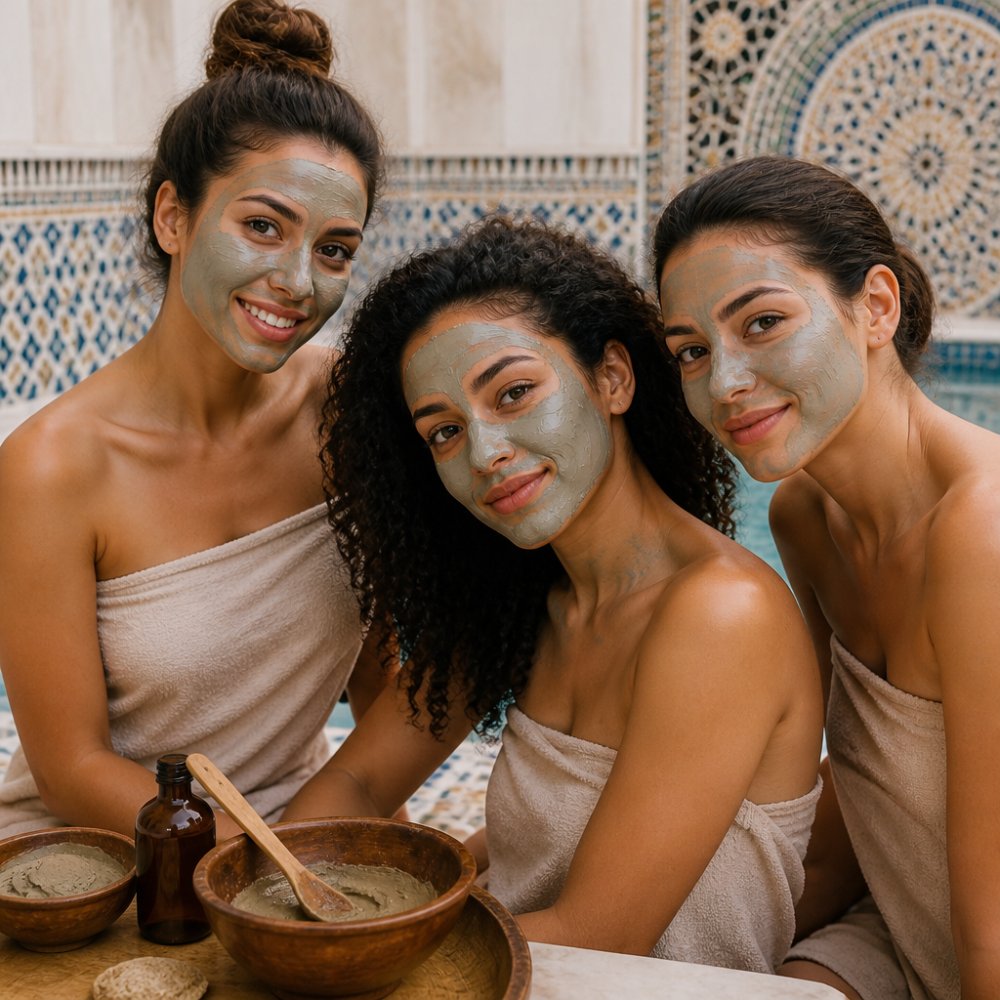
Ghassoul clay, also called rhassoul clay, is a mineral-rich clay mined in the Atlas Mountains of Morocco and used for centuries in traditional hammam rituals. Its high silica and magnesium content, plus an ion exchange process that lifts impurities without stripping the skin barrier, make it gentle, the principle behind Renaissance de Beaute Argan Treatments' Ghassoul offerings.
Instead of aggressively pulling moisture, ghassoul works through ion exchange, swapping charged particles for impurities in the pores, so reactive or dry skin often tolerates it better than bentonite.
Rhassoul Clay vs Bentonite Clay for Sensitive Skin
Rhassoul clay is generally better for sensitive skin because it absorbs excess sebum more gradually and is less likely to leave skin tight or irritated. Bentonite is a stronger drawing agent that many dermatologists caution against for reactive or dry skin.
| Factor | Rhassoul Clay | Bentonite Clay |
|---|---|---|
| Absorption strength | Moderate, gradual | Strong, fast |
| Best for | Dry, sensitive, reactive skin | Oily, congested skin |
| Tightness after use | Minimal | Common |
If your skin reacts to almost everything, rhassoul is the safer starting point.
How Often to Use Clay Masks on Sensitive Skin
For sensitive skin, once a week is the sweet spot, and never more than twice weekly, overuse shows up as redness, flaking, or a compromised barrier within weeks.
Start with one application every 10 days for the first month, move to once weekly if skin stays calm, skip a week if skin feels tight or dry, and always follow with a hydrating moisturizer or facial oil.
Ghassoul Clay Mask Recipe for Sensitive Skin
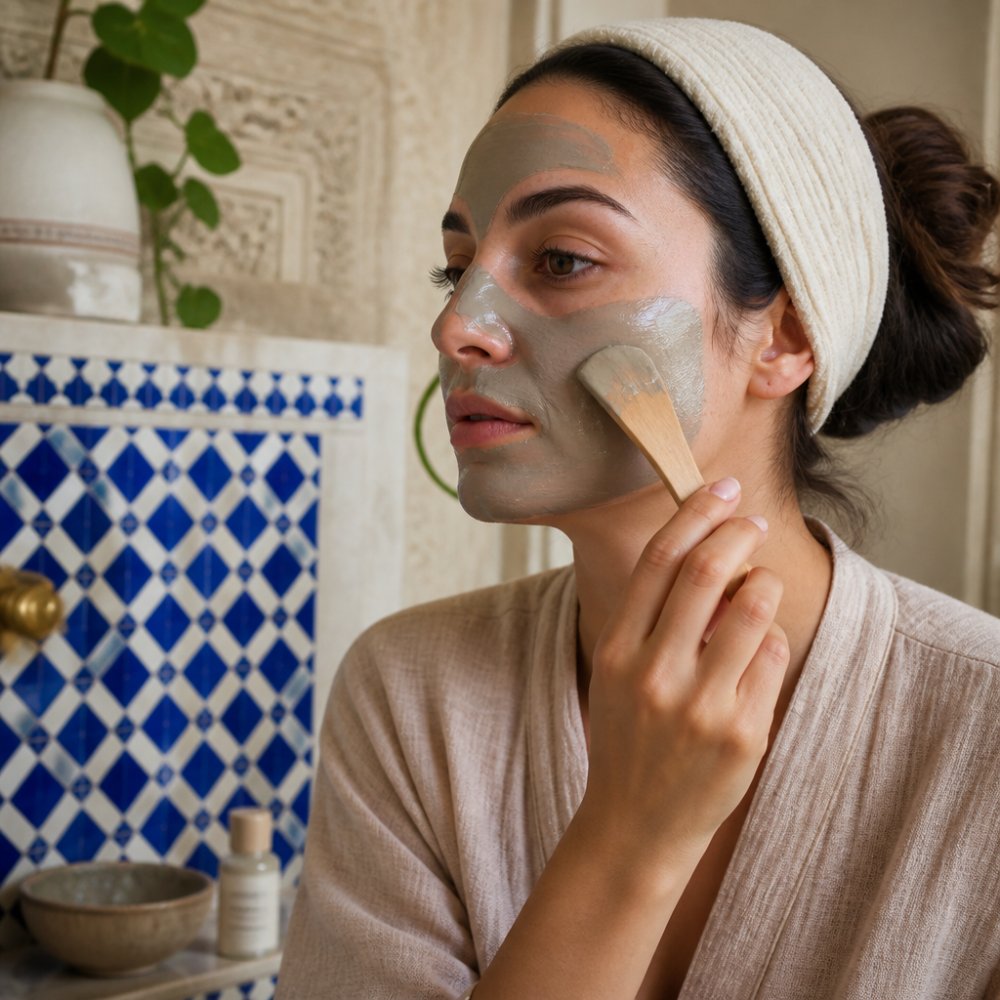
Mix one tablespoon of ghassoul clay powder with roughly two tablespoons of rose water or cooled chamomile tea until smooth and yogurt-like. If your skin is very dry, swap half the liquid for plain full-fat yogurt or a few drops of argan oil.
Apply a thin layer, avoiding the eye area, for no more than 8 to 10 minutes. Remove with lukewarm water, pat dry, and moisturize immediately, never let it dry to cracking.
Patch Testing and Ingredient Pairing for Reactive Skin
Before any new clay touches your face, patch test it: apply a small amount to the inner forearm, leave it 10 minutes, and wait 24 hours. No redness, itching, or swelling means you're clear to try it on your face.
Ghassoul plays well with rose water and chamomile for calming, argan oil for barrier support, honey for hydration, and aloe vera gel as a post-mask soother. Avoid strong exfoliating acids like glycolic or salicylic on the same day.
Supporting Your Skin Barrier After a Clay Mask
Within five minutes of rinsing, apply a hydrating serum or a few drops of pure argan oil, then seal it with a moisturizer to help the barrier recover from the pH shift any clay mask causes.
Renaissance de Beaute Argan Treatments formulates its Ghassoul and Argan products around this recovery principle. If you're unsure which combination suits your skin, our Treatment Consultations can help you build a routine that fits.
Frequently Asked Questions
How often should I use ghassoul clay on sensitive skin?
Start with once every 10 to 14 days and observe how your skin responds. If there is no redness, tightness, or flaking, you can move to once weekly. Sensitive skin has a thinner or more reactive barrier, so over-masking strips lipids and triggers trans-epidermal water loss. Always follow with a fragrance-free moisturizer while skin is still damp to lock in hydration.
Is ghassoul clay less drying than bentonite clay?
Yes, for most sensitive skin types. Bentonite has a stronger negative charge and pulls more water and sebum from the surface, which can leave skin feeling tight. Ghassoul clay has a milder ion exchange and higher natural moisture content, so it cleanses without stripping the acid mantle as aggressively. That said, any clay left on too long will dry out skin, so remove it before it fully hardens.
Can ghassoul clay help with redness and inflammation?
The magnesium and silica in ghassoul clay support a calmer-looking complexion, and its gentle exfoliation removes dead cells that can trap irritants. It is not a treatment for rosacea or dermatitis, though. If you have a diagnosed skin condition, patch test first on your inner forearm for 24 hours and check with your dermatologist before adding any new clay product to your routine.