 ultimate-guide
Benefits of Moroccan Beauty Rituals for Hair Growth
Table of Contents
- What Moroccan Beauty Rituals Actually Do for Hair
- Benefits of Pure Argan Oil for Hair
- Ghassoul Clay Hair Benefits for a Cleaner Scalp
- How to Treat Dry Scalp Naturally with a Hammam-Inspired Routine
- Customizing Moroccan Beauty Rituals for Your Hair Type
- What the Science Says About Moroccan Beauty Rituals and Hair Growth
- Post-Ritual Maintenance: Keeping Results Between Treatments
- Frequently Asked Questions
Last Updated: October 1, 2026
What Moroccan Beauty Rituals Actually Do for Hair
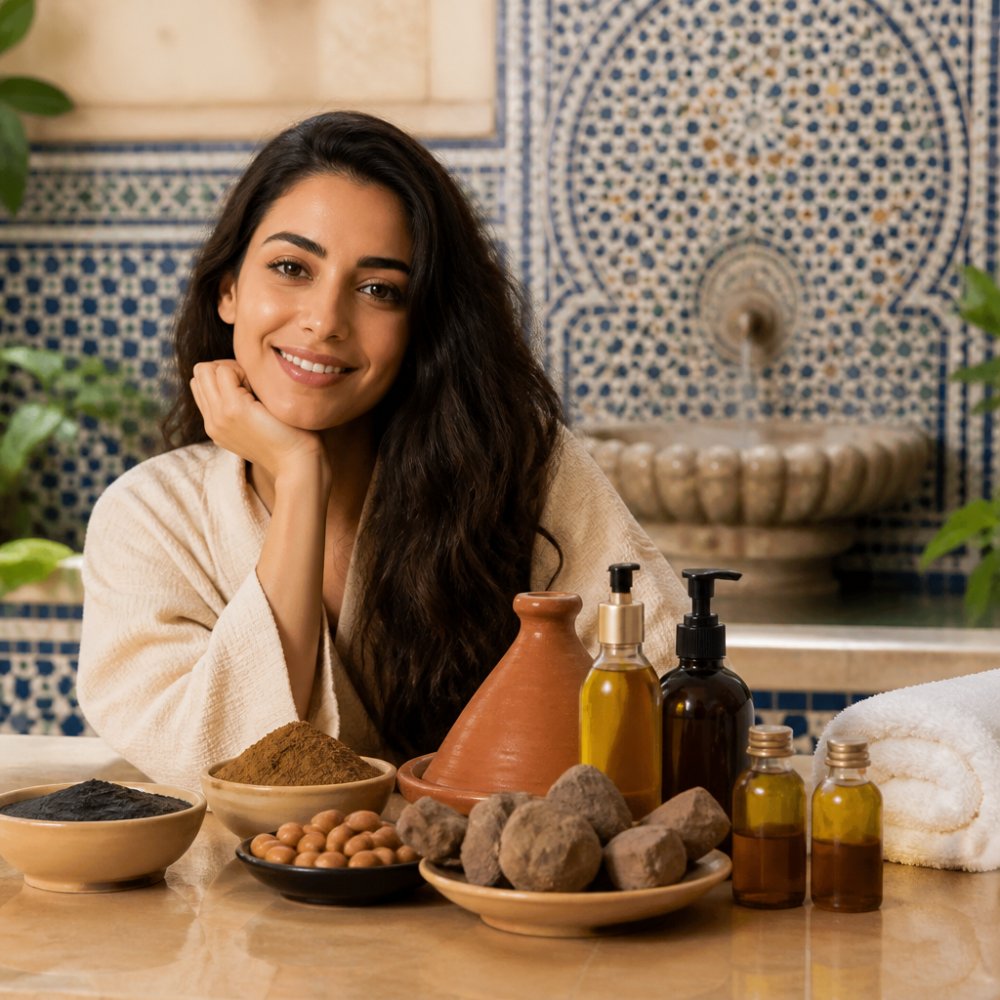
Moroccan beauty rituals are traditional cleansing and conditioning practices built on mineral-rich clay, cold-pressed oils, and steam, used to support scalp health and stronger hair. These rituals address two things most hair routines ignore: a congested scalp and moisture loss along the hair shaft. Below, we'll show you exactly how to adapt each ritual to your hair type, and where the science backs up the tradition.
Benefits of Pure Argan Oil for Hair
Pure argan oil is a cold-pressed oil extracted from argan kernels, rich in fatty acids like Omega-6 and Omega-9 plus Vitamin E, and it works as a lightweight sealant that improves hair elasticity and shine without weighing strands down.
Here's what it actually does:
- Moisture retention: Fatty acids coat the hair cuticle, slowing water loss through the day.
- Frizz control: A few drops smoothed over dry ends reduce the frizz that humidity amplifies.
- Breakage prevention: Vitamin E and natural antioxidants support the hair fibers so they bend instead of snapping.
How to Spot Authentic Cold-Pressed Argan Oil
Authentic cold-pressed argan oil is golden, has a faint nutty scent, and absorbs within a minute or two. If a bottle is clear, odorless, and slippery for hours, it's likely cut with filler oils. Check the label for a single ingredient: argan oil. No fragrance, no mineral oil, no "argan blend." Cold-pressed matters because heat processing strips some of the Vitamin E that makes the oil worth using.
Ghassoul Clay Hair Benefits for a Cleaner Scalp
Ghassoul clay, also called Rhassoul, is a mineral-rich clay mined in the Atlas Mountains and used for centuries to absorb excess sebum without stripping the scalp. Unlike harsh clarifying shampoos, it lifts oil and product buildup gently, which matters if your scalp is both oily at the roots and dry at the ends. A clay mask once every week or two can leave hair with more volume and a cleaner-feeling scalp.
How to Treat Dry Scalp Naturally with a Hammam-Inspired Routine
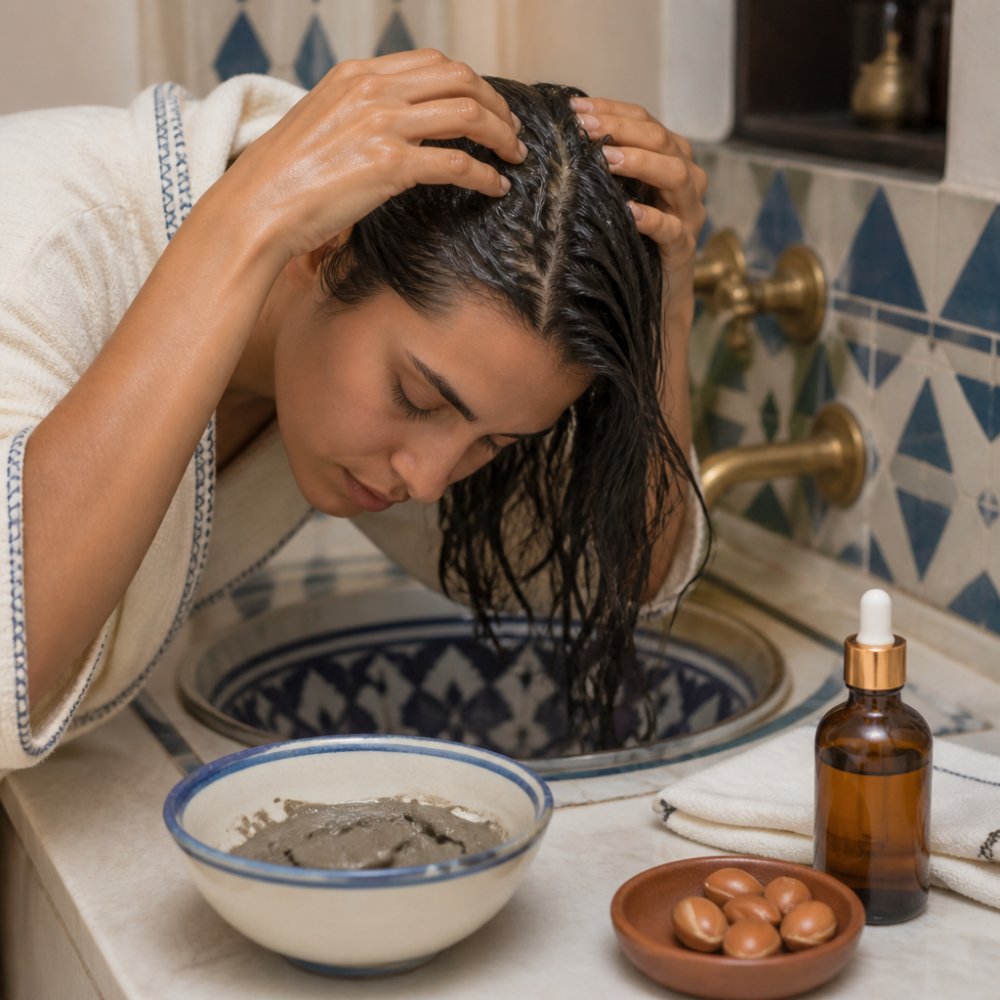
Treating a dry scalp naturally means restoring moisture and circulation rather than stripping oil. A Hammam-inspired routine combines warm steam, gentle exfoliation, and oil massage to loosen buildup and improve scalp circulation, which supports healthier follicle stimulation over time. The sequence matters: heat first to soften sebum, oil second to lubricate and nourish, clay third to lift what the oil loosened, and a cool rinse last to flatten the cuticle.
A Step-by-Step Scalp Detox at Home
Total time: 30-40 minutes
- Warm the scalp with a warm (not hot) shower or a steamed towel for 5 minutes. Heat softens the sebum plugging the follicle opening and lifts the cuticle slightly so the oil can penetrate. Water above roughly 100°F starts to strip the scalp's lipid barrier, so keep it comfortably warm rather than hot.
- Massage in oil using fingertips in slow circles for 5-10 minutes. Work in sections, hairline, crown, nape, behind the ears, rather than scrubbing randomly. The mechanical action increases blood flow to the dermal papilla, the structure at the base of each follicle that supplies it with nutrients. Use roughly a tablespoon for shoulder-length hair; add more only if the scalp still drags.
- Apply Ghassoul clay mixed with warm water to the roots only. The right consistency is thick yogurt, about 2 parts clay to 1 part water. Leave 10 minutes. Pull it off sooner if it starts to crack; cracking means it is pulling moisture out of the scalp rather than the oil you applied.
- Rinse thoroughly with lukewarm water, then follow with a deep conditioning mask on the lengths. Clay residue left at the roots can feel gritty and cause tangling, so rinse until the water runs clear.
- Finish cool with a cool-water rinse for 30-60 seconds to seal the cuticle and add shine.
Expected result: A scalp that feels clean but not tight, with softer, more manageable hair. If your scalp feels tight or itchy within a day, the clay stayed on too long or the water was too hot, adjust one variable at a time next round.
Adapting the Routine to Your Scalp
- Oily roots, dry ends: Apply clay only to the first two inches of scalp, and keep the oil massage to the scalp rather than pulling it down the lengths.
- Flaky, tight scalp: Skip the clay on the first pass and do oil-and-steam only for two weeks. Add clay back once the tightness fades.
- Sensitive scalp: Drop the massage to 3-4 minutes and use fingertips only, no nails, no brushes, no scalp scrubbers.
- Postpartum or seasonal shedding: Keep the routine gentle and consistent; aggressive exfoliation during a shedding phase tends to increase fallout rather than reduce it.
Customizing Moroccan Beauty Rituals for Your Hair Type
Customization is where most routines fail. A ritual that transforms fine hair can weigh down curls, and what rescues dry coils can leave straight hair greasy.
| Hair Type | Argan Oil Use | Ghassoul Clay Frequency | Watch Out For |
|---|---|---|---|
| Fine, straight | 1-2 drops, ends only | Every 2-3 weeks | Over-oiling roots |
| Wavy, medium | 3-4 drops, mid-length to ends | Weekly | Buildup at crown |
| Curly, thick | 5-6 drops, full length | Weekly to twice weekly | Under-moisturizing |
| Coily, dry | Generous, plus leave-in | Weekly | Clay drying out ends |
What the Science Says About Moroccan Beauty Rituals and Hair Growth
Most articles on this topic lean on the phrase "ancient secret" and stop there. Here is the honest version, ingredient by ingredient.
What Argan Oil Can and Cannot Do
Argan oil is roughly 80% unsaturated fatty acids, dominated by oleic acid (Omega-9) and linoleic acid (Omega-6), with a meaningful amount of Vitamin E in the form of tocopherols. Those components do three measurable things to hair:
- Reduce water loss. The fatty acids sit on the cuticle and slow transepidermal water loss from the strand, which is why hair feels softer hours after application.
- Improve combability. Studies on plant oils applied to hair consistently show a drop in friction between strands, which means less snapping during detangling.
- Support the scalp barrier. Vitamin E is an antioxidant, and oxidative stress at the scalp is one of several factors associated with a weakened follicle environment.
What Ghassoul Clay Actually Does
Ghassoul clay is a smectite-type clay, which means it has a layered structure that binds to oil and suspended particles. On the scalp, that translates to removing excess sebum and product residue without the surfactant load of a clarifying shampoo. The benefit is indirect: a scalp that is not chronically congested tends to be less inflamed, and inflammation is one of the recognized contributors to a poor follicle environment.
The Realistic Claim
The defensible claim is this: Moroccan beauty rituals improve scalp condition, moisture retention, and strand strength. Those factors reduce breakage, and reduced breakage means hair looks fuller and grows longer without actually growing faster. Hair grows about half an inch per month on average regardless of what you put on it, what changes is how much of that length survives to the ends.
How to Tell If It Is Working
Track three things over 8-12 weeks:
- Shedding count. Count hairs lost during wash day. A drop from a handful to a few strands is a real signal.
- Breakage. Look at the ends of shed hairs. A bulb at the end means it shed naturally; a blunt or frayed end means it broke.
- Scalp feel. Less tightness, less itch, and less flaking within a week of washing.
If you are dealing with significant thinning, patchy loss, or a sudden change in shedding, see a dermatologist. The American Academy of Dermatology's guidance on hair loss is a good starting point for understanding causes.
Post-Ritual Maintenance: Keeping Results Between Treatments
Results fade fast without maintenance. Between full rituals, keep the scalp clean, protect the ends, and avoid the habits that undo the work.
- Refresh ends with 1-2 drops of argan oil on non-wash days.
- Sleep on a silk or satin pillowcase to reduce friction and breakage.
- Skip tight ponytails and harsh brushing while hair is wet.
- Keep heat styling to a minimum and always use a protectant.
- Repeat the clay-and-oil ritual on a consistent schedule rather than sporadically.
Frequently Asked Questions
What do people in Morocco use for natural hair growth?
Traditional Moroccan hair care leans on a small set of plant ingredients: cold-pressed Argan oil, Ghassoul clay, rose water, and olive-oil-based black soap. Argan oil supplies fatty acids and vitamin E that condition the hair cuticle, while Ghassoul clay lifts oil and buildup from the scalp. Used together in a weekly routine, these ingredients support moisture retention and a cleaner scalp environment, which is what most people mean when they talk about Moroccan beauty rituals for hair growth.
Does pure Argan oil actually stimulate hair growth?
Pure Argan oil does not directly trigger new growth, but it supports the conditions hair needs to grow well. Its omega-6 and omega-9 fatty acids and vitamin E help reduce breakage and improve hair elasticity, so strands retain length instead of snapping. Massaging it into the scalp also boosts scalp circulation, which supports follicle stimulation over time. Think of it as protecting the hair you have rather than forcing new growth.
What are the primary benefits of Ghassoul clay for the scalp?
Ghassoul clay, also called Rhassoul, is mineral-rich and draws out excess sebum, product residue, and dead skin from the scalp. That matters because a congested scalp can feel itchy and flaky and can interfere with how well conditioning oils absorb. Used once a week, it supports sebum regulation and leaves the scalp feeling clean without stripping it. Follow with a few drops of Argan oil to restore moisture.
Can a Moroccan beauty routine help with a dry, flaky scalp?
Yes, when the dryness comes from a compromised scalp barrier rather than a medical condition. A gentle routine works well: warm a small amount of Argan oil, massage it into the scalp for a few minutes to boost circulation, leave it for 20 to 30 minutes, then cleanse with a mild soap and follow with a Ghassoul clay mask once a week. If flaking persists or you see redness and soreness, see a dermatologist before continuing.