 ultimate-guide
Does Argan Oil Help With Frizzy Hair? A 2026 Guide
Table of Contents
- Why Argan Oil Works on Frizzy Hair
- Signs of Hair Dehydration You Should Not Ignore
- How to Apply Argan Oil to Hair for Maximum Frizz Control
- Argan Oil for Curly Hair Frizz: What Changes
- Argan Oil vs. Other Oils for Frizzy Hair
- Choosing Quality Argan Oil: What to Look For
- Frequently Asked Questions
Last Updated: September 28, 2026
Why Argan Oil Works on Frizzy Hair
Does argan oil help with frizzy hair? Yes, frizz is a moisture problem, not a styling problem. This guide from Renaissance de Beaute Argan Treatments covers the science, the application technique, and the quality markers that separate real argan oil from diluted imitations.
The Science of Frizz and Moisture Imbalance
Frizz is a moisture imbalance between your hair and the air around it. When the cortex is dehydrated, humidity rushes in, the shaft expands, and the cuticle, the outer layer of overlapping scales, gets pushed up.
How Argan Oil Smooths the Hair Cuticle
Argan oil is pressed from the kernels of the argan tree and is rich in oleic and linoleic fatty acids plus vitamin E and antioxidants. Those fatty acids sit on the hair shaft and fill the gaps between lifted cuticle scales.
Signs of Hair Dehydration You Should Not Ignore
Hair dehydration shows up before frizz becomes constant. Catching it early makes argan oil more effective, because you're treating the cause rather than the symptom.
Watch for these signals:
- Hair feels rough or straw-like when dry, even after conditioning
- Split ends appear within weeks of a trim
- Strands snap easily when wet, a sign of low hair elasticity
- Frizz shows up in low humidity, not just on rainy days
- Scalp feels tight or flaky while the lengths stay dry
- Color-treated or heat-styled hair loses shine faster than usual
How to Apply Argan Oil to Hair for Maximum Frizz Control
Applying argan oil correctly matters more than how much you use. The order, the section you target, and the amount all change the outcome, but the biggest variable most guides skip is hair porosity, which determines how much oil your strands absorb before the surface turns greasy.
Step-by-Step Application by Hair Porosity
Hair porosity is how easily your hair absorbs and retains moisture, and it determines how much oil your strands can take before looking greasy. The cuticle is the gatekeeper: flat, tight scales keep oil on the surface; lifted or damaged ones let it slip into the cortex.
- Low porosity: A strand of shed hair floats on top of a glass of water for several minutes. The cuticle is tight, so products sit on top.
- Medium porosity: The strand sinks slowly, over a minute or two. This is the easiest type to treat.
- High porosity: The strand sinks almost immediately. The cuticle is raised, often from color, heat, or mechanical damage, so it absorbs fast and loses moisture just as fast.
Once you know your porosity, the application changes:
- Step 1: Start with damp or dry hair, never soaking wet. Water dilutes the oil and prevents even distribution. For high-porosity hair, damp application helps the oil absorb before it evaporates.
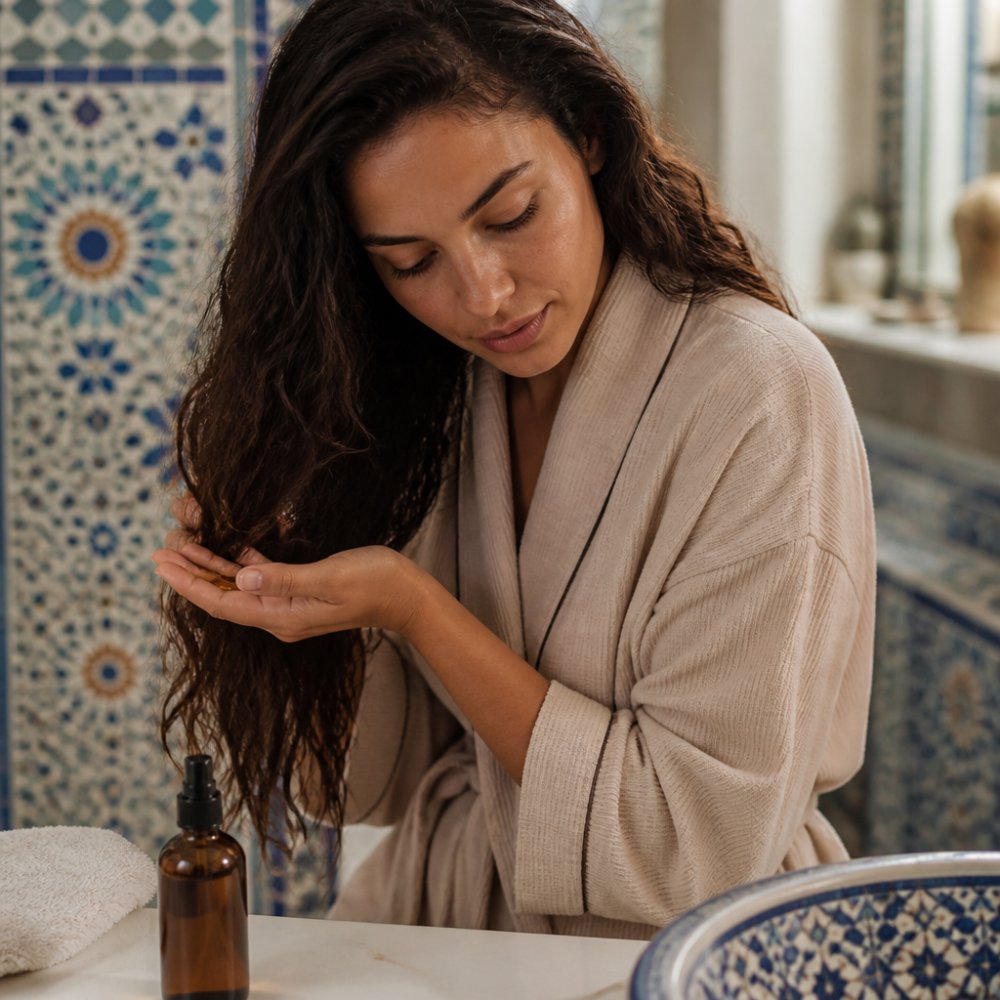
- Step 2: Warm 2-4 drops between your palms. Friction helps the oil spread evenly instead of pooling in one spot.
- Step 3: Begin at the mid-lengths, not the roots. The scalp produces its own natural oils; the ends don't.
- Step 4: Work downward through the ends with a smoothing motion. Avoid scrunching, which encourages the cuticle to lift.
- Step 5: For high-porosity hair, apply to damp hair and layer a second light pass once dry. Low-porosity hair should stay with one application on dry hair only.
- Step 6: Finish with a wide-tooth comb to distribute evenly. No brushing, which causes friction and breakage.
How Much Argan Oil to Use
Most people use too much. Here are starting points based on hair length and texture, not just porosity:
| Hair Type | Starting Amount | Notes |
|---|---|---|
| Fine, shoulder length, low porosity | 1 drop | Add a second only if ends still feel rough |
| Medium, mid-back, normal porosity | 2-3 drops | The most common sweet spot |
| Thick, coarse, high porosity | 3-5 drops | Can layer a second pass on damp hair |
| Curly or coily, any length | 3-6 drops | Apply to soaking-wet hair as part of a leave-in |
Ingredient Compatibility: What Not to Layer With Argan Oil
Pure argan oil plays well with most products, but a few combinations undercut its frizz control:
- Silicone-heavy serums (dimethicone, cyclopentasiloxane): Layering these over argan oil can trap the oil against the shaft and create buildup that dulls shine over time. If you use a silicone serum, apply it first and let it dry, then use argan oil only on the ends.
- Sulfate shampoos: Harsh sulfates strip the oil coating faster than you applied it, so you end up reapplying constantly. A sulfate-free cleanser keeps the smoothing effect intact between washes.
- Heavy butters and creams: Shea butter and thick curl creams can sit on top of argan oil and prevent it from spreading evenly. Apply the lighter product first.
- Alcohol-based styling sprays: Denatured alcohol in hairsprays and setting sprays can dry the cuticle and undo the moisture balance argan oil just restored.
Argan Oil for Curly Hair Frizz: What Changes
Curly hair needs a different approach: curls are naturally drier at the bends, and those bends are exactly where frizz starts.
Argan Oil vs. Other Oils for Frizzy Hair
Argan oil is lighter than most natural oils, which is why it suits fine and medium hair better than heavier options. Here's how the common choices compare.
| Oil | Weight | Best For | Main Drawback |
|---|---|---|---|
| Argan | Light | Fine to medium hair, daily use | Absorbs fast, needs reapplication |
| Coconut | Heavy | Thick, coarse, high-porosity hair | Can leave residue, clogs some scalps |
| Jojoba | Light | Scalp health, oily roots | Less smoothing on the ends |
| Olive | Heavy | Deep pre-wash treatments | Too heavy for leave-in use |
| Grapeseed | Very light | Very fine hair | Weak frizz control on its own |
Choosing Quality Argan Oil: What to Look For
Ingredient quality decides whether argan oil works at all. A diluted blend with silicone fillers coats hair temporarily, then leaves it drier once it washes out. "Pure argan oil" on a front label means little, the back label and production method are where the truth lives.
How to Read an Argan Oil Label Like a Formulator
Check these markers before buying:
- "100% argan oil" or "pure argan oil" on the label, not "argan oil blend" or "with argan oil." The word "with" is a signal that argan oil is a minor ingredient.
- Cold-pressed listed in the production method. Heat processing degrades vitamin E and the antioxidant content that gives argan oil its secondary benefits.
- A single ingredient on the back label, or a short list you recognize. If the first ingredient is cyclopentasiloxane or dimethicone, you are buying a silicone serum with a splash of argan oil.
- Amber or dark glass packaging, which protects the oil from light degradation. Clear plastic bottles let UV light break down the fatty acids.
- A nutty, slightly earthy scent, not a strong perfume. Fragrance is often added to mask the smell of rancid or heavily refined oil.
- A harvest or batch date, not just a "best by" date. Argan oil is perishable; a bottle older than about 18 months has likely lost much of its antioxidant punch.
How to Verify Purity at Home
You do not need a lab to spot a diluted product. Two simple checks:
- The fridge test. Put a small amount in the refrigerator for about 30 minutes. Pure argan oil thickens and turns cloudy but does not fully solidify. A blend with a lot of silicone or mineral oil stays clear and runny.
- The absorption test. Rub a drop into the back of your hand. Pure argan oil absorbs within a minute or two and leaves a soft finish. A diluted product sits on the surface and feels slick or filmy.
What Dilution Actually Does to Your Hair
When argan oil is cut with silicone, the silicone creates immediate slip and shine that mimics the real thing. But silicone isn't water-soluble, so it builds up on the cuticle over repeated use. The cuticle can no longer absorb moisture, and hair becomes drier and more brittle underneath the coating, which is why some people report argan oil "stopped working" after a few weeks.
Sourcing: Why Origin and Pressing Method Matter
Argan oil quality varies by how kernels are pressed and how quickly the oil is bottled. Cold-pressed oil from the first pressing retains the most vitamin E and oleic acid; industrial refining strips those compounds to extend shelf life, which is why refined argan oil is cheaper and less effective for frizz control.
Frequently Asked Questions
Do I apply argan oil to wet or dry hair?
Both work, but the timing changes the result. On damp, towel-dried hair, argan oil spreads more evenly and seals in hydration as the hair dries, which gives better frizz control. On dry hair, use a smaller amount to smooth flyaways and add sheen without weighing strands down. For the strongest humidity resistance, apply a few drops to damp hair before styling, then finish with one drop on dry ends.
Is argan oil good for dry, frizzy hair?
Yes. Argan oil is rich in fatty acids and vitamin E, which help replace some of the moisture dry hair loses and smooth the hair cuticle so strands lie flatter. It absorbs faster than heavier oils, so it hydrates without a greasy film. Pair it with a leave-in treatment on very dry hair, and apply consistently two to three times per week to see steady improvement in manageability and shine.
What are the disadvantages of argan oil for hair?
Overuse is the main issue. Too much oil on fine or low-porosity hair causes a greasy, weighed-down look. Some products labeled argan oil contain mostly silicones and little actual argan oil, which coats hair without nourishing it. Rarely, people with nut allergies react to argan oil, though it is pressed from a seed rather than a true nut. Start with a small amount and patch test first.
How often should you use argan oil on hair?
For frizz control, two to three times per week suits most hair types. Fine or low-porosity hair may only need it once or twice weekly, while thick, curly, or high-porosity hair can handle daily application on the ends. Use it as a leave-in after washing and as a finishing touch on dry days. Adjust based on how your hair feels, not a fixed schedule.