 how-to
What Happens If You Stop Natural Anti-Aging Skincare
Table of Contents
- What Happens When You Stop Using Skincare Products
- Stopping Retinol Effects: What Changes and When
- How Long Does It Take for Skin to Adjust After Stopping Skincare?
- Natural vs. Active Ingredients: Which Benefits Persist
- Dryness, Irritation, and Breakouts: When to Seek Help
- A Simple Skincare Routine for Mature Skin After Stopping Products
- Frequently Asked Questions
Last Updated: October 20, 2026
What Happens When You Stop Using Skincare Products
If you stop natural anti-aging skincare, the first change is usually surface hydration. Your skin loses the moisture layer those products were supplying, and it starts to feel tight and rough within days. At Renaissance de Beaute, we hear this question often: what actually happens when you stop natural anti-aging skincare?
The honest answer is that it depends on what you were using. A simple oil or moisturizer leaves a small gap. A retinol or acid serum leaves a bigger one. Your skin does not "detox" or "reset." It simply returns to its baseline, and your baseline is shaped by age, sun history, and genetics.
The First Two Weeks: Hydration and Surface Changes
The first two weeks are about water loss. Without a daily moisturizer or facial oil, the outer layer holds less moisture, so skin looks duller and feels tighter. Fine flakes can show up around the nose and cheeks.
This phase is mild for most people. It becomes uncomfortable if your routine was doing heavy lifting, like a rich natural moisturizer applied twice daily.
One to Three Months: Collagen and Fine Lines
Collagen changes take longer. Ingredients like retinoids work by nudging skin cell turnover and collagen signaling, and that benefit fades once you stop. Most people notice softer, less firm skin somewhere between one and three months, not overnight.
That timeline is a general pattern, not a rule. Sun exposure and age speed it up. Consistent sun protection slows it down.
Stopping Retinol Effects: What Changes and When
Stopping retinol effects follow a predictable arc. In the first month, skin often looks calmer and less flaky, because the irritation retinol causes is gone. By month two or three, the smoothing and brightness retinol was providing starts to fade. Pores can look larger again, and fine lines look slightly more visible.
Here is what most guides miss: retinol does not cause a rebound. Your skin does not get worse than before you started. It just drifts back toward where it would have been.
Should You Stop Retinol Gradually or All at Once?
Taper if your skin is sensitive. Going from nightly use to nothing can trigger a short burst of breakouts or dryness. Drop to every third night for two weeks, then every fifth night, then stop. If your skin tolerates it easily, stopping cold is fine.
| Product Type | What Fades First | Timeline |
|---|---|---|
| Moisturizer or facial oil | Hydration, softness | 1-2 weeks |
| Retinol serum | Smoothness, tone | 4-12 weeks |
| Vitamin C serum | Brightness | 2-6 weeks |
| Exfoliating acids | Texture, clarity | 2-4 weeks |
| Sunscreen | Nothing (keep using it) | Immediate risk |
How Long Does It Take for Skin to Adjust After Stopping Skincare?
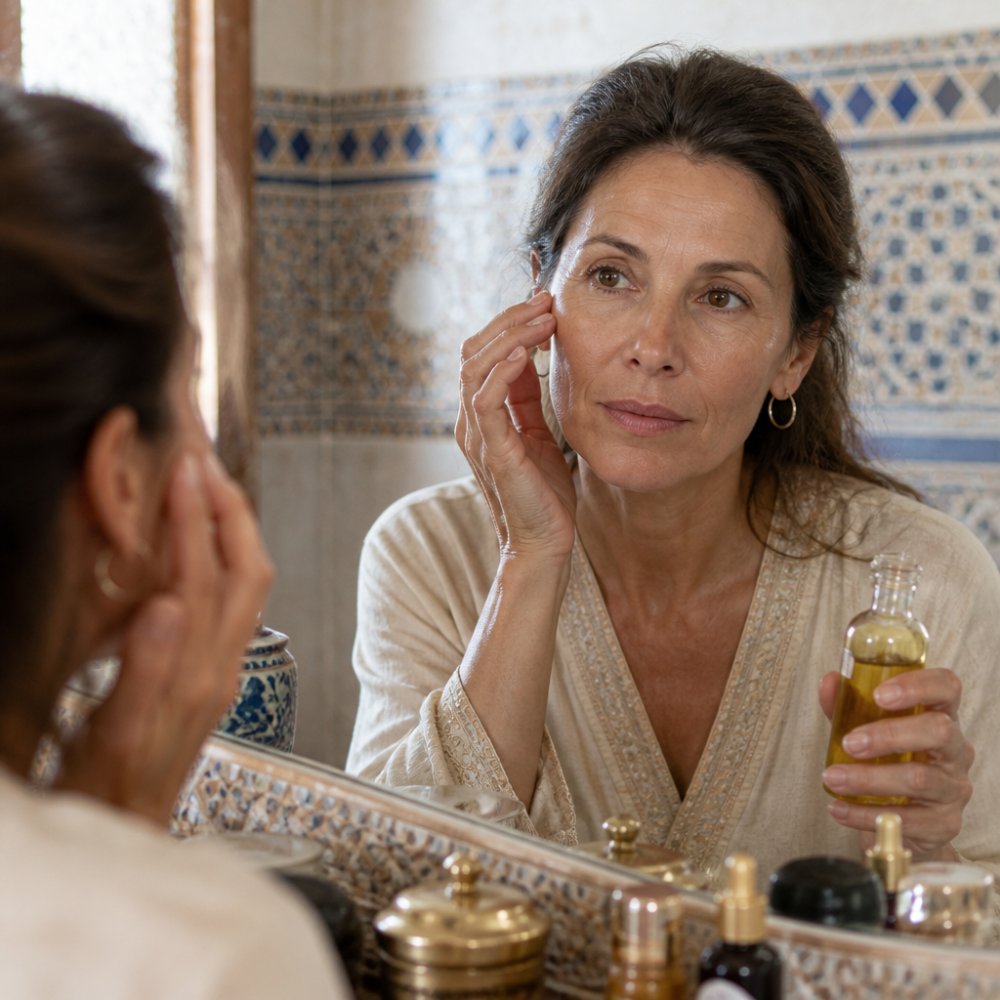
Most people see their skin settle within four to six weeks, but that single number hides the real story. Adjustment is not one event; it is a stack of overlapping timelines, and each product you drop runs on its own clock. The surface cycle, the roughly 28-day turnover of the outer layer, drives the early changes. Barrier lipids rebalance over two to four weeks.
A Product-by-Product Discontinuation Timeline
| Product dropped | What changes first | Typical onset | Temporary or long-term |
|---|---|---|---|
| Moisturizer or facial oil | Tightness, dullness, flaking | 3-10 days | Temporary; barrier rebalances in 2-4 weeks |
| Vitamin C serum | Brightness, even tone | 2-6 weeks | Mostly temporary; tone drifts toward baseline |
| Exfoliating acids (AHA/BHA) | Smoothness, clarity, pore appearance | 2-4 weeks | Temporary texture change; congestion may return |
| Retinol or retinoid alternative | Flaking and redness stop first; smoothing fades later | Calmer in 1-2 weeks; smoothing fades by 8-12 weeks | Long-term drift back toward baseline |
| Sunscreen | Nothing visible, but cumulative UV damage resumes | Immediate, invisible | Long-term and cumulative |
Temporary Adjustment vs. Long-Term Change
The distinction matters because it tells you when to wait and when to act. Temporary changes are surface-level and self-correcting: tightness, mild flaking, a few weeks of unpredictable texture. They resolve as the barrier rebuilds its lipid matrix.
A common pattern is a bumpy middle: weeks three and four often bring a short burst of breakouts or flaking as oil production and turnover re-equilibrate. That middle stretch is rarely permanent. If it persists past six weeks, it is no longer adjustment, it is a signal to reassess.
- Days 1-14: tightness, dullness, possible flaking
- Weeks 3-4: temporary breakouts or texture swings as the barrier rebalances
- Weeks 5-6: barrier stabilizes, surface texture evens out
- Months 2-3: collagen-related changes become visible
- Beyond month 3: what remains is your baseline, shaped by age, sun history, and genetics
Natural vs. Active Ingredients: Which Benefits Persist
Most guides split the world into "natural" and "active," as if the label on the bottle predicts what happens when you stop. It does not. What determines whether a benefit persists is the specific ingredient, its concentration, and how the formula delivers it, not whether the marketing calls it natural. A plant oil and a plant-derived acid can sit on the same shelf and behave nothing alike.
The Label Is Not the Mechanism
"Natural" describes sourcing, not function. Argan oil, shea butter, and squalane are occlusive and emollient: they sit on the surface, slow water loss, and cushion the barrier. Their effect is real but shallow, and it disappears within days of stopping because nothing underneath changed. A naturally derived exfoliating acid, by contrast, alters how dead cells shed, and a naturally derived antioxidant neutralizes free radicals at the surface.
So the useful question is not "natural or active?" but "what job was this product doing?" Group your products by function, not by label.
Which Benefits Persist and Which Require Continued Use
| Function | Example ingredients | What happens when you stop | Requires continued use? |
|---|---|---|---|
| Hydration and barrier support | Plant oils, shea, squalane, glycerin | Dryness and tightness return within days to two weeks | Yes, for comfort |
| Exfoliation and texture | Naturally derived AHA/BHA, fruit enzymes | Smoothness fades over two to four weeks; congestion may return | Yes, for texture |
| Antioxidant protection | Vitamin C, green tea, tocopherol | Surface protection fades over weeks; tone drifts toward baseline | Yes, for tone |
| Visible signs of aging | Retinoids and retinoid alternatives | Smoothing and firmness fade over one to three months | Yes, for firmness |
| UV protection | Broad-spectrum sunscreen | Nothing visible at first, damage accumulates silently | Yes, always |
The one row that behaves differently is sun protection. Stopping sunscreen does not produce a visible change next week; it produces a cumulative one over years. That is why it is the step to keep even in the most minimal routine.
Barrier Support vs. Collagen Stimulation
Barrier support is immediate and fully reversible. Stop your moisturizer and dryness returns within days; restart it and comfort returns just as fast. Collagen signaling is slow and cumulative, and it unwinds slowly too, which is why the firmness you built over months does not vanish overnight, but it does drift back over one to three months.
A realistic expectation: barrier benefits vanish quickly, functional benefits linger for weeks to months, and none of it is permanent. That is not a failure of natural skincare. It is how skin responds to any topical, natural or not.
Dryness, Irritation, and Breakouts: When to Seek Help
Some dryness and mild irritation are normal during the adjustment window. See a dermatologist if you notice:
- Cracking, bleeding, or raw patches
- Swelling, hives, or a spreading rash
- Breakouts that worsen past six weeks
- Any reaction that feels painful
These signs point to something beyond a routine change. A professional can rule out eczema, rosacea, or an allergy. If you would like personalized guidance on rebuilding a routine that suits your skin, our Treatment Consultations are a good place to start.
Signs a Product Has Gone Bad
Expired skincare can cause reactions that look like "your skin freaking out." Check for:
- A changed smell, especially rancid oil
- Separated or grainy texture
- Visible mold or black spots
- Discoloration
- A "use by" date that has passed
Natural products with fewer preservatives have shorter shelf lives. Store oils away from heat and direct sun. If a product looks or smells wrong, discard it. Do not risk a skin reaction to save a bottle.
A Simple Skincare Routine for Mature Skin After Stopping Products
You do not need ten steps. A simple skincare routine for mature skin after stopping products comes down to four moves:
- Cleanse gently. Use a mild cleanser or traditional black soap once daily.
- Hydrate. Apply a natural moisturizer or pure argan oil to damp skin.
- Protect. Wear broad-spectrum sunscreen every morning. This is the one step never to drop.
- Restore occasionally. Add a nourishing mask or oil treatment once or twice a week.
That is enough to support the barrier and slow visible aging without the actives you are stepping away from. Our organic argan treatments fit this minimal approach well, and our team is happy to help you build a routine that suits your skin. If you are restocking, the Renaissance Online Shop carries the oils and moisturizers that make this pared-back routine easy to keep up.
For guidance backed by dermatology guidance on skin barrier function, keep the routine short and consistent. And as FDA sunscreen guidance makes clear, daily sun protection is the most reliable anti-aging step you can take.
Frequently Asked Questions
What happens to your skin when you stop using anti-aging skincare?
Your skin loses the hydration and barrier support those products provided, so dryness and tightness often appear within one to two weeks. If your routine included retinol or other active ingredients, fine lines and texture changes may become more visible over four to twelve weeks as collagen stimulation fades. Natural oils and moisturizers mainly support the skin barrier, so their effects fade faster than active-ingredient results. Most people notice surface changes first, then deeper changes over the following months.
Will wrinkles get worse if you stop using natural skincare products?
Wrinkles will not suddenly worsen overnight, but they may become more noticeable over time. Natural moisturizers and facial oils plump the skin temporarily; when you stop, that plumping effect fades and fine lines look more pronounced. Products with active ingredients like retinol have been shown to support collagen, and stopping them gradually reverses some of that support. The change is gradual, typically over one to three months, not immediate.
Can you stop using face oils without damaging your skin?
Yes, you can stop using face oils without damaging your skin. Facial oils like argan oil mainly seal in moisture and support the skin barrier; they do not cause dependency. When you stop, your skin may feel drier for a week or two until it adjusts. If you have dry or mature skin, replacing the oil with a basic moisturizer can help maintain hydration. There is no withdrawal effect, only a return to your skin's baseline moisture level.
Which skincare steps should you keep if you stop anti-aging products?
Keep three core steps: a gentle cleanser, a moisturizer, and a broad-spectrum sunscreen. Sunscreen is the most important anti-aging product because it prevents further DNA damage and collagen breakdown. If your skin is dry, a natural moisturizer or a few drops of argan oil can replace a more complex routine. A simple skincare routine for mature skin can be as short as three steps and still support skin health. Add back active ingredients only if you have a specific concern.
Stopping natural anti-aging skincare is not a loss. It is a reset, and a chance to build something simpler. The challenge is knowing which steps to keep so your skin stays comfortable and protected. At Renaissance de Beaute, we help you do exactly that with pure organic argan oil, traditional Hammam-inspired cleansers, and spa-quality essentials designed for mature skin. Reach out for personalized guidance and build a routine that works for your skin.