 how-to
Natural Skincare Routine for Pollutant Removal
Table of Contents
- How Environmental Pollution Affects Your Skin
- How to Protect Skin from Environmental Pollution
- Double Cleansing to Remove Makeup, Sunscreen, and Pollutants
- Beldi Black Soap Skincare Routine for Deep Cleansing
- Ghassoul Clay Face Mask for Pollutant Removal
- Gentle Cleansing Routine for Sensitive Skin
- Antioxidants and Hydration: Completing Your Natural Skincare Routine
- Morning and Evening Routines by Skin Type
- Frequently Asked Questions
Last Updated: October 19, 2026
How Environmental Pollution Affects Your Skin
Air pollution, urban pollution, and particulate matter settle on your skin throughout the day, penetrating the skin barrier and triggering oxidative stress.
The damage compounds over time: skin becomes dull, irritated, and prone to premature aging, with earlier fine lines, dark spots, and lost glow.
As pollutants accumulate, barrier function weakens: skin can't retain moisture, inflammation increases, and sensitivity worsens, making skin reactive to products that normally wouldn't cause issues.
The good news: a targeted natural skincare routine for environmental pollutant removal can reverse much of this damage without harsh chemicals. Traditional Moroccan ingredients like Beldi black soap and Ghassoul clay have cleansed deeply and restored skin health for centuries.
How to Protect Skin from Environmental Pollution
Protecting your skin starts with understanding what you're up against. Environmental pollution includes:
- Fine particulate matter (PM2.5 and PM10) from vehicle exhaust, brake dust, and tire wear
- Industrial emissions, smog, and ozone
- Dust and debris tracked in from outdoors
- Free radicals generated when UV exposure interacts with pollutants
- Heavy metals and polycyclic aromatic hydrocarbons (PAHs) in urban air
A realistic definition of pollutant removal. This is the part most routines get wrong. Skincare can do two things: (1) physically wash away particles, oils, and residue sitting on the skin's surface, and (2) reduce oxidative damage through antioxidants and barrier support. Skincare cannot remove pollutants from your body, reverse exposure, or detoxify your system. When a product claims to "detox" or "draw out" pollution from deep within, treat that as marketing language rather than a mechanism.
Reduce exposure before you reach for a product. The most effective anti-pollution step costs nothing:
- Check your local Air Quality Index (AQI) before long outdoor time; on poor-air days, exercise indoors or early morning when ozone is lower.
- Keep windows closed during high-traffic hours and use a HEPA filter indoors if you live near a major road.
- Wash exposed skin (face, neck, hands) soon after coming inside, and shower and wash hair after heavy outdoor exposure, hair holds particulate matter that transfers to your face and pillow.
- Change pillowcases frequently if you sleep with windows open.
The three core skincare strategies, with trade-offs:
- Cleansing to physically remove surface contaminants. The trade-off: over-cleansing strips the barrier and makes skin more reactive. Once or twice daily is enough; more is not better.
- Antioxidant protection to neutralize free radicals. The trade-off: antioxidants degrade with light and air, so packaging and freshness matter, and no serum replaces sunscreen.
- Barrier repair through hydration and nourishing ingredients. The trade-off: a damaged barrier lets more pollutants in, so gentle products beat aggressive ones on high-exposure days.
This framework works for all skin types; only the specific products change. Renaissance de Beaute Argan Treatments products support each step using authentic Moroccan ingredients.
Double Cleansing to Remove Makeup, Sunscreen, and Pollutants
Step 1: Oil-based cleanser (removes makeup, sunscreen, and oil-soluble pollutants)
Use an oil-based cleanser first. Oil dissolves oil.
Step 2: Water-based cleanser (removes water-soluble pollutants and residue)
Follow with a gentle water-based cleanser. This removes any remaining residue, water-soluble pollutants, and dead skin cells. Massage for another 30-60 seconds.
The combination removes what a single cleanser cannot, leaving skin clean without stripping the barrier.
Do this every evening, without exception. In the morning, a single gentle cleanse is sufficient unless you have very oily skin.
Beldi Black Soap Skincare Routine for Deep Cleansing
Beldi black soap is a traditional Moroccan cleansing product, a thick, dark paste of olive oil, potassium hydroxide, and aromatic oils, used in Hammam rituals for centuries because it cleanses deeply without harsh chemicals.
Beldi black soap is ideal for the evening cleanse when you need serious pollutant removal. Here's how to use it:
Application method:
- After your oil-based cleanser, dampen your skin with warm water
- Apply a small amount of Beldi black soap (about the size of a coin)
- Massage gently in circular motions for 2-3 minutes
- Add more water to create a lather
- Rinse thoroughly with lukewarm water
- Pat dry gently
The warmth softens the soap for easier spreading, and the massage removes dead skin cells and surface contaminants.
Use Beldi black soap 3-4 times per week in your evening routine; daily use can over-strip skin, especially sensitive or dry types. On other evenings, use a gentler water-based cleanser.
Ghassoul Clay Face Mask for Pollutant Removal
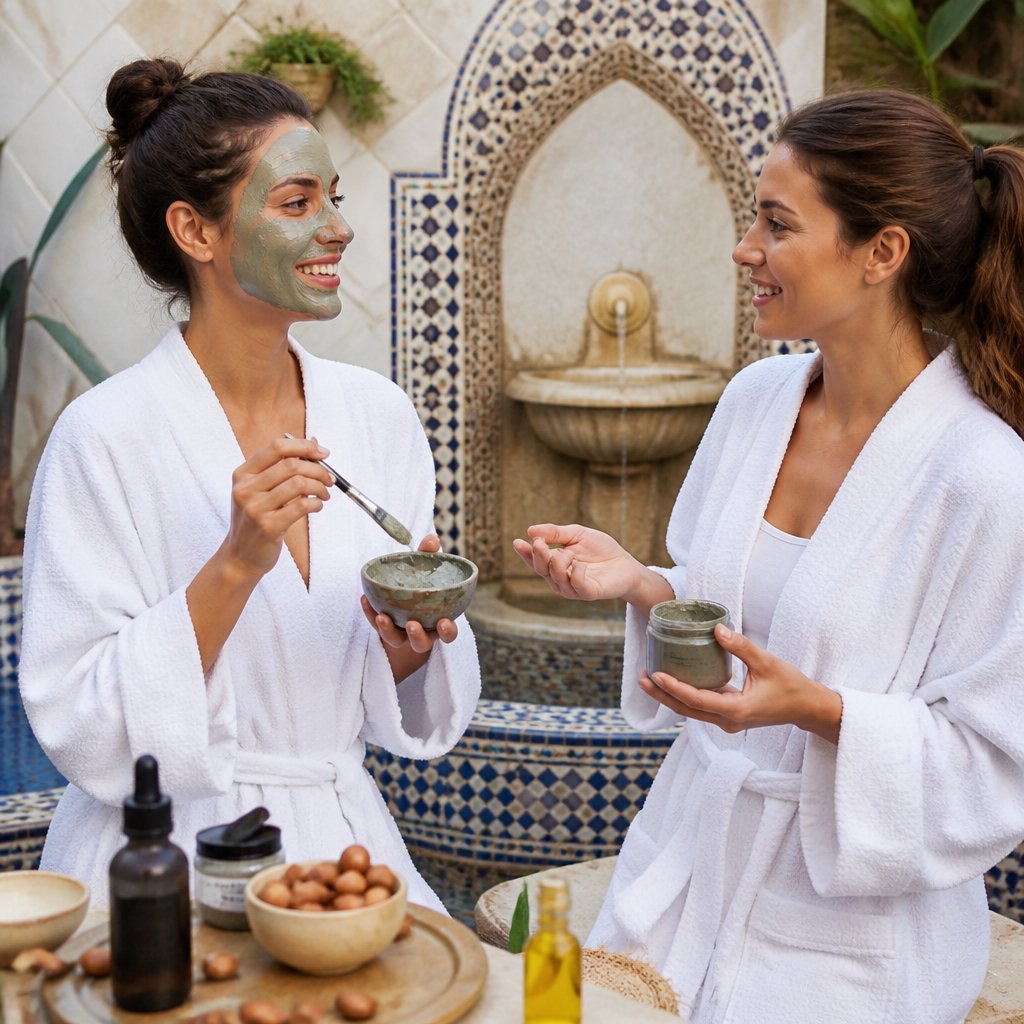
Ghassoul is a mineral-rich clay from Morocco that draws out deep impurities. Unlike harsh clay masks that leave skin tight, it's gentle and balancing, absorbing excess oil and removing embedded pollutants without disrupting the skin barrier.
Use a Ghassoul clay face mask once or twice weekly as a targeted treatment:
How to apply:
- Mix Ghassoul powder with water or rose water until you reach a spreadable paste
- Apply evenly to clean skin, avoiding the eye area
- Leave on for 10-15 minutes as it dries
- Add a few drops of water and massage gently to exfoliate
- Rinse thoroughly with lukewarm water
- Follow with a hydrating serum and moisturizer
Ghassoul removes dead skin cells and trapped pollutants, revealing fresher, softer, more radiant skin. Its minerals balance pH, reduce inflammation, and support recovery after environmental stress, making it ideal for your natural skincare routine for environmental pollutant removal, especially after high-pollution days.
Gentle Cleansing Routine for Sensitive Skin
If you have sensitive skin, aggressive cleansing causes more damage than pollution does. You need a gentler approach that still removes pollutants effectively, using milder products and shorter contact times:
Morning routine:
- Rinse with lukewarm water only, or use a very gentle milk cleanser
- Skip harsh exfoliation
- Apply antioxidant serum (vitamin C if tolerated)
- Use gentle moisturizer with hyaluronic acid for hydration
- Apply mineral sunscreen for UV protection
Evening routine:
- Use a very gentle oil-based cleanser (avoid products with fragrance if possible)
- Follow with a creamy, non-foaming water-based cleanser
- Skip Beldi black soap, use it only once monthly if at all
- Use Ghassoul clay mask only once every 2-3 weeks
- Apply nourishing moisturizer to support barrier repair
For sensitive skin, consistency matters more than intensity: a gentle daily routine outperforms aggressive treatments that cause irritation. Avoid alcohol, fragrance, and essential oils if your skin reacts easily, and look for simple formulations with hyaluronic acid for hydration and niacinamide for barrier support.
Antioxidants and Hydration: Completing Your Natural Skincare Routine
Cleansing removes pollutants from the surface; antioxidants and hydration address the damage already done. Free radicals keep causing oxidative stress even after visible pollutants are gone, so this step matters, but only if you separate what's well-supported from what's wishful.
What the evidence supports, and what it doesn't.
- Well-supported: sunscreen prevents UV damage; gentle cleansing removes surface contaminants; moisturizers and humectants support barrier function; topical vitamin C has reasonable evidence for brightening and antioxidant support.
- Less-supported: claims that a single product "removes" pollution from skin, "detoxifies" the body, or reverses existing exposure damage. No topical product does this. Treat anti-pollution marketing as a bonus, not a mechanism.
Antioxidants, ingredient-level guidance:
- Vitamin C (L-ascorbic acid): The most-studied topical antioxidant. Effective concentrations commonly cited are in the 10-20% range, often formulated at low pH. Caveats: it degrades with light and air (choose opaque, air-restrictive packaging), can sting sensitive skin, and is unstable in water-based formulas over time. If it irritates, a derivative like sodium ascorbyl phosphate is gentler but less potent.
- Niacinamide: Supports the barrier and reduces redness at commonly used concentrations around 2-5%. Well tolerated by most skin types; higher percentages don't necessarily work better and can irritate.
- Green tea extract (EGCG): Calming and antioxidant-rich; best used in fresh formulas since the actives degrade.
- Resveratrol: Antioxidant with reasonable in-vitro support; less clinical evidence than vitamin C, and it is light-sensitive.
Formulation caveats that matter more than the ingredient list:
- Antioxidants are fragile; a serum in a clear jar or dropper bottle loses potency faster than one in opaque, pump, or airless packaging.
- Layer thinnest to thickest: antioxidant serum after cleansing, before moisturizer and sunscreen.
- More is not better, stacking strong actives (vitamin C plus retinoid plus acids) raises irritation risk without proven added benefit.
Hydration supports barrier repair:
Hyaluronic acid is a humectant, it holds water rather than adding oil. Apply hydrating serums while skin is still damp, then seal with a moisturizer; in dry climates, an unsealed humectant can pull moisture from deeper skin, so always layer an emollient or occlusive on top.
A complete natural skincare routine for environmental pollutant removal:
| Step | Product Type | Purpose | Timing |
|---|---|---|---|
| Cleanse | Oil-based or gentle cleanser | Remove surface pollutants | Morning and evening |
| Cleanse | Water-based cleanser | Remove residual contaminants | Evening |
| Treat | Vitamin C or antioxidant serum | Neutralize free radicals | Morning |
| Hydrate | Hydrating serum with hyaluronic acid or glycerin | Support barrier function | Morning and evening |
| Protect | Moisturizer | Lock in hydration | Morning and evening |
| Protect | Sunscreen | Create barrier against UV and pollution | Morning only |
This framework adapts to your skin type. The core principle stays the same: cleanse, protect, repair.
Morning and Evening Routines by Skin Type
Your skin type determines which products work best, but the natural skincare routine for environmental pollutant removal follows the same sequence for everyone.
For oily and combination skin:
Morning:
- Rinse with lukewarm water or use a gentle foaming cleanser
- Apply vitamin C serum
- Apply lightweight hydrating serum
- Use oil-free or gel moisturizer
- Apply mineral sunscreen
Evening:
- Use oil-based cleanser (yes, even for oily skin, it won't make you oilier)
- Follow with gentle water-based cleanser
- Use Beldi black soap 3-4 times weekly
- Apply lightweight hydrating serum
- Use oil-free moisturizer
For dry and sensitive skin:
Morning:
- Rinse with lukewarm water only
- Apply antioxidant serum (if tolerated)
- Apply hydrating serum with hyaluronic acid
- Use rich moisturizer
- Apply mineral sunscreen
Evening:
- Use very gentle oil-based cleanser
- Follow with creamy water-based cleanser
- Skip Beldi black soap or use monthly only
- Use Ghassoul clay mask once every 3 weeks
- Apply rich, nourishing moisturizer
For normal skin:
Morning:
- Gentle cleanser or water rinse
- Apply vitamin C serum
- Apply hydrating serum
- Use lightweight moisturizer
- Apply sunscreen
Evening:
- Oil-based cleanser
- Water-based cleanser
- Use Beldi black soap 2-3 times weekly
- Apply hydrating serum
- Use moisturizer
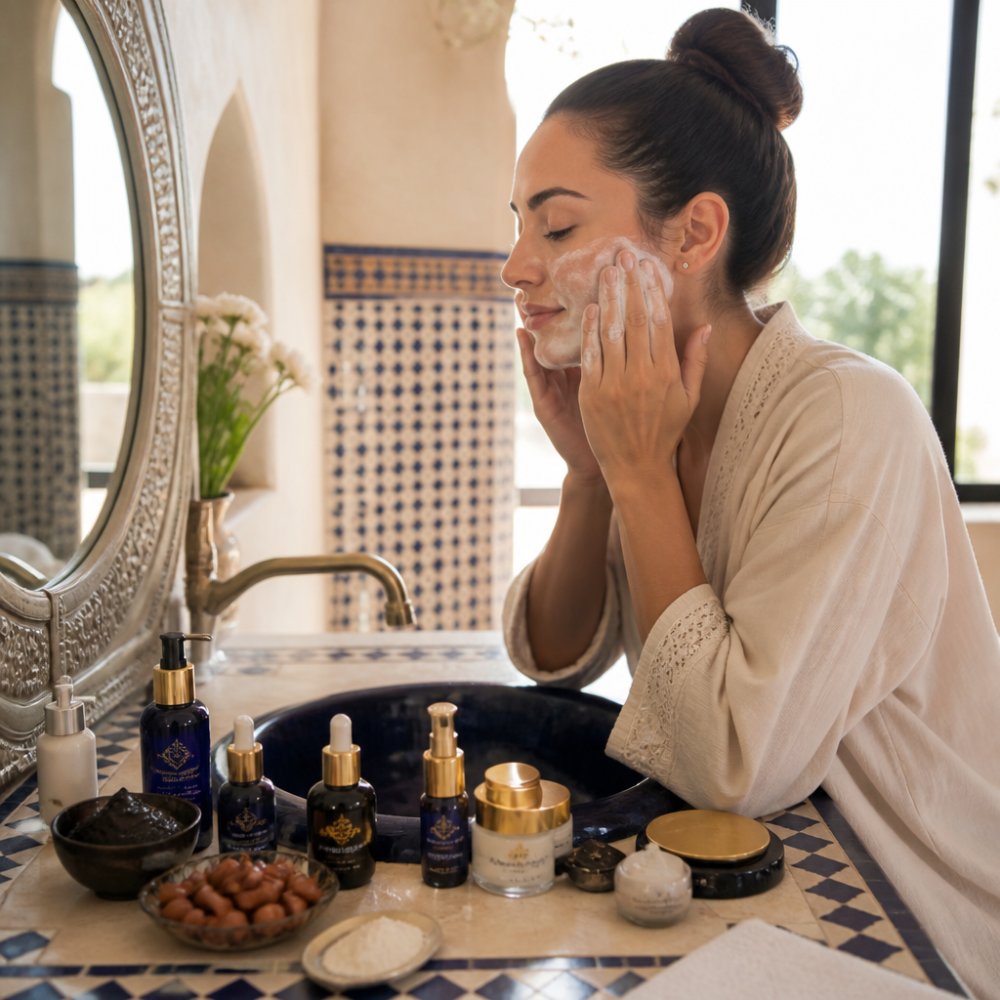
Environmental pollution accelerates aging and damages skin barrier function. A natural skincare routine for environmental pollutant removal addresses this through deep cleansing, antioxidant protection, and barrier repair.
Frequently Asked Questions
Can a natural skincare routine actually remove pollutants from the skin?
A natural skincare routine can effectively remove surface contaminants and particulate matter that accumulate on your skin throughout the day. Double cleansing with oil-based and water-based products, combined with gentle exfoliation, removes makeup, sunscreen, and environmental debris. However, no topical routine prevents all pollution exposure at the cellular level. The goal is consistent cleansing to minimize oxidative stress and support your skin barrier's natural recovery process.
How often should I use Beldi black soap in my skincare routine?
Beldi black soap works best as a weekly or twice-weekly treatment rather than a daily cleanser. Its deep cleansing properties make it ideal for removing accumulated pollutants and dead skin cells, but daily use may over-strip sensitive skin. Start with once weekly, observe how your skin responds, and adjust frequency based on your skin type and pollution exposure level. On non-treatment days, use a gentler daily cleanser.
Is ghassoul clay safe for sensitive skin?
Ghassoul clay is naturally gentle and mineral-rich, making it suitable for most skin types, including sensitive skin. Unlike harsher clay masks, ghassoul removes impurities without excessive drying. If you have reactive or compromised skin, start with a patch test and limit use to once weekly. Always follow with hydrating serum and moisturizer to support your skin barrier. If irritation occurs, discontinue use and consult a dermatologist.
What antioxidants should I look for in a natural skincare routine for pollution protection?
Vitamin C is the most researched antioxidant for neutralizing free radicals caused by environmental pollution and UV exposure. Niacinamide supports skin barrier function and reduces irritation from pollutant exposure. Argan oil contains vitamin E and polyphenols that provide additional antioxidant protection. These ingredients work together to shield your skin from oxidative stress and support recovery after pollution exposure throughout the day.