 how-to
How Long Does Plant-Based Anti-Aging Take to Work?
Table of Contents
- Plant-Based Anti-Aging: What the Evidence Actually Shows
- How Long Does Skincare Take to Work? A Timeline by Outcome
- How to Use Argan Oil on Face for Best Results
- Best Anti-Aging Oils for Face: What to Look For
- How to Assess Progress Consistently
- Safety, Irritation, and Ingredient Interactions
- What to Do If You See No Improvement
- Frequently Asked Questions
Last Updated: October 17, 2026
Plant-Based Anti-Aging: What the Evidence Actually Shows
Most people quit plant-based anti-aging routines too early. They expect a filter-like glow in ten days, see nothing, and toss the bottle. The honest answer: plant-based anti-aging is a slow build, not a quick fix. Visible change usually starts around four weeks and keeps compounding for six months or more.
Here is the part most guides skip. "Plant-based" describes where an ingredient comes from, not how well it works. A botanical extract still needs the right concentration, the right packaging, and steady use to do anything. At Renaissance de Beaute Argan Treatments, we tell customers the same thing we would tell a friend: judge a plant-based routine by consistency and formulation, not by the word "natural" on the label.
Topical Products vs. a Whole-Food, Plant-Based Diet
These are two different tools, and mixing them up causes most of the confusion.
- Topical plant-based skincare works on the skin's surface: hydration, barrier repair, antioxidant defense, tone.
- A whole-food, plant-based diet supports skin from the inside: nutrients that feed repair processes over months.
- One does not replace the other. A perfect diet will not fix a damaged barrier, and a serum will not undo a poor diet.
Topical products act faster because they land where you apply them. Diet changes are slower and broader. If your goal is visible skin change, start topical and treat diet as the long game.
How Long Does Skincare Take to Work? A Timeline by Outcome
Short answer: expect the first hints at two to four weeks, texture and tone shifts by eight to twelve weeks, and firmness or dark-spot changes over three to six months. Skin cells turn over on a roughly four-week cycle, so nothing dramatic happens overnight.
That timeline is general, not a promise. Your age, skin type, sun history, and how faithfully you apply products all shift it. Below is what to realistically watch for at each stage, so you can tell progress from wishful thinking.
One distinction most guides blur: what a study measures is not the same as what you see. Clinical work on botanical actives often reports instrument-measured changes in skin hydration, transepidermal water loss, or elasticity using a corneometer or cutometer. Those numbers can move before your reflection looks different.
Weeks 1-4: Hydration and Barrier Support
This stage is about moisture, not miracles. Plant oils rich in fatty acids, like argan, help soften rough patches and reduce that tight, dry feeling after cleansing.
Instrument studies of plant oils and moisturizing regimens commonly show measurable hydration gains within one to two weeks and reduced water loss by about four weeks. What you will notice in the mirror is subtler: skin feels calmer, looks less flaky, and makeup sits better.
What you likely will not see yet: fewer wrinkles or faded dark spots. Those come later. If your skin feels more comfortable and looks less flaky, the routine is working.
Weeks 4-12: Texture, Tone, and Early Fine-Line Changes
Around the one-to-three-month mark, texture usually smooths out. Pores can look less obvious, and early fine lines may soften as hydration holds steadier. Antioxidant-rich botanical extracts help defend against daily oxidative stress from sun and pollution, think of them as slowing the damage rather than reversing it.
This is where consistency pays off. Skipping days resets the clock. A common mistake is switching products every two weeks, which never gives any formula a fair run.
A realistic read on the evidence: most published trials of plant-derived actives run eight to twelve weeks, and many are small, single-center, or funded by the manufacturer. That does not make the results meaningless, it means treat them as directional.
Weeks 12-24: Firmness, Elasticity, and Dark Spots
Firmness and elasticity changes are the slowest to appear, often taking three to six months of steady use. Dark spots and uneven tone tied to melanin can fade gradually, but sun protection is non-negotiable here. Without daily SPF, pigment work stalls no matter how good the serum is.
Set expectations honestly: plant-based actives support skin renewal, but they are not prescription-strength treatments. Think gradual improvement, not erasure. The difference between a short-term drop in redness or water loss and a lasting change in collagen or pigmentation is the difference between a good month and a real result, and only the second one survives a skipped week.
| Outcome | First Signs | Full Effect | What Drives It |
|---|---|---|---|
| Hydration and barrier | 1-2 weeks | 4 weeks | Plant oils, fatty acids |
| Texture and tone | 4-6 weeks | 12 weeks | Gentle exfoliation, antioxidants |
| Fine lines | 6-8 weeks | 12-16 weeks | Hydration, collagen support |
| Firmness and elasticity | 8-12 weeks | 24 weeks | Consistent actives, sun protection |
| Dark spots and tone | 8-12 weeks | 24 weeks | Antioxidants plus daily SPF |
How to Use Argan Oil on Face for Best Results
Argan oil is the easiest plant-based active to get wrong. Used well, it seals in moisture and softens skin. Used heavily, it can feel greasy and clog pores.
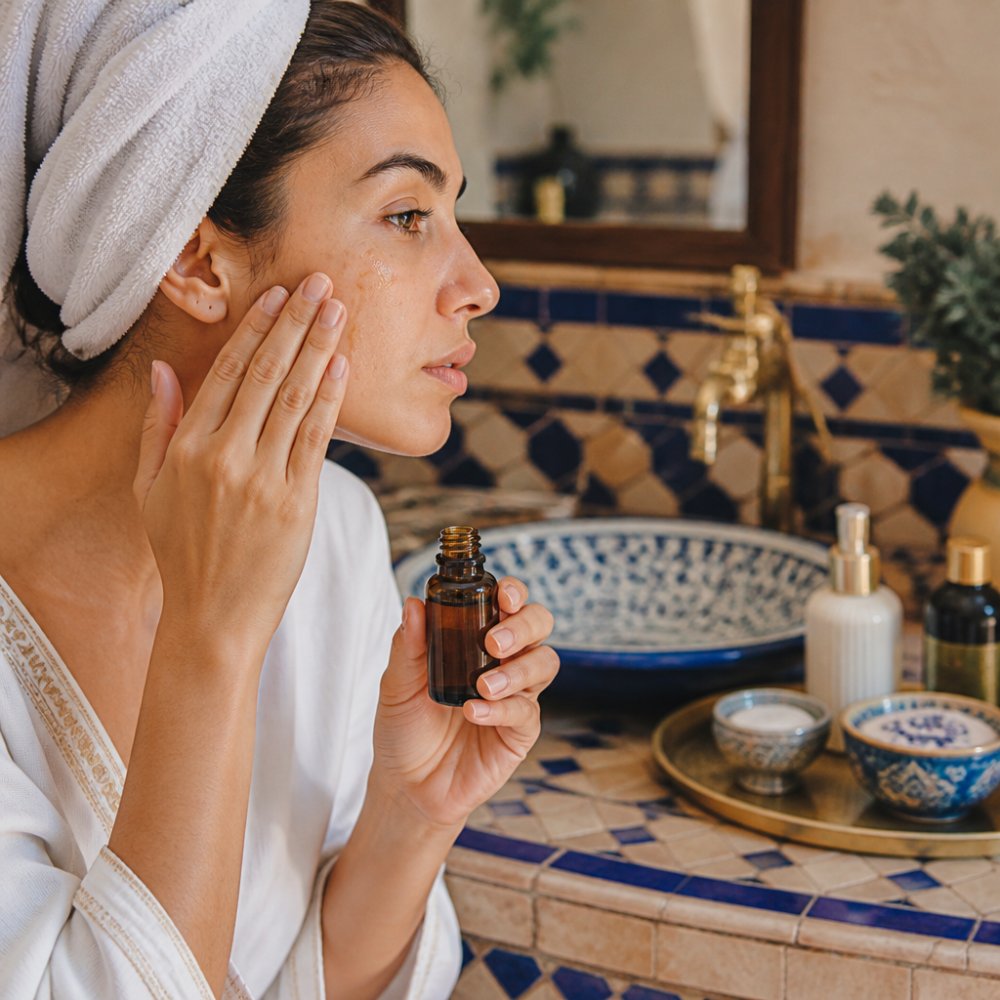
Follow these steps:
- Cleanse and pat dry. Apply to slightly damp skin so the oil locks in water.
- Use three to four drops. Warm them between your palms first.
- Press, do not rub. Gently pat over face and neck, avoiding the eye area.
- Layer it last. Apply after lighter serums, before sunscreen in the morning.
- Start at night. Begin with evening use only, then add mornings once your skin adjusts.
A little goes a long way. More oil does not mean more benefit, just a shinier pillow.
Best Anti-Aging Oils for Face: What to Look For
The best anti-aging oils for face share three traits: a short ingredient list, cold-pressed extraction, and packaging that protects the oil from light and air. Fancy blends with long fragrance lists are usually the weakest performers.
What to check before buying:
- Single-ingredient or minimal blends. Fewer additives means less irritation risk.
- Cold-pressed, unrefined oils. Heat and harsh processing can strip beneficial compounds.
- Dark glass bottles. Light degrades plant oils over time.
- Fatty-acid profile. Oils high in oleic and linoleic acids support the skin barrier.
- No added fragrance or alcohol. Both can trigger redness and irritation.
Plant oils are not all equal. A well-made argan or similar oil does more for barrier function than a cheap blend cut with filler. That is why we focus on pure, organic Moroccan ingredients rather than long ingredient decks, and if you would rather try a few formulas before committing to a full-size bottle, the Renaissance Online Shop is a good place to start.
How to Assess Progress Consistently
Judging progress by memory fails. You will either imagine changes or miss real ones. Build a simple system instead.
- Take a photo every two weeks. Same spot, same light, no makeup.
- Use a simple 1-5 score for hydration, texture, tone, and firmness.
- Log application days. Consistency is the variable you control.
- Check in at 4, 8, 12, and 24 weeks. Compare against the last photo, not your mood.
Safety, Irritation, and Ingredient Interactions
Plant-based does not automatically mean safe for sensitive skin. Botanical extracts can still cause irritation or allergic reactions, and essential oils are a common culprit.
Do this before committing:
- Patch test first. Apply a small amount to your inner forearm for two days.
- Add one product at a time. Wait a week before introducing the next.
- Watch for erythema, itching, or stinging. Stop if redness persists.
- Check interactions. If you use prescription retinoids or acids, space plant oils apart and ask your dermatologist.
- Store oils away from heat and light. Rancid oil irritates skin.
If you are under a dermatologist's care, bring your product list to your next visit. Home routines should support professional treatment, not compete with it.
What to Do If You See No Improvement
No change after eight to twelve weeks of consistent use usually points to one of a few causes, not a broken product. The trick is to diagnose in order rather than overhaul everything at once, most people change five things at the same time and learn nothing.
Work through this sequence, one variable per two-week window:
- Confirm consistency first. Log application days for two weeks. If you missed more than a couple, the routine has not had a fair test yet. Gaps reset progress, and a serum used four days a week is not the same product as one used daily.
- Check your barrier. Over-cleansing, hot water, or stacking harsh actives can leave skin red, tight, or stinging, and a damaged barrier blocks every result downstream. Pause exfoliants for two weeks and see if comfort returns.
- Audit sun protection. Without daily SPF, tone and fine-line gains fade fast. This is the single most common reason pigment work stalls.
- Match the formula to your skin type. A heavy oil may suit dry skin but sit greasy on oily skin, and a rich balm can trigger congestion in acne-prone skin. Texture mismatch reads as "not working" when the issue is fit.
- Check for irritation masquerading as progress. Persistent redness, itching, or new bumps are not a purge, they are a signal to stop the product and patch test again.
- Recognize the limit of topical reach. Deep wrinkles, stubborn melasma, and volume loss are beyond what a plant oil or serum can meaningfully change. That is not a product failure; it is a scope issue.
If nothing shifts after three months of honest consistency, simplify your routine to a cleanser, one active, a moisturizer, and SPF, then reintroduce products one at a time. Sometimes the fix is fewer products, not more. And if you would like help mapping out a realistic timeline for your own skin, a Treatment Consultation can point you in the right direction.
Frequently Asked Questions
How long does plant-based anti-aging skincare take to work?
Most people notice better hydration and a calmer skin barrier within 2 to 4 weeks of consistent use. Changes in skin texture and early fine lines typically appear between 4 and 12 weeks. Firmness, elasticity, and dark spots usually need 12 to 24 weeks because they involve deeper skin renewal. Plant-based anti-aging works gradually, so daily use matters more than any single product.
How often should you use argan oil on your face?
You can use argan oil on your face once or twice daily. For daytime, apply 2 to 3 drops to clean, slightly damp skin before sunscreen. At night, apply it as the last step of your routine to seal in moisture. If your skin is oily or acne-prone, start with once daily at night and adjust based on how your skin responds.
Can plant oils improve the appearance of fine lines?
Plant oils like argan oil can improve the look of fine lines by supporting the skin barrier and boosting moisture retention, which temporarily plumps the skin. Antioxidants in botanical extracts also help protect against oxidative stress from free radicals. These effects are gradual and modest, so expect softer-looking lines over 8 to 12 weeks rather than dramatic wrinkle removal.
Can you use plant-based oils with retinol?
Yes, many people layer plant-based oils with retinol, but timing matters. Apply retinol first, wait a few minutes, then follow with a plant oil to reduce dryness and irritation. Some oils, especially those high in oleic acid, may increase penetration and irritation, so start with a patch test. If you have sensitive skin, alternate nights instead of layering both.