
 ultimate-guide
Is Pure Argan Oil Safe for Sensitive Skin?
Table of Contents
- What Makes Pure Argan Oil Different for Sensitive Skin
- Argan Oil Comedogenic Rating and What It Means for Your Face
- Key Benefits of Argan Oil for Skin Health
- How to Use Argan Oil for Sensitive Skin
- Argan Oil Patch Test for Face: A Step-by-Step Protocol
- Potential Side Effects and When to Avoid Argan Oil
- Sourcing and Purity: How to Choose a Safe Argan Oil
- Final Verdict on Argan Oil for Reactive Skin
- Frequently Asked Questions
Last Updated: September 7, 2026
What Makes Pure Argan Oil Different for Sensitive Skin
Pure argan oil is a cold-pressed botanical oil from Moroccan argan tree kernels, prized for its essential fatty acids, vitamin E, and phenolic compounds. For sensitive skin, whether is pure argan oil safe for sensitive skin depends on purity, molecular composition, and interaction with a compromised barrier. A single-ingredient oil eliminates synthetic fragrance, preservatives, and alcohols that often trigger reactions.
Sensitive skin typically has a weakened lipid barrier, causing water loss and reactivity; pure argan oil replenishes those lipids directly. Responses vary, so a structured introduction protocol is essential.
Argan Oil Comedogenic Rating and What It Means for Your Face
The comedogenic rating of argan oil is low, typically scored at 0 to 1 on the standard 5-point scale, meaning it has a very low likelihood of clogging pores. For those with sensitive, acne-prone skin, this is reassuring, but the rating only tells part of the story. A low score indicates the oil's molecular structure allows dermal absorption without blocking follicles, yet it does not guarantee zero irritation for every individual.
Some oils with low comedogenic ratings still trigger breakouts in certain people due to individual skin chemistry. The fatty acid profile of argan oil, rich in linoleic acid and oleic acid, supports sebum regulation and barrier repair, which is why dermatologists often recommend it for dry, flaking, or compromised skin. However, those with a history of fungal acne or severe cystic breakouts should approach any oil with caution and professional guidance.
Key Benefits of Argan Oil for Skin Health
Argan oil benefits extend beyond moisturization, offering antioxidants that combat oxidative stress. High vitamin E acts as a free-radical scavenger, while phenolic compounds provide anti-inflammatory effects that soothe redness and irritation.
Argan oil acts as an emollient and occlusive agent, reducing water loss and reinforcing the moisture barrier. Unlike heavier oils, it penetrates the stratum corneum, delivering fatty acids that support cell membranes. For aging sensitive skin, it maintains elasticity and softens fine lines without the stinging of retinol or alpha-hydroxy acids.
How to Use Argan Oil for Sensitive Skin
Applying argan oil correctly matters as much as choosing the right product. Use two to three drops warmed between the palms, then press gently onto damp skin rather than rubbing.
- Cleanse your face with a gentle, fragrance-free cleanser and pat dry, leaving the skin slightly damp.
- Warm two to three drops of pure argan oil between your fingertips.
- Press the oil into your face and neck using light, upward motions, avoiding the eye area.
- Follow with a moisturizer if your skin requires additional hydration, or use the oil as the final step at night.
- Start by using the oil every other evening, then gradually increase to nightly application if no adverse reactions occur.
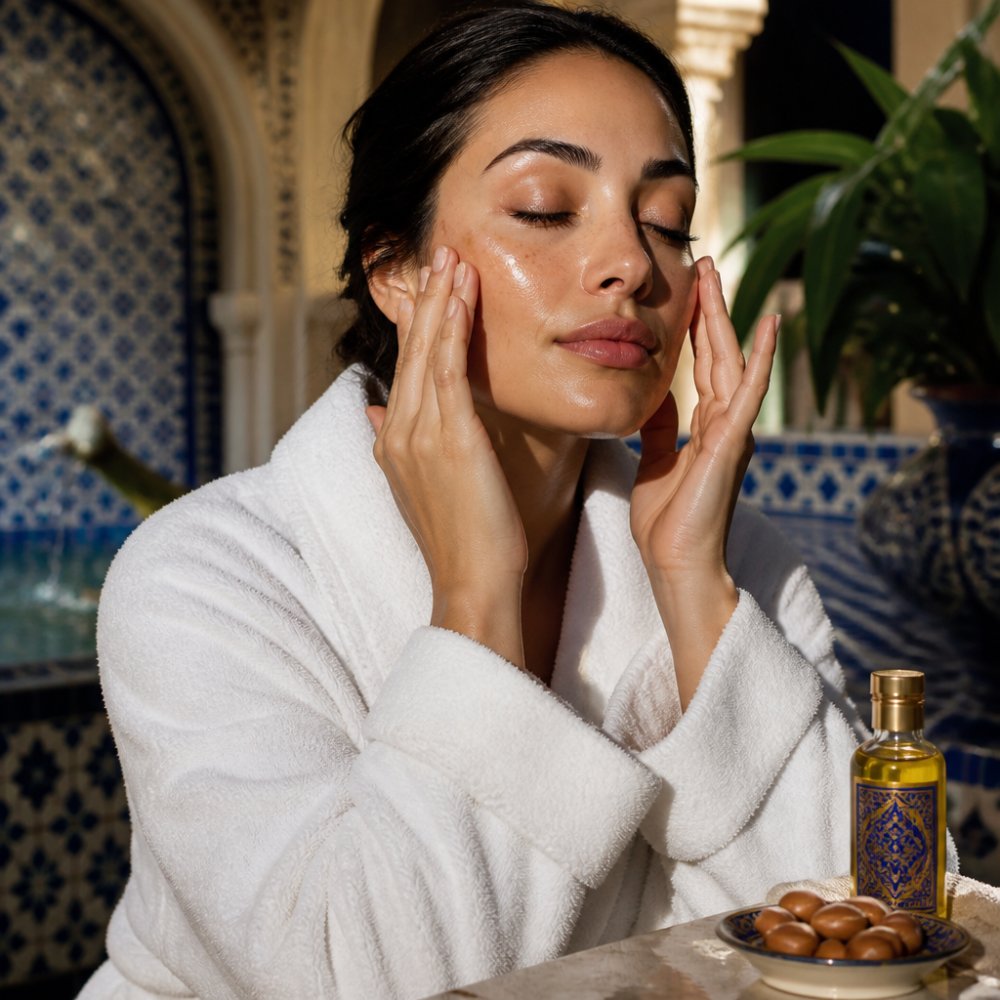
Introduce argan oil in the evening when skin repair is most active. Morning use under sunscreen is acceptable, but very reactive skin should start with nighttime application only to isolate the oil as the sole new variable.
Layering Argan Oil with Active Ingredients
How argan oil interacts with other products is a critical safety factor. Application order and active ingredients can enhance benefits or trigger irritation.
Safe to Layer:
- Hyaluronic Acid Serums: Apply your hyaluronic acid serum to damp skin first, allow it to absorb for 60 seconds, then seal it in with argan oil. The oil's occlusive properties trap the humectant's moisture, enhancing hydration without added irritation.
- Gentle Moisturizers: Argan oil can be mixed with a few pumps of your regular fragrance-free moisturizer to boost its barrier-repairing fatty acid content. This dilution method is often better tolerated by very reactive skin than using the oil alone.
- Sunscreen: In the morning, apply argan oil as the final skincare step before sunscreen. The oil creates a smooth base and does not interfere with mineral or chemical UV filters.
Proceed with Caution:
Contact Us for Personalized Spa Packages →
- Retinoids (Retinol, Tretinoin): If you use a prescription retinoid, apply it at night, wait 20 to 30 minutes for it to fully absorb, and then apply argan oil. This buffer layer can help mitigate the dryness and flaking often associated with retinoid therapy. However, do not mix the two products together, as the oil can alter the retinoid's penetration rate and increase the risk of irritation.
- Alpha Hydroxy Acids (AHAs) and Beta Hydroxy Acids (BHAs): On nights you use a chemical exfoliant, skip the argan oil or apply it only after the acid has completely dried. Layering an oil over a damp acid-treated face can enhance penetration, leading to stinging or redness.
Avoid Combining:
- Benzoyl Peroxide: This ingredient is highly oxidizing. When combined with a pure oil like argan oil, it can degrade the oil's beneficial fatty acids and generate free radicals, potentially causing inflammation on sensitive skin. Use benzoyl peroxide in the morning and argan oil at night, or on alternate days.
- Other Heavy Oils: Avoid layering argan oil over heavier, more occlusive oils like coconut oil or mineral oil. This can create an overly thick barrier that traps heat and sebum, potentially leading to clogged pores or milia, especially for those with reactive, acne-prone skin.
If you are using multiple prescription topicals, consult your dermatologist before adding argan oil to your routine. They can provide specific guidance on the order of application based on your unique treatment plan.
Argan Oil Patch Test for Face: A Step-by-Step Protocol
An argan oil patch test for face application is the most reliable way to determine tolerance before full-face use. Even hypoallergenic oils can provoke reactions in highly sensitive individuals, so this step is never optional.
- Cleanse a small area of skin, such as the inner forearm or behind the ear, and allow it to dry completely.
- Apply a single drop of pure argan oil to the test area and gently massage it in.
- Leave the oil on for 24 hours without washing the area, covering it with a bandage if necessary to prevent rubbing.
- Monitor the site for any signs of redness, itching, swelling, or burning sensation.
- If no reaction appears after 24 hours, apply the oil to a small patch on your jawline or cheek for an additional 48 hours.
- Only proceed with full-face application if both test phases produce no adverse reactions.
If any reaction occurs, discontinue use and wash the area with lukewarm water. Persistent symptoms warrant a dermatologist consultation, especially with diagnosed eczema or rosacea.
Potential Side Effects and When to Avoid Argan Oil
Pure argan oil is generally well-tolerated, but those with tree nut allergies should avoid topical application unless cleared by an allergist, as argan oil comes from a nut-producing tree.
Irritation can occur if the oil is rancid, contaminated, or blended with additives. Genuine argan oil has a subtle, nutty aroma; a bitter or burnt smell indicates oxidation that can trigger inflammation. Those using prescription retinoids, benzoyl peroxide, or topical antibiotics should consult their dermatologist first, as interactions may alter absorption or efficacy.
Avoid argan oil entirely with active weeping eczema, severe acne with open lesions, or a known allergy to its components. When in doubt, professional patch testing provides the most definitive answer.
Sourcing and Purity: How to Choose a Safe Argan Oil
Choosing a safe argan oil requires scrutiny of sourcing and purity, since not all products labeled "pure" meet the same standards. Authentic cold-pressed oil should list a single ingredient, Argania Spinosa Kernel Oil, with no added fragrance, preservatives, or carrier oils.
Sourcing indicators to look for include:
- Cold-pressed extraction, which preserves heat-sensitive nutrients like vitamin E and phenolic compounds
- Unrefined or minimally filtered oil, retaining its natural golden color and characteristic nutty scent
- Dark glass packaging to protect against light degradation
- Transparent sourcing information, ideally from Moroccan cooperatives or ethical producers
- Certifications for organic farming practices, which reduce the risk of pesticide residue
The price of authentic, cold-pressed argan oil reflects the labor-intensive process of cracking and pressing the kernels by hand. Excessively cheap oils are often diluted with cheaper seed oils or chemically extracted using solvents, both of which can irritate sensitive skin. At [Renaissance de Beaute Argan Treatments(https://www.instagram.com/renaissance_beaute_/) | renaissancedebeaute.net], we emphasize that sourcing transparency is the first line of defense against adverse reactions.
Reading the Label: A Checklist for Reactive Skin
A detailed label-reading protocol is essential for sensitive-skin users. This checklist helps identify a genuinely safe product:
Contact Us for Personalized Spa Packages →
- Ingredient List: The product must list only one ingredient: Argania Spinosa Kernel Oil. If you see any additional ingredients, including tocopherol (vitamin E) added as a preservative, it introduces a new potential allergen.
- Extraction Method: Look for the terms "cold-pressed" or "first cold-pressed." Avoid products that list "hexane" or "solvent extraction" anywhere on the label or the manufacturer's website. Solvent-extracted oils retain chemical residues that can trigger contact dermatitis.
- Processing Claims: The label should say "unrefined" or "virgin." Refined argan oil is often deodorized and bleached, stripping away the very antioxidants that provide anti-inflammatory benefits. A refined oil will be nearly colorless and odorless, whereas a true unrefined oil has a warm golden hue and a mild, nutty aroma.
- Fragrance and Additives: The label must explicitly state "fragrance-free" or "no added fragrance." Even "natural" essential oils like lavender or rose can be potent irritants for sensitive skin. If the product has a strong scent, it is likely adulterated.
- Packaging: The oil should come in a dark amber or cobalt blue glass bottle. Clear plastic or glass allows UV light to penetrate, accelerating oxidation. Avoid any product sold in a jar that requires dipping fingers into the oil, as this introduces bacteria and moisture.
Preventing Oxidation: The Hidden Safety Factor
Sensitive skin also reacts to rancid oils. Oxidation occurs when unsaturated fatty acids are exposed to oxygen, light, or heat, breaking down into pro-inflammatory compounds. Rancid argan oil can cause redness, itching, and breakouts even if it was pure at purchase.
- Shelf Life: Unopened, cold-pressed argan oil typically lasts 18 to 24 months from the production date. Once opened, it should be used within 6 to 12 months. Always check for a "best by" or "production" date on the bottle.
- Storage Conditions: Store your argan oil in a cool, dark cabinet away from the stove, dishwasher, or any heat source. The bathroom is acceptable if it is not subject to high humidity and steam from showers. Refrigeration is not necessary but can extend freshness; if you refrigerate it, the oil may become cloudy, which is normal and does not affect quality.
- Signs of Rancidity: Trust your senses. Fresh argan oil has a mild, nutty, slightly sweet aroma. If it smells bitter, burnt, or like old cooking oil, it has oxidized. The texture may also become sticky or tacky. Discard the oil immediately if you notice these signs.
Following this checklist and strict storage protocols significantly reduces the risk of introducing an oxidized or adulterated product to sensitive skin.
Final Verdict on Argan Oil for Reactive Skin
Pure argan oil is generally safe for sensitive skin when authentically sourced, properly stored, and introduced via gradual patch testing. Its non-comedogenic nature, linoleic acid content, and antioxidants make it valuable for barrier repair and hydration, especially for dry or aging reactive skin.
However, "safe" is not a universal guarantee. Individual skin chemistry, existing allergies, and concurrent treatments all influence how your skin responds. The low incidence of adverse reactions reported in dermatological literature on botanical oils supports its use as a gentle moisturizer, yet the American Academy of Dermatology guidance on patch testing reminds us that any new topical product carries some risk for those with heightened sensitivity.
For most reactive-skin users, the rewards, reduced water loss, improved elasticity, calmed inflammation, outweigh risks when approached methodically. Respect your skin's signals, start slowly, and choose a trustworthy product from grove to shelf.
Choosing the right skincare for sensitive skin requires patience, education, and products you can verify. At Renaissance de Beaute Argan Treatments, we offer authentically sourced, cold-pressed Moroccan argan oil designed for those who refuse to compromise on purity. Our Renaissance Online Shop provides access to our curated collection, while our Treatment Consultations offer personalized guidance for your unique skin concerns. Contact us to build a routine that nurtures your skin without the guesswork.
Frequently Asked Questions
Do dermatologists recommend argan oil for sensitive skin?
Many dermatologists consider pure argan oil a safe option for sensitive skin because of its high content of essential fatty acids and vitamin E. Its non-comedogenic rating of 0 means it is unlikely to clog pores. However, as with any new product, dermatologists advise a patch test before applying it to your entire face to confirm your skin tolerates it without irritation.
What is the disadvantage of argan oil?
The main disadvantage is the risk of an allergic reaction, although it is rare. Some people with a nut allergy may also react to argan oil since it comes from the argan tree kernel. For sensitive skin, the biggest concern is using a low-quality or adulterated product with added fragrances or other irritants, which is why 100% pure, cold-pressed oil is essential.
Is cold-pressed argan oil better for sensitive skin?
Yes, cold-pressed argan oil is generally better for sensitive skin. This extraction method preserves more of the beneficial antioxidants, tocopherols, and fatty acids without using heat or chemicals that can degrade the oil's quality. A pure, cold-pressed oil is also less likely to contain residues from processing, making it a gentler and more effective choice for reactive skin.
Can argan oil clog your pores?
No, pure argan oil has a comedogenic rating of 0, meaning it is non-comedogenic and does not clog pores. Its high linoleic acid content can actually help regulate sebum production, which is beneficial for acne-prone skin. This makes argan oil a rare oil that can moisturize deeply without leaving a heavy or pore-clogging residue, even for those with sensitive or combination skin.