 how-to
How to Start a Plant-Based Anti-Aging Regimen (2026)
Table of Contents
- What You'll Need Before You Start a Plant-Based Anti-Aging Regimen
- Step 1: Build Your Three-Step Anti-Aging Skincare Routine
- Step 2: Choose Natural Anti-Aging Skincare Ingredients That Match Your Concern
- Step 3: Add Argan Oil for Face to Your Morning and Night Routine
- Step 4: How Long Does It Take to See Results From a Skincare Routine?
- Step 5: Personalize Your Regimen by Skin Type, Age, and Concern
- Common Mistakes to Avoid With a Plant-Based Anti-Aging Regimen
- Conclusion: Your First Two Weeks
- Frequently Asked Questions
Last Updated: October 13, 2026
What You'll Need Before You Start a Plant-Based Anti-Aging Regimen
Starting a plant-based anti-aging regimen comes down to five product types and one honest label check. Get those right and everything else in this guide falls into place.
Below, we'll walk you through a sequenced starter routine, morning and night, plus the ingredient swaps that actually matter for mature skin. By the end, you'll know exactly what to buy and in what order to use it.
The Five Product Categories That Cover Every Skin Type
You don't need a shelf full of bottles. You need one from each category:
- Gentle cleanser to lift dirt without stripping
- Hydrating serum for water-based moisture
- Facial oil to seal and soften
That's it. Five categories, one product each. Everything else is optional.
How to Read a Label and Spot Real Plant-Derived Ingredients
Flip the bottle over. Ingredients are listed by weight, so the first five names tell you most of the story.
Look for recognizable plant names: argan oil, almond oil, rosewater, oats, honey, cocoa, avocado. If the first five ingredients are water, alcohol, silicone, and fragrance, you're paying for packaging.
A common mistake is trusting the front label. "Botanical" and "natural" are marketing words, not regulated claims. The back label is the honest one.
Step 1: Build Your Three-Step Anti-Aging Skincare Routine
A three-step anti-aging skincare routine works because it's repeatable. Most people quit complicated routines within a month, so simplicity is the real anti-aging strategy.
Morning: Cleanse, Treat, Protect
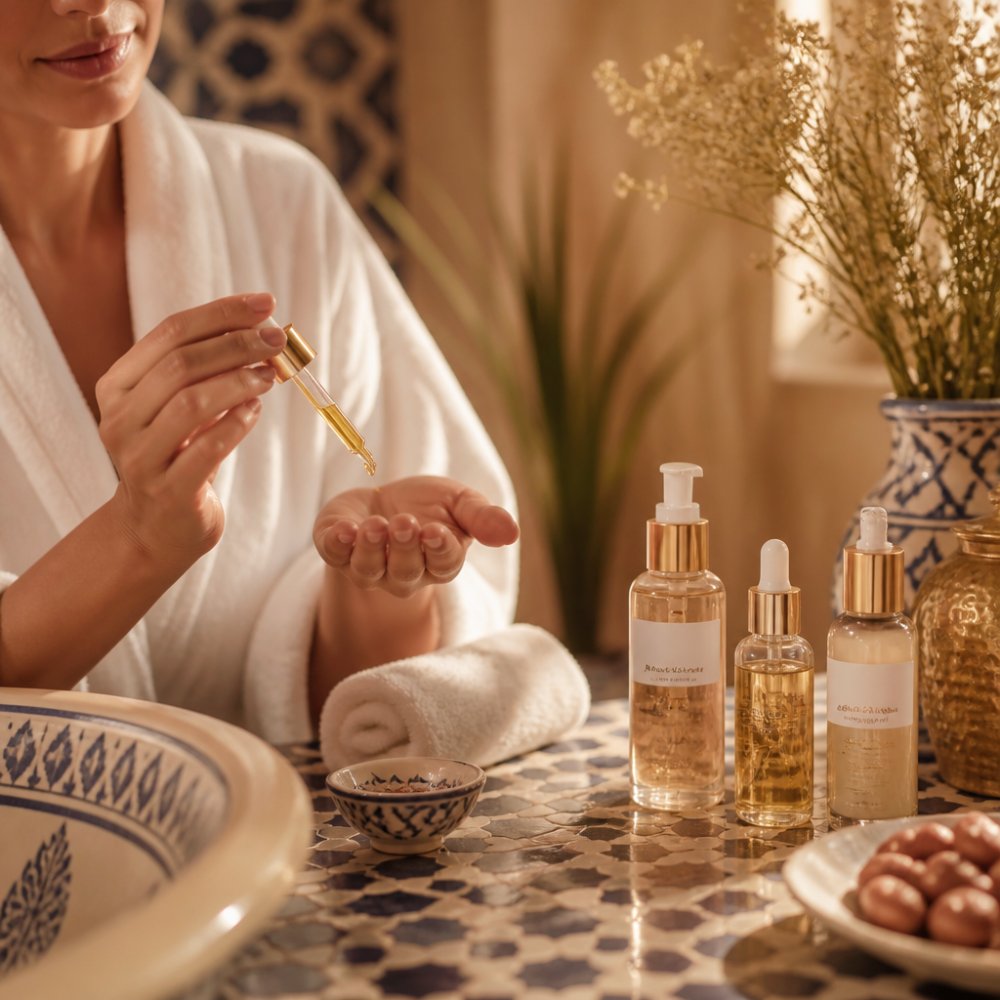
Keep mornings short. Rinse with lukewarm water or a gentle cleanser, then apply a hydrating serum while skin is still damp. Finish with sun protection.
Sun protection is the single most effective anti-aging step you can take. The American Academy of Dermatology's sun protection guidance recommends broad-spectrum SPF 30 or higher every day, even when it's cloudy.
Night: Cleanse, Repair, Seal
Nights are for repair. Cleanse away the day, apply your serum, then seal everything with a facial oil or night cream.
This is where plant oils earn their place. They sit on top of the skin and slow water loss overnight, which is when skin does most of its recovery work.
Step 2: Choose Natural Anti-Aging Skincare Ingredients That Match Your Concern
Match the ingredient to the problem, not to the trend. Natural anti-aging skincare ingredients work best when they target one concern at a time.
Here's how we'd pair them:
| Your Main Concern | Ingredient to Look For | How to Use It |
|---|---|---|
| Dryness and tightness | Argan oil, almond oil | Nightly, as your last step |
| Fine lines and dullness | Antioxidant-rich botanical extracts | Morning serum, before SPF |
| Redness and sensitivity | Oats, rosewater, honey | Cleanser or soothing mask |
| Loss of firmness | Hydrating serums plus facial oil | Twice daily, consistently |
Antioxidants matter here. They help defend skin against everyday environmental stress, which is one of the drivers of visible aging. The Linus Pauling Institute's overview of antioxidants explains how these compounds work in the body.
One ingredient won't fix everything. A short, consistent routine beats a long, sporadic one.
Step 3: Add Argan Oil for Face to Your Morning and Night Routine
Argan oil for face is the easiest upgrade you can make, and it suits nearly every skin type. It's rich in fatty acids and vitamin E, so it softens dry patches and supports the skin barrier.
Here's how we'd use it:
- Warm two to three drops between your palms
- Press gently into cheeks, forehead, and jawline
- Follow with moisturizer in the morning, or use it last at night
- Start with once daily if your skin is oily
Our pure organic Argan Oil is cold-pressed and unrefined, which keeps more of the natural vitamin E intact.
If you're building a full routine, our Renaissance Online Shop carries the oils and cleansers we mention here.
Step 4: How Long Does It Take to See Results From a Skincare Routine?
Most people see early changes in two to four weeks, with more visible results by eight to twelve weeks. That timeline is normal, and it's why so many routines get abandoned too soon. But not all changes are equal, and knowing which results are realistic, and which aren't, will save you from chasing the wrong thing.
What Changes First, and Why
Hydration improves first. Skin feels softer and looks less dull within a couple of weeks because humectants like glycerin and hyaluronic acid pull water into the top layers of skin.
Barrier support comes next. Plant oils rich in fatty acids, argan, almond, jojoba, sit on top of the skin and slow water loss overnight.
Fine lines and skin tone take longer, because they reflect changes deeper in the skin.
What Plant-Based Skincare Can and Can't Do
Here's an honest split:
- Plausible with consistent use: better hydration, softer texture, less visible dryness, a calmer look to reactive skin, and a modest improvement in the appearance of fine lines caused by dehydration.
- Possible but slower: gradual improvement in uneven tone, especially when paired with daily sun protection.
- Not realistic from topical products alone: rebuilding lost collagen, reversing deep wrinkles, or replacing procedures a dermatologist performs.
A lot of marketing blurs these lines. Traditional use of a botanical ingredient is not the same as clinical evidence that it changes skin structure. When you read a claim, ask whether it describes hydration and appearance, or a structural change. The first is common; the second is rare from a jar.
Two Things That Slow Results Down
- Switching products every week, which never gives any single product a fair trial
- Skipping sun protection on cloudy days, which undoes much of the benefit of everything else
How to Actually Track Change
Take a photo on day one in the same light, at the same time of day, with the same expression. Repeat every four weeks. Memory is unreliable, and photos are the only honest way to see whether anything is shifting.
Give any new routine a full eight weeks before you judge it. If nothing has changed by twelve weeks, adjust one variable, not all of them at once.
Step 5: Personalize Your Regimen by Skin Type, Age, and Concern
One routine doesn't fit everyone. Skin type, age, and your main concern should all shape what you use, how much, and how often. Below are decision paths you can follow, plus a gradual introduction schedule so you don't overwhelm your skin in week one.
Start With Your Skin Type
- Dry or mature skin: cream or oil cleanser, a hydrating serum with glycerin or hyaluronic acid, a richer moisturizer, and facial oil every night. Cleanse once in the morning with lukewarm water only if your skin feels tight after washing.
- Oily or combination skin: gel or foaming cleanser, a lightweight water-based serum, a lotion rather than a cream, and facial oil two to three nights a week instead of every night. Skip heavy butters on the T-zone.
- Sensitive or reactive skin: fragrance-free everything, short ingredient lists, and no more than one new product at a time. Choose oat, rosewater, or colloidal oatmeal-based cleansers over anything with essential oils.
Then Layer In Your Main Concern
- Fine lines and dullness: an antioxidant-rich serum in the morning before sun protection. Vitamin C from botanical sources, green tea extract, and grapeseed extract are common choices.
- Uneven tone or dark spots: daily broad-spectrum sun protection is the non-negotiable first step. Add a niacinamide or licorice root extract serum if your skin tolerates it.
- Loss of firmness: hydration plus consistency. No topical product rebuilds collagen on its own, but well-hydrated skin looks plumper and reflects light better.
Adjust by Age Band
- 30s: focus on sun protection, antioxidants, and sleep. This is the decade where daily SPF pays off most.
- 40s: add a hydrating serum and a nightly facial oil. Skin's oil production drops, so barrier support matters more.
- 50s and beyond: gentler is better. Cream cleansers, richer moisturizers, and consistent nightly oil outperform harsh exfoliants used sporadically.
Introduce New Products Gradually
A common pattern is to add everything at once and then blame the routine when skin reacts. Instead:
- Week 1-2: cleanser, moisturizer, and sun protection only. Let your barrier settle.
- Week 3-4: add the hydrating serum in the morning.
- Week 5-6: add facial oil at night.
- Week 7+: add one targeted serum for your main concern.
Patch test each new product on your inner forearm for two nights before it touches your face. If you feel stinging, burning, or itching, stop and wait a week before trying anything new.
Common Mistakes to Avoid With a Plant-Based Anti-Aging Regimen
The biggest mistake is treating "plant-based" as a guarantee of safety. Natural ingredients can still irritate sensitive skin, so patch testing isn't optional.
Other traps we see often:
- Layering too many actives at once
- Skipping SPF because the products feel gentle
- Buying based on scent instead of ingredients
Patch test on your inner forearm for two nights before using anything on your face. It costs you nothing and saves a lot of regret.
Also worth knowing: if you're under a dermatologist's care, tell them what you're using.
Conclusion: Your First Two Weeks
Your first two weeks are about building the habit, not chasing results. Cleanse, treat, protect in the morning. Cleanse, repair, seal at night. That's the whole plan.
If you want a starting point built on authentic Moroccan ingredients, our Treatment Consultations can help you match products to your skin.
Start simple, stay consistent, and let your skin do the rest.
Frequently Asked Questions
What is a simple three-step anti-aging skincare routine?
A three-step anti-aging skincare routine is cleanse, treat, protect. In the morning, wash with a gentle cleanser, apply an antioxidant serum, then finish with a moisturizer and sunscreen. At night, cleanse again, apply a treatment oil or serum, and seal with a richer cream. Three steps done consistently beat ten steps done occasionally, and each step has one job: remove buildup, deliver active plant-based anti-aging ingredients, and lock in hydration.
Which plant-based ingredients can support mature-looking skin?
Natural anti-aging skincare ingredients include argan oil for fatty acids and vitamin E, rosewater for gentle toning, oats for soothing irritation, avocado oil for deep moisture, cocoa butter for barrier support, and botanical extracts rich in antioxidants. Honey and almond oil also appear in traditional formulas. Look for short ingredient lists where the plant oil or extract sits near the top, and patch test anything new on your inner forearm for 24 hours before using it on your face.
Can argan oil be used in an anti-aging skincare routine?
Yes. Argan oil for face works as both a treatment and a sealant. Press two to three drops into damp skin after cleansing at night, or mix one drop into your moisturizer in the morning. Its vitamin E and fatty acid content supports the skin barrier, which helps with fine lines and rough texture over time. If your skin is oily, start with one drop at night only and adjust based on how your skin feels the next morning.
How long does it take to see results from a skincare routine?
Hydration and glow can improve within one to two weeks. Skin texture and tone typically shift around four to six weeks, which matches the skin's renewal cycle. Fine lines and wrinkles respond more slowly, often eight to twelve weeks of consistent use. Take a photo in the same light every Sunday so you can compare honestly. If nothing changes after three months of daily use, simplify your routine or speak with a dermatologist.