
 how-to
Natural Hair Care Routine for Dry Scalp: 7 Steps
Table of Contents
- Start With a Dry Scalp Diagnosis, Not a Product
- Dry Scalp vs Dandruff: How to Tell Them Apart
- The Best Hair Wash Routine for Dry Scalp
- How to Moisturize Your Scalp Naturally Between Wash Days
- How to Use Oils and Home Remedies Safely
- Dry Scalp Treatment for 4C Hair and Protective Styles
- Your Weekly Dry Scalp Routine Schedule
- Conclusion
- Frequently Asked Questions
Last Updated: October 18, 2026
Start With a Dry Scalp Diagnosis, Not a Product
A flaky, itchy scalp is not a shopping problem. The natural hair care routine for dry scalp that finally works is the one built around what is actually happening on your scalp, not around the newest bottle on the shelf.
Below, we walk through the exact steps we would follow, from telling dryness apart from dandruff to building a wash-day schedule you can keep.
Here is the part most guides get wrong: dry scalp and dandruff look alike but need opposite approaches. Treating one like the other can make things worse. So before you buy anything, learn to read the signs.
Dry Scalp vs Dandruff: How to Tell Them Apart
Dry scalp is a lack of moisture on the skin, while dandruff is a buildup of dead skin cells often linked to oil and a naturally occurring yeast. They feel similar but respond to different care.
Getting this distinction right is the single most useful thing you can do. The American Academy of Dermatology on scalp flaking notes that flaking has several causes, and matching your routine to the cause matters more than the number of products you use.
Signs That Point to Dry Scalp
- Small, dry flakes that look like powder
- Tightness or itchiness, worse in cold, dry weather
- Flakes that fall easily and are white or gray
Signs That Point to Dandruff or Seborrheic Dermatitis
- Larger, greasy, yellowish flakes
- Oily scalp with flakes that cling to hair
- Red, inflamed patches, sometimes with itching
If you see redness, crusting, or sores, that is your cue to see a dermatologist. Dry scalp care at home will not fix a condition that needs medical attention.
The Best Hair Wash Routine for Dry Scalp
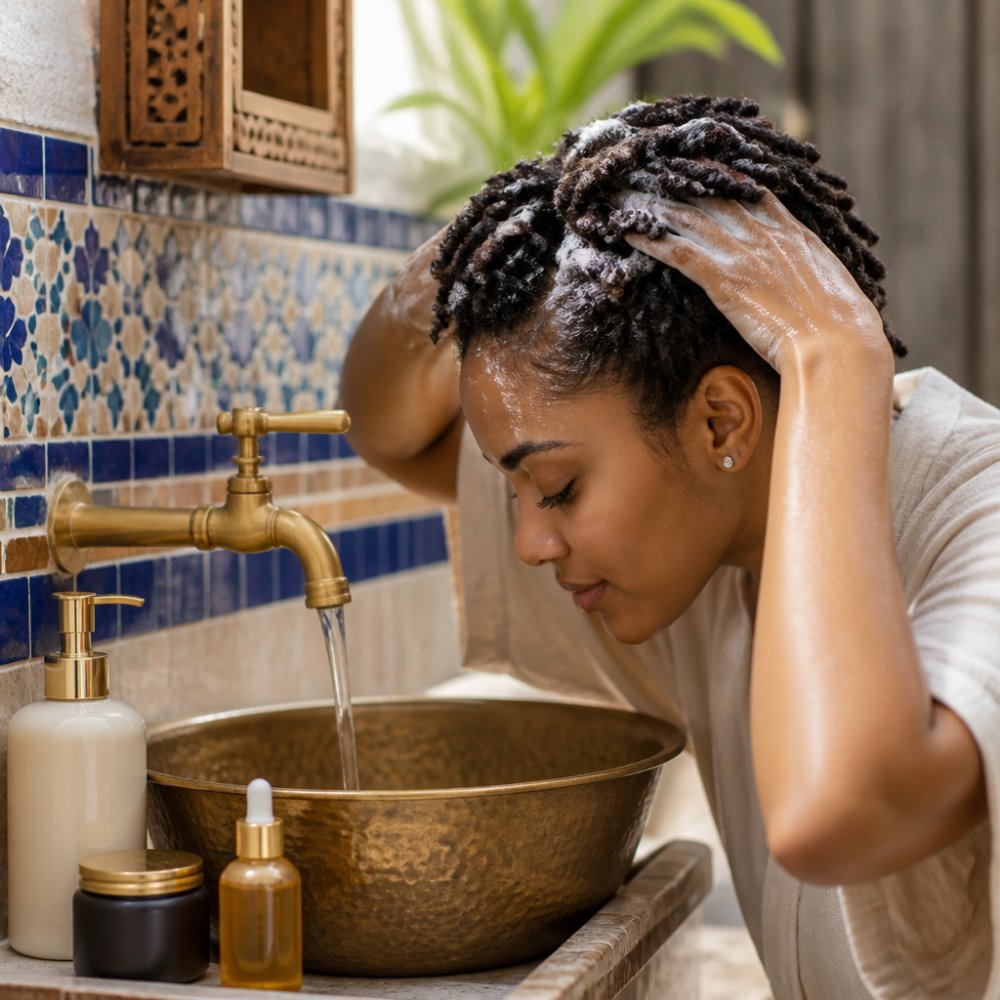
The best hair wash routine for dry scalp is gentle and infrequent: pre-treat before water, cleanse with a mild shampoo, and follow with deep conditioning. This protects your scalp's natural oils instead of stripping them.
Step 1: Pre-Treat and Detangle Before Water
- Section dry hair and gently detangle with your fingers or a wide-tooth comb.
- Apply a light oil to the scalp and ends, then wait 20 to 30 minutes.
- Use lukewarm water only. Hot water strips moisture and worsens tightness.
Step 2: Cleanse Gently, Then Condition Deeply
- Dilute a gentle, moisturizing shampoo and massage it into the scalp with fingertips.
- Rinse fully, then apply a deep conditioner from mid-shaft to ends.
- Leave it on for the time on the label, then rinse with cool water.
- Skip harsh clarifying shampoos unless you have real product buildup.
How to Moisturize Your Scalp Naturally Between Wash Days
To moisturize your scalp naturally between washes, apply a small amount of a light oil or a water-based leave-in to the scalp, then seal it in. The goal is hydration without buildup.
- Light oil massage: a few drops, worked in with fingertips, two to three times a week.
- Water-based leave-in: apply to damp scalp, then seal with a thin layer of oil.
- Scalp massage: a few minutes daily boosts circulation and helps distribute natural oils.
Many people find that a simple oil-and-massage habit beats a shelf full of products. Consistency matters more than quantity.
How to Use Oils and Home Remedies Safely
Oils and home remedies can help a dry scalp, but only when used correctly. Too much oil, the wrong oil, or an undiluted essential oil can trigger buildup, irritation, and a cycle of itching that looks like dryness but is actually a reaction.
Patch Test Before You Commit
Before applying any new oil, essential oil, or remedy to your scalp, patch test it. Apply a small amount to the inner forearm or behind the ear, wait 24 to 48 hours, and check for redness, itching, or swelling. A common pattern is for a reaction to appear hours after application, so do not skip the waiting period. If you have a diagnosed scalp condition or sensitive skin, ask a dermatologist before starting a new remedy.
Dilution Rules for Essential Oils
Essential oils are concentrated and should never go on the scalp undiluted. A widely used guideline is to keep essential oils at roughly 1 to 2 percent of a carrier oil blend for scalp use. In practical terms, that is about 6 to 12 drops of essential oil per 1 fluid ounce (about 30 mL) of carrier oil. For a first trial, stay at the lower end.
Which Oils Suit a Dry Scalp
- Jojoba oil: close to the scalp's own sebum, absorbs well, and is a good default for between-wash moisture.
- Argan oil: lightweight and rich in fatty acids, useful for both scalp and ends without heaviness.
- Olive oil: heavier; best as a pre-wash treatment that gets shampooed out rather than left in.
Application Amounts That Prevent Buildup
A few drops per section is enough. For a full scalp, start with about a teaspoon of carrier oil total, parted into sections and massaged in with fingertips. More oil does not mean more moisture; it means more residue that can trap flakes and clog follicles. If your scalp feels greasy or itchy the day after oiling, you used too much or the oil was too heavy for you.
What the Evidence Says About Popular Remedies
Some home remedies have modest support, and others are mostly folklore. Aloe vera and diluted apple cider vinegar are popular for soothing; use them sparingly and patch-test first. Vinegar should be diluted (a common starting point is one part vinegar to several parts water) and kept away from broken skin. Lemon juice is often recommended but is acidic and can irritate; it is not a substitute for treatment.
When Oils Make Things Worse
If your flakes are greasy and yellowish, or if oiling increases itching and buildup, you may be dealing with dandruff or seborrheic dermatitis rather than simple dryness. In that case, adding oil can feed the problem. Stop the oil, cleanse gently, and consider whether a medicated shampoo or a dermatologist visit is the better next step.
Dry Scalp Treatment for 4C Hair and Protective Styles
Dry scalp treatment for 4C hair needs extra care because tight coils and protective styles limit how often you can wash and moisturize. The routine shifts toward prevention.
- Under braids and twists: use a nozzle bottle to apply diluted leave-in to the scalp, not the hair.
- Under wigs: let the scalp breathe and cleanse it regularly between installs.
- Before installing: deep condition and moisturize so the scalp starts hydrated.
- Loosen tight styles: tension causes irritation that mimics dryness.
Coarse and coily hair holds moisture less easily, so sealing with a light oil after hydration is key. A Cleveland Clinic overview of dry scalp is a useful plain-language reference for what causes tightness and flaking.
Your Weekly Dry Scalp Routine Schedule
A simple weekly schedule keeps a dry scalp calm without over-washing or over-oiling. The schedule below is a starting point; adjust it to your hair type, activity level, and how often you wash. The key is consistency, not intensity.
The Weekly Plan
| Day | Action | Frequency |
|---|---|---|
| Wash day | Pre-treat, gentle cleanse, deep condition | Once weekly, or every 7 to 10 days |
| Day 2 | Light scalp oil massage with a few drops | 2 to 3 times weekly |
| Mid-week | Water-based leave-in to damp scalp, then seal | As needed |
| Before styling | Moisturize, then seal with light oil | Every install or restyle |
| Monthly | Gentle exfoliation if buildup appears | As needed, not on a fixed schedule |
If You Wash More Often
If you wash every 3 to 4 days, you do not need a separate mid-week leave-in; your wash-day conditioning is doing the work. Focus on a gentle, moisturizing shampoo and a deep conditioner each wash, and keep oiling to a light massage the day after washing. Over-washing with a harsh shampoo is a common cause of tightness, so the shampoo matters more than the frequency.
If You Wash Less Often
If you wash every 2 weeks or longer, between-wash moisture becomes the main job. Use a water-based leave-in on a damp scalp, then seal with a light oil. A nozzle bottle helps you reach the scalp under protective styles without disturbing the hair. If your scalp feels tight or itchy before wash day, add a light oil massage rather than waiting.
Between-Wash Days Under Protective Styles
- Under braids and twists: use a nozzle bottle to apply diluted leave-in to the scalp, not the hair, then seal with a light oil.
- Under wigs: let the scalp breathe and cleanse it regularly between installs.
- Before installing: deep condition and moisturize so the scalp starts hydrated.
- Loosen tight styles: tension causes irritation that mimics dryness, so give the scalp a break between tight styles.
How to Adjust the Schedule
If your scalp feels tight, add moisture. If it feels greasy or itchy with buildup, cleanse sooner or reduce the amount of oil. If flaking persists after several weeks of consistent care, or if you see redness, crusting, or sores, that is your cue to see a dermatologist rather than add more products.
Conclusion
A dry, flaky scalp can feel like a losing battle, especially when every product promises a fix. The real answer is a gentler routine: diagnose first, cleanse softly, moisturize between washes, and use oils with care.
At Renaissance de Beaute Argan Treatments, we craft pure organic Argan oil and traditional Hammam-inspired essentials designed to support exactly this kind of care. Explore our Renaissance Online Shop to build a routine rooted in authentic Moroccan ingredients, or book a Treatment Consultation for personalized guidance on what suits your scalp best.
Frequently Asked Questions
How often should you wash your hair if you have a dry scalp?
For most natural and textured hair, washing once every 7 to 10 days works well for a dry scalp. That interval lets you remove product buildup and dead skin without stripping the scalp every few days. If your scalp feels tight or itchy sooner, add a mid-week water rinse and a light moisturizing mist instead of a full shampoo session. Oily scalps or heavy styling product use may need washing every 5 to 7 days. Adjust based on how your scalp feels, not a fixed rule.
Can natural oils help moisturize a dry scalp?
Oils can reduce water loss from the scalp and ease tightness, but they do not add water on their own. Apply them to slightly damp scalp after cleansing so they seal in moisture rather than sit on dry skin. Jojoba and argan oil absorb well and suit most scalps; coconut oil works for many people but can clog pores for some. Use a small amount, two to three times a week, and stop if you notice bumps or increased itching.
How can you tell the difference between dry scalp and dandruff?
Dry scalp flakes are small, white, and dry, and they often come with tightness or itchiness after washing. Dandruff flakes are larger, yellowish, and greasy, and they tend to cling to the hair and scalp. Dandruff also often involves redness and responds to anti-fungal ingredients, while dry scalp improves with moisture and gentler cleansing. If flaking persists after several weeks of moisturizing care, or you see redness and swelling, see a dermatologist.
When should you see a dermatologist about a dry scalp?
Book an appointment if flaking and itching last more than four to six weeks despite a consistent gentle routine, if you notice redness, swelling, crusting, or open sores, or if hair thinning appears alongside scalp symptoms. Sudden severe itching, scalp pain, or symptoms that spread to your face and ears also warrant professional care. A dermatologist can distinguish seborrheic dermatitis, psoriasis, and contact dermatitis from simple dryness and prescribe treatment that home care cannot match.