 listicle
Best Essential Oils for Itchy Scalp Relief
Table of Contents
- Understanding Itchy Scalp: Causes and Why Essential Oils Help
- Top Essential Oils for Itchy Scalp Relief
- Essential Oil Dilution Ratios for Scalp Safety
- The Importance of Carrier Oils in Scalp Treatment
- How to Treat Dry Scalp Naturally with Essential Oil Blends
- Benefits of Argan Oil for Itchy Scalp Relief
- Safety Considerations and Contraindications
- Frequently Asked Questions
Last Updated: September 23, 2026
Understanding Itchy Scalp: Causes and Why Essential Oils Help
An itchy scalp can stem from dandruff, seborrheic dermatitis, dry scalp conditions, or product sensitivity. The best essential oils for itchy scalp relief offer a natural alternative to conventional treatments.
Essential oils address itching through antifungal, antibacterial, anti-inflammatory, and circulation-boosting properties. The key is selecting the right oil and using it safely with proper dilution.
Essential oils are concentrated plant compounds with therapeutic potential, but potency requires respect. Undiluted oils can irritate skin, making proper dilution, patch testing, and carrier oils non-negotiable.
Top Essential Oils for Itchy Scalp Relief
The following oils have earned their reputation through consistent use and reported benefits. Each addresses itchy scalp through different mechanisms.
Tea Tree Oil for Antifungal and Antibacterial Relief
Tea tree oil is highly researched for scalp conditions, with compounds that fight fungal and bacterial growth.
Undiluted tea tree oil can cause burning, redness, or contact dermatitis, so dilution is essential. When properly mixed with a carrier oil, it becomes a powerful yet gentle treatment.
Peppermint Oil for Cooling and Stimulating Relief
Peppermint oil delivers an immediate cooling sensation that soothes itching and stimulates blood flow to the scalp, potentially promoting hair growth. Menthol content is responsible for both effects.
The sensation can feel intense for newcomers. Start with 1-2 drops per tablespoon of carrier oil to acclimate.
Application frequency matters here.
Lavender Oil for Soothing Inflammation
Lavender is the gentler option for itchy scalp relief, excelling at reducing inflammation and calming irritated skin without the intensity of tea tree or peppermint. It works well for sensitive scalps prone to allergic reactions.
Lavender's regenerative properties support scalp healing and promote a relaxing aromatherapy experience.
Lavender alone may not be potent enough for severe fungal conditions like seborrheic dermatitis; it works best for mild itching or as part of a blend with stronger oils.
Rosemary Oil for Scalp Circulation and Health
Rosemary oil stimulates blood flow to the scalp, improving nutrient delivery and addressing itching from poor scalp health. It also balances sebum production for both dry and oily scalps.
Mild tingling indicates increased circulation; if uncomfortable, reduce concentration or frequency.
Cedarwood Oil for Balancing Dry, Flaky Scalps
Cedarwood oil regulates sebum production and supports a healthy scalp microbiome, addressing underlying imbalances in dry, flaky scalps. It has a calming, grounding aroma.
Contact Us for Personalized Spa Packages →
Cedarwood's strong earthy scent requires conservative use; dilute at 1-2 drops per tablespoon of carrier oil.
Essential Oil Dilution Ratios for Scalp Safety
Dilution is not optional, it's the foundation of safe essential oil use. Undiluted essential oils are too concentrated for skin application and can cause irritation, sensitization, or allergic reactions. Understanding proper ratios prevents these problems entirely.
Safe Dilution Guidelines
A standard dilution ratio for scalp treatments is 2-3% essential oil concentration (12-18 drops per ounce). Beginners should start at 1% (6 drops per ounce) and increase once tolerance is confirmed.
Here's a practical breakdown:
| Carrier Oil Amount | 1% Dilution | 2% Dilution | 3% Dilution |
|---|---|---|---|
| 1 tablespoon (15 ml) | 3 drops | 6 drops | 9 drops |
| 2 tablespoons (30 ml) | 6 drops | 12 drops | 18 drops |
| 1/4 cup (60 ml) | 12 drops | 24 drops | 36 drops |
Never exceed 3% dilution for scalp treatments unless directed by a practitioner. Some oils like cinnamon or clove require lower dilutions due to heating properties.
When blending multiple oils, total drops must respect the dilution percentage. A 2% blend might contain 4 drops each of tea tree, lavender, and rosemary per ounce of carrier oil.
Patch Testing Before Full Application
Patch testing identifies sensitivities before full scalp application. Apply a dime-sized amount behind your ear or on your wrist, wait 24 hours, and observe for redness, itching, or burning.
If no reaction occurs, the blend is safe for scalp application. Patch testing reveals individual sensitivities to specific oils.
The Importance of Carrier Oils in Scalp Treatment
Carrier oils dilute essential oils to safe concentrations while providing therapeutic benefits. Choosing the right carrier oil enhances treatment effectiveness and safety.
Jojoba oil closely mimics scalp sebum, allowing deep absorption without residue.
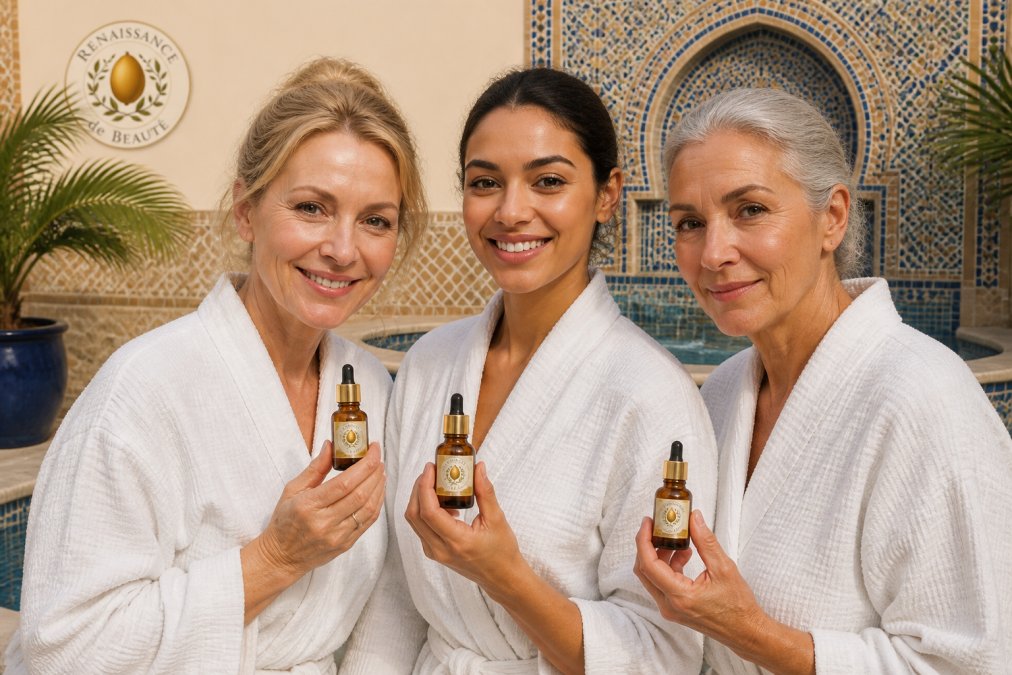
Argan oil from Renaissance de Beaute Argan Treatments is particularly beneficial for scalp health. Rich in essential fatty acids and vitamin E, authentic Moroccan argan oil nourishes while supporting scalp balance and suits both dry and sensitive scalps.
Always blend essential oils with a carrier oil first. The carrier ensures safety, extends benefits across the scalp, and reduces waste.
How to Treat Dry Scalp Naturally with Essential Oil Blends
Homemade blends offer control over ingredients, cost savings, and customization for your specific needs.
Creating Your Own Scalp Treatment Oil
Choose a carrier oil base (jojoba, argan, or fractionated coconut oil) and measure into a clean 2-ounce dark glass bottle for storage and light protection.
Add essential oils according to your dilution ratio. For a 2-ounce bottle at 2% dilution, add 12 drops total. Here's a balanced dry, itchy scalp blend:
- 4 drops tea tree oil
- 4 drops lavender oil
- 2 drops rosemary oil
- 2 drops cedarwood oil
Mix thoroughly by shaking the bottle for 10-15 seconds. Label your blend with the date and ingredients. Store in a cool, dark place away from direct sunlight. Most blends remain potent for 3-6 months.
Contact Us for Personalized Spa Packages →
Application Methods for Different Hair Types
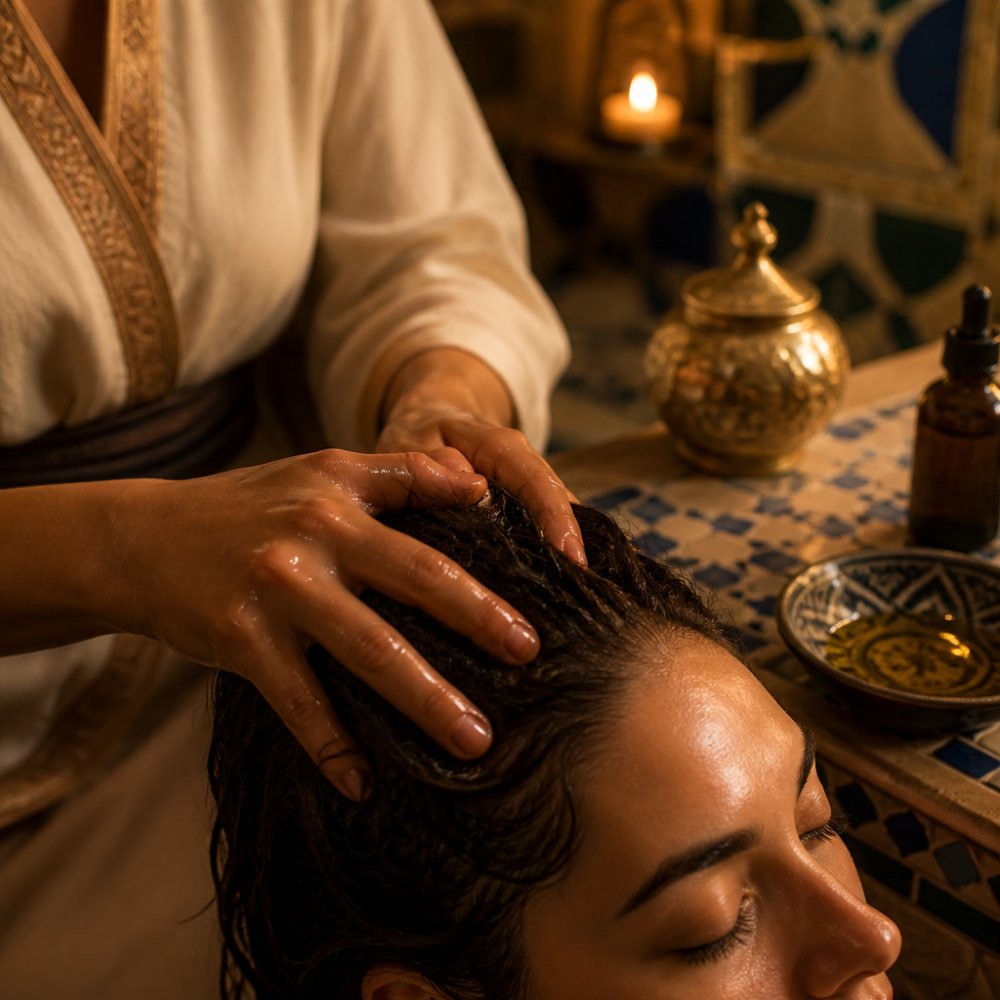
For straight or wavy hair: Part your hair into sections and apply the blend directly to your scalp using your fingertips. Massage gently in circular motions for 2-3 minutes to stimulate circulation and distribute the oil evenly. Leave the blend on for 20 minutes to several hours (or overnight) before shampooing.
For curly or coily hair: Apply the blend to your scalp between braids or twists to avoid disrupting your style. Use a dropper bottle for precision application. The blend can remain in place for 24-48 hours without washing if desired.
For fine hair: Use a lighter carrier oil like fractionated coconut oil and apply less frequently, once weekly rather than twice weekly. Fine hair can appear weighed down by heavier oils, so less is often more.
For textured or protective styles: Difeel Itchy Scalp & Tension Relief Hair Oil is specifically formulated for braided and protective hairstyles, making it an excellent pre-made option. Its consistency allows targeted scalp application without disrupting your style.
Frequency matters.
Benefits of Argan Oil for Itchy Scalp Relief
Argan oil deserves special attention because of how to treat dry scalp naturally often leads back to this remarkable ingredient. Authentic argan oil from Morocco contains high concentrations of essential fatty acids, vitamin E, and antioxidants that address multiple scalp concerns simultaneously.
For itchy scalp specifically, argan oil reduces inflammation and supports the scalp's natural protective barrier. It also moisturizes without clogging follicles, making it suitable for most scalp types. The oil's lightweight texture allows it to absorb fully, leaving no greasy residue.
Renaissance de Beaute Argan Treatments offers pure, organic argan oil sourced directly from Morocco. This authenticity matters. When blended with essential oils, it becomes an exceptionally potent scalp treatment.
Using argan oil as your carrier oil base means your scalp receives both the benefits of the essential oils and the nourishing properties of the argan itself.
Safety Considerations and Contraindications
Essential oils are powerful, and certain conditions require extra caution or avoidance altogether.
Pregnancy: Some essential oils are not recommended during pregnancy. Peppermint and rosemary should be used only under practitioner guidance.
Frequently Asked Questions
Which essential oils are best for an itchy scalp?
Tea tree, peppermint, lavender, rosemary, and cedarwood essential oils are the most effective for itchy scalp relief. Tea tree oil offers antifungal and antibacterial properties ideal for dandruff-related itching. Peppermint provides immediate cooling relief and stimulates circulation. Lavender soothes inflammation and irritation. Rosemary improves scalp health and circulation. Cedarwood balances sebum production and addresses flaky, dry conditions. Always dilute these oils with a carrier oil before applying to your scalp.
What are the correct essential oil dilution ratios for scalp treatments?
The standard dilution ratio is 2-3% for scalp applications, which equals 12-18 drops of essential oil per ounce (30 mL) of carrier oil. For sensitive skin or first-time use, start with a 1% dilution (6 drops per ounce). Never apply undiluted essential oils directly to your scalp, as they can cause irritation, burning, or allergic reactions. Always perform a patch test on a small area 24 hours before full application to check for sensitivity.
Can argan oil help with an itchy scalp?
Yes, argan oil provides significant benefits for itchy scalps. Rich in essential fatty acids and vitamin E, argan oil deeply moisturizes, reduces inflammation, and restores the scalp's natural pH balance. Its antioxidant properties soothe irritation and support scalp health. Argan oil works exceptionally well as a carrier oil for essential oil blends or as a standalone treatment. It absorbs easily without leaving a greasy residue, making it ideal for all hair types. For best results, warm the oil slightly before application and massage gently into the scalp.
How often should I use essential oils for scalp relief?
Start with 1-2 times per week and adjust based on your scalp's response. Overuse can disrupt your scalp's natural microbiome and sebum production. Listen to your scalp: if irritation develops, reduce frequency or dilution strength.