 ultimate-guide
Is Moroccan Skin Care Worth Trying for Your Routine?
Last Updated: October 26, 2026
Quick Summary
Moroccan skin care is worth trying because it is a complete, coherent system for cleansing and moisturizing, refined over generations of Berber beauty practices. Argan oil nourishes, Beldi black soap cleanses without stripping, Ghassoul clay draws out excess oil, and rose water tones, each earning its place in a routine.
- Pair simple daily cleansing with weekly black soap, kessa glove, and ghassoul rituals.
- Press three to four drops of argan oil into damp skin after cleansing.
- Keep ghassoul clay masks on for 10 to 15 minutes and rinse before fully dry.
- Patch test new products on the inner arm for 24 hours first.
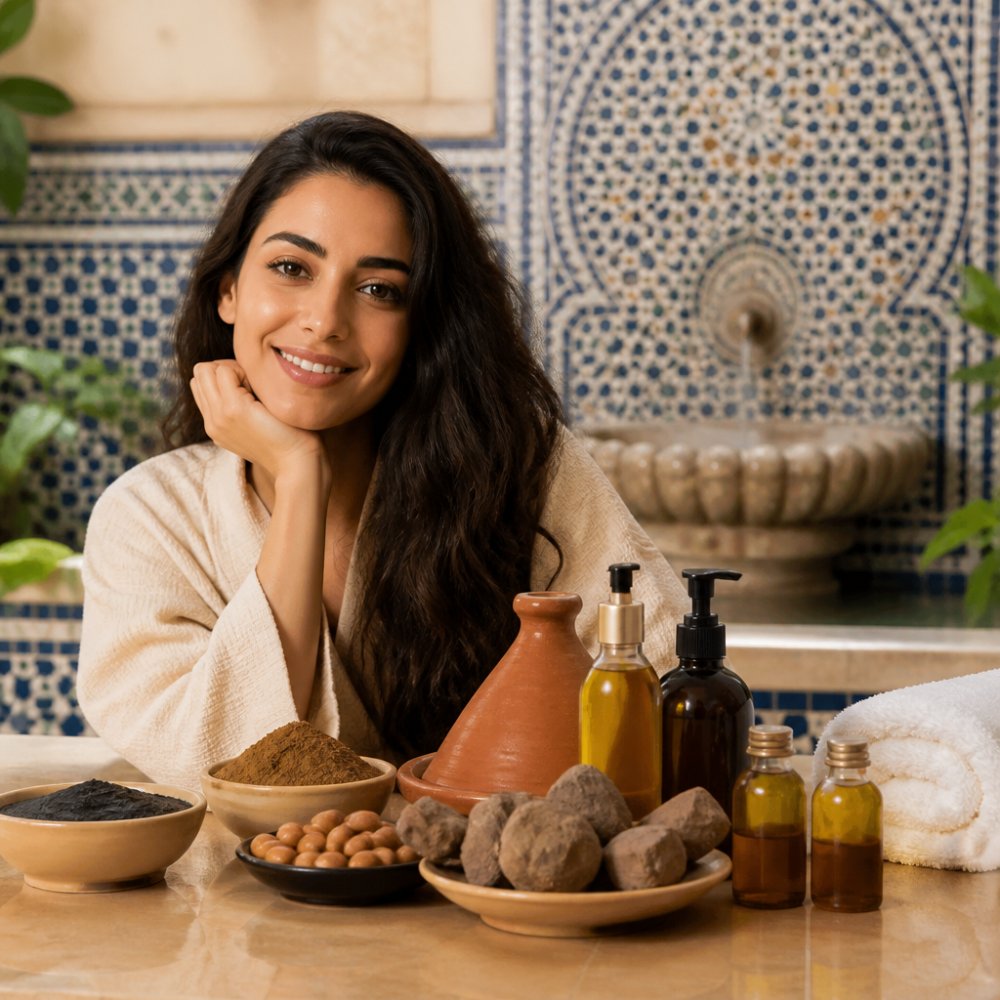
- Start with one oil, one clay, one cleanser, and one floral water.
Table of Contents
- Why Moroccan Skin Care Has Stood the Test of Time
- What a Moroccan Skincare Routine Actually Looks Like
- Argan Oil for Skin: What It Does and How to Apply It
- Beldi Black Soap Benefits for Cleansing and Detoxifying
- How to Use a Ghassoul Clay Mask Without Overdrying
- Safety First: Patch Testing, Allergies, and Realistic Claims
- Matching Moroccan Skin Care to Your Skin Type
- Choosing Authentic Products and Building Your First Order
- Frequently Asked Questions
Why Moroccan Skin Care Has Stood the Test of Time
The numbers suggest the appeal is not fading.
Why does it last? Because the core ingredients do specific jobs. Argan oil nourishes. Beldi black soap cleanses without stripping. Ghassoul clay draws out excess oil.
What most guides miss is that these are not exotic add-ons. They are a complete, coherent system for cleansing and moisturizing, refined over generations of Berber beauty practices.
What a Moroccan Skincare Routine Actually Looks Like
A Moroccan skincare routine pairs simple daily cleansing with weekly rituals: a black soap cleanse, a kessa glove exfoliation, a ghassoul clay mask, and a finishing layer of argan oil or rose water. The daily steps take minutes.
Here is the base rhythm:
- Daily: Gentle cleanse, rose water tone, argan oil or moisturizer
- Weekly: Beldi black soap, kessa glove exfoliation, ghassoul mask
- As needed: Spot treatments and extra hydration in dry weather
Daily Steps Versus Weekly Rituals
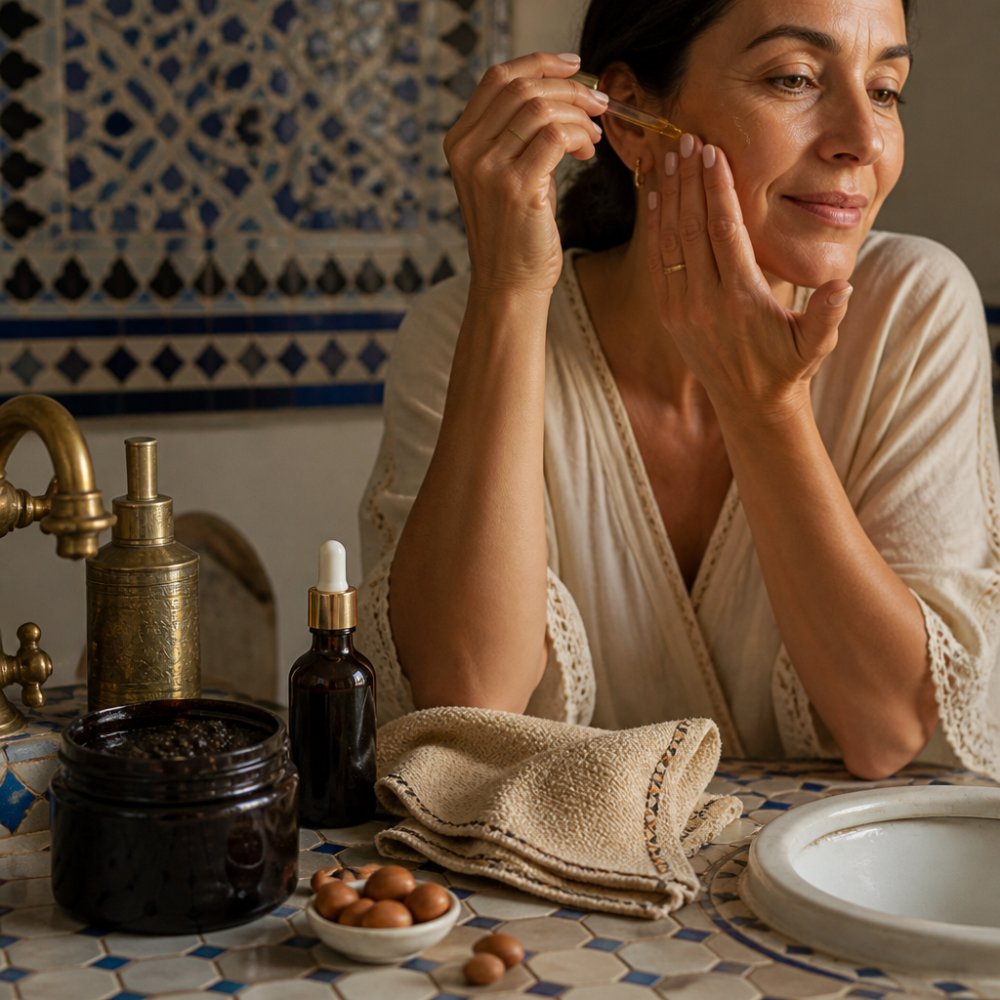
Daily steps keep the skin balanced: cleanse, tone, moisturize. Weekly rituals reset it. Exfoliation removes dead skin cells, clay pulls out buildup, and oil restores what cleansing took away. If you want a deeper walkthrough, our guide on how to incorporate Moroccan rituals into skincare maps the whole sequence step by step.
Face Versus Body: Which Product Goes Where
Most confusion comes from mixing up face and body use. Beldi black soap and the kessa glove are traditionally body treatments, the paste is thick, the glove is abrasive, and neither belongs in a daily facial routine. Ghassoul clay works on both face and body, but facial use calls for a thinner layer and shorter dwell time. Argan oil and rose water are the most face-friendly of the group and can be used daily.
How Often Is Too Often?
Frequency matters more than product choice for most people. A common pattern that works for many:
- Black soap and kessa glove: once a week for most body skin; every 10 to 14 days for sensitive or dry skin
- Ghassoul clay on the face: once a week for oily and combination skin; every other week for dry or sensitive skin
- Argan oil: daily, morning or evening, pressed into damp skin
If skin feels tight, stings, or looks flushed after a ritual, you are doing it too often or too aggressively. Back off for a week before resuming.
Fitting Traditional Products Around Modern Skincare
Traditional Moroccan products can sit alongside sunscreen, retinoids, and exfoliating acids, but the order and timing matter.
- Sunscreen always goes last in the morning. Argan oil can go underneath it; give the oil a minute to absorb before applying sunscreen.
- Do not stack exfoliation. If you use a retinoid, an AHA/BHA, or a benzoyl peroxide product, skip the kessa glove and black soap on those days. Doubling up on exfoliation is the fastest route to irritation.
- Space out clay and actives. Use a ghassoul mask on a night when you are not applying a retinoid or acid, and follow with a plain moisturizer rather than another active.
Argan Oil for Skin: What It Does and How to Apply It
Argan oil for skin works as a lightweight moisturizer rich in fatty acids and vitamin E, and the right way to apply it is to press three to four drops into damp skin after cleansing. Damp skin absorbs oil faster and needs less product.
Warm the oil between your palms first, then press it into the face and neck. For daytime, use it under sunscreen. For evening, it can be the last step.
A common mistake is drowning the skin in oil. More does not mean more nourishment. Start small and add a drop if skin still feels tight.
Beldi Black Soap Benefits for Cleansing and Detoxifying
Beldi black soap benefits come from its texture and ingredients: a soft, olive-based paste that lifts dead skin and prepares the body for exfoliation.
Apply a thin layer to damp skin, leave it a few minutes, then rinse and exfoliate. Skin feels softer and looks clearer immediately after.
If you are curious whether it belongs in your facial routine, our complete guide on whether you can use Beldi soap on your face covers the details.
How to Use a Ghassoul Clay Mask Without Overdrying
The fix for an over-drying ghassoul clay mask is timing: keep it on for 10 to 15 minutes and remove it before it fully dries.
Mix the powder with water or rose water to a smooth paste. Apply an even layer, avoiding the eyes.
Once a week suits most skin types. For face-specific instructions, see our guide on Ghassoul clay for the face.
Safety First: Patch Testing, Allergies, and Realistic Claims
Patch test any new product on a small area of the inner arm for 24 hours before applying it to your face. Natural does not automatically mean suitable for every user, and a Moroccan skincare guide we reviewed cautions that product quality varies, so checking labels matters.
A few honest rules:
- Avoid use on broken, sunburned, or irritated skin
- Stop if you notice redness, stinging, or swelling
- If you are under a dermatologist's care, ask before layering new products with prescribed treatments
If your concern is argan oil specifically, our article on whether pure argan oil is safe for sensitive skin answers the common questions.
Matching Moroccan Skin Care to Your Skin Type
Skin type should drive which products you reach for and how often. The table below is the shortcut we give customers.
| Skin Type | Best Fit | Frequency |
|---|---|---|
| Dry | Argan oil, gentle cleanse, weekly clay | Clay every other week |
| Oily | Beldi soap, ghassoul clay, rose water | Clay weekly |
| Sensitive | Patch test first, mild cleanse, argan oil | Introduce one product at a time |
| Combination | Clay on the T-zone, oil on dry areas | Weekly clay, daily oil |
A CosmoDerma study on traditional practices reported that 60.2% of respondents used remedies such as mineral clays, rose water, argan oil, and rosemary, mainly on the face and hair (CosmoDerma's traditional practices study). Usage is common. Fit is personal.
Choosing Authentic Products and Building Your First Order
Authenticity is the difference between a product that works and one that disappoints, and the biggest gap in most Moroccan skincare content is practical guidance on how to judge it. Here is what to actually look for.
Reading the Label Like an Editor
- Ingredient count. Traditional single-ingredient products, pure argan oil, plain ghassoul powder, rose water, should have short ingredient lists. A "pure argan oil" with five ingredients is not pure argan oil.
- Named origin. Good labels state the region or cooperative where the ingredient was sourced. Vague "imported from Morocco" claims tell you nothing about processing or purity.
- Processing method. For argan oil, cold-pressed is the standard to look for; heat-processed oil loses much of what makes it useful. For ghassoul, look for unrefined clay with no added fragrance or dye.
Purity and Sustainability Questions Worth Asking
Sourcing matters for both quality and ethics. Argan oil production is labor-intensive, and much of it comes from women's cooperatives in Morocco, buying from brands that disclose cooperative partnerships supports that supply chain. For ghassoul, ask whether the clay is mined responsibly and whether the product is unrefined. For rose water, look for steam-distilled rather than fragrance-added versions. None of these questions have a single right answer, but a brand that cannot answer them is telling you something.
Building a First Order Without Overbuying
Start small. One cleanser, one oil, one clay. Add products only once you know how your skin responds. A sensible first order for most people:
- One oil (argan) for daily moisturizing
- One clay (ghassoul) for weekly masking
- One cleanser suited to your skin type, black soap for body-focused routines, a gentler cleanser for daily facial use
- One floral water (rose) for toning
Skip the multi-product kits until you know which single items your skin likes. It is cheaper and easier to troubleshoot.
Our own approach at Renaissance de Beaute Argan Treatments is to keep the range tight: pure organic ingredients, traditional hammam-inspired cleansing, and spa-quality essentials for home use. You can browse the full collection in our Renaissance Online Shop when you are ready to build a routine. If you would rather have the sequence tailored to your skin before you buy, our Treatment Consultations can help you sort out which products and frequency suit you best.
Frequently Asked Questions
What is the Moroccan skin care routine?
A traditional Moroccan skin care routine pairs daily gentle cleansing with weekly exfoliation and masking. Beldi black soap is applied to damp skin, then a kessa glove is used to lift dead skin cells. A ghassoul clay mask follows to draw out impurities, and argan oil finishes as a moisturizer. Rose water can be used as a toner between steps. The rhythm matters more than the number of products: daily cleansing, weekly exfoliation, and consistent hydration.
What does argan oil do for skin?
Argan oil is rich in fatty acids and vitamin E, which support the skin barrier and help lock in hydration. It absorbs without leaving a heavy residue, making it useful for dry or damaged skin. A few drops pressed into damp skin after cleansing is enough for the face; for body use, apply after a shower. If you have oily or acne-prone skin, start with a small amount and patch test first, since oils do not suit every skin type.
Is Beldi black soap suitable for sensitive skin?
Beldi black soap is a traditional olive-based cleanser, but sensitive skin should approach it with care. Patch test on the inner forearm for 24 hours before using it on your face, and avoid broken, sunburned, or irritated skin. If your skin reacts to fragranced or plant-based products, start with a short contact time and rinse thoroughly. Anyone under dermatological care for a skin condition should ask their doctor before adding new products.
How do you use a ghassoul clay mask on your face?
Mix ghassoul clay powder with water or rose water to a smooth paste, then apply an even layer to clean skin, avoiding the eyes and lips. Leave it on for 5 to 10 minutes; do not let it dry completely, as that can strip moisture. Rinse with warm water and follow with argan oil or a moisturizer. Once a week is enough for most skin types, and less often for dry or sensitive skin.
How can you tell if Moroccan argan oil is authentic?
Check the label for 100% argan oil with no added carrier oils, and look for cosmetic-grade oil that is cold-pressed. Authentic argan oil has a faint nutty scent and a golden color; a strong perfume smell often signals additives. Buy from sellers who describe their sourcing and offer batch or purity information. If the price seems far below the market, treat it as a warning sign and ask the seller directly about origin and processing.
Does Morocco have good skin care?
Moroccan skin care draws on ingredients that have been used for generations, including argan oil, ghassoul clay, rose water, and olive-based black soap. A study published in CosmoDerma reported that 60.2% of respondents used traditional remedies such as mineral clays, rose water, argan oil, and rosemary. That reflects cultural practice rather than clinical proof. Quality varies by product, so check labels, patch test, and treat claims about anti-aging or detoxifying with realistic expectations.