 how-to
Can You Use Beldi Soap on Your Face? A Complete Guide
Table of Contents
- What Is Beldi Soap and Why the Facial Question?
- Is Beldi Soap Safe for Facial Skin?
- How to Use Beldi Soap on Your Face Safely
- How Long to Leave Black Soap on Your Face
- Beldi Soap for Sensitive Skin
- Beldi Soap vs African Black Soap for Facial Use
- Building Your Facial Cleansing Routine with Beldi Soap
- Frequently Asked Questions
Last Updated: October 21, 2026
What Is Beldi Soap and Why the Facial Question?
Beldi soap is a traditional Moroccan black soap made from olive oil, potassium hydroxide, and sometimes eucalyptus or other plant extracts.
Facial skin has a thinner, more delicate barrier and is more exposed to environmental stressors. Using a body-cleansing product on your face without understanding its strength can cause irritation, dryness, or barrier damage.
Understanding Moroccan Black Soap
Moroccan black soap, also called Saboun Beldi, has a thick, paste-like consistency and a distinctive dark color. Traditional saponification leaves it rich in glycerin and natural oils, and it's mixed with warm water to create a creamy lather.
What makes Beldi soap different from regular body wash is its potency. It's formulated to penetrate deeply and exfoliate aggressively, removing dead skin, oils, and impurities from the body.
Why Facial Use Requires Different Considerations
Your facial skin barrier is thinner than anywhere else on your body and more sensitive to pH changes and harsh treatments.
Facial skin also deals with concerns like acne, sensitivity, or aging, and an overly strong cleanser can worsen these. The face requires gentler products because it's exposed to sun, pollution, and frequent washing.
Is Beldi Soap Safe for Facial Skin?
Yes, Beldi soap can be used on facial skin, but only with proper precautions and not for everyone. The key is understanding how to use it correctly and recognizing when it's not the right choice for your skin type.
The Difference Between Body and Facial Cleansing
Body skin is thicker, less sensitive, and tolerates more aggressive exfoliation.
Facial skin is thinner, more reactive, and renews itself more frequently. A product too strong for it can strip sebum, leaving your face dry, tight, and vulnerable to irritation.
When you use Beldi soap on your face, you're applying a product designed for intensive body cleansing to a more delicate area. The result depends on several factors:
- Your skin type and sensitivity level
- How long you leave the soap on your face
- Whether you use an exfoliating tool with it
Skin Barrier Considerations
Your skin barrier is a layer of lipids and dead skin cells that protects deeper layers from water loss and environmental damage.
Beldi soap's alkaline nature can temporarily raise your skin's pH, opening pores for deeper penetration.
A compromised barrier leads to increased sensitivity, dryness, redness, difficulty tolerating other products, and an accelerated aging appearance.
How to Use Beldi Soap on Your Face Safely
Using Beldi soap on your face is possible when you follow a careful protocol. The goal is to get the cleansing benefits without overwhelming your facial skin.
Patch Testing Before Full Use
Before applying Beldi soap to your entire face, test it on a small area first.
- Choose a small area on your inner arm or behind your ear
- Mix a tiny amount of Beldi soap with warm water into a thin paste
- Apply it to the test area for three minutes
- Rinse thoroughly with lukewarm water
- Observe the area for 24 hours
Watch for redness, itching, burning, tightness, or any unusual reaction.
Even if the patch test passes, start with your neck or jawline before applying to your full face. This gives you another checkpoint to confirm tolerance.
Step-by-Step Application Method
Once you've confirmed tolerance through patch testing, follow this method:
-
Prepare your skin. Wash your face with lukewarm water to open your pores gently. Pat your skin damp, not dripping wet.
-
Mix the soap. Scoop a small amount of Beldi soap (about the size of a pea) into your palm. Add a few drops of warm water and rub your hands together to create a thin, creamy lather.
-
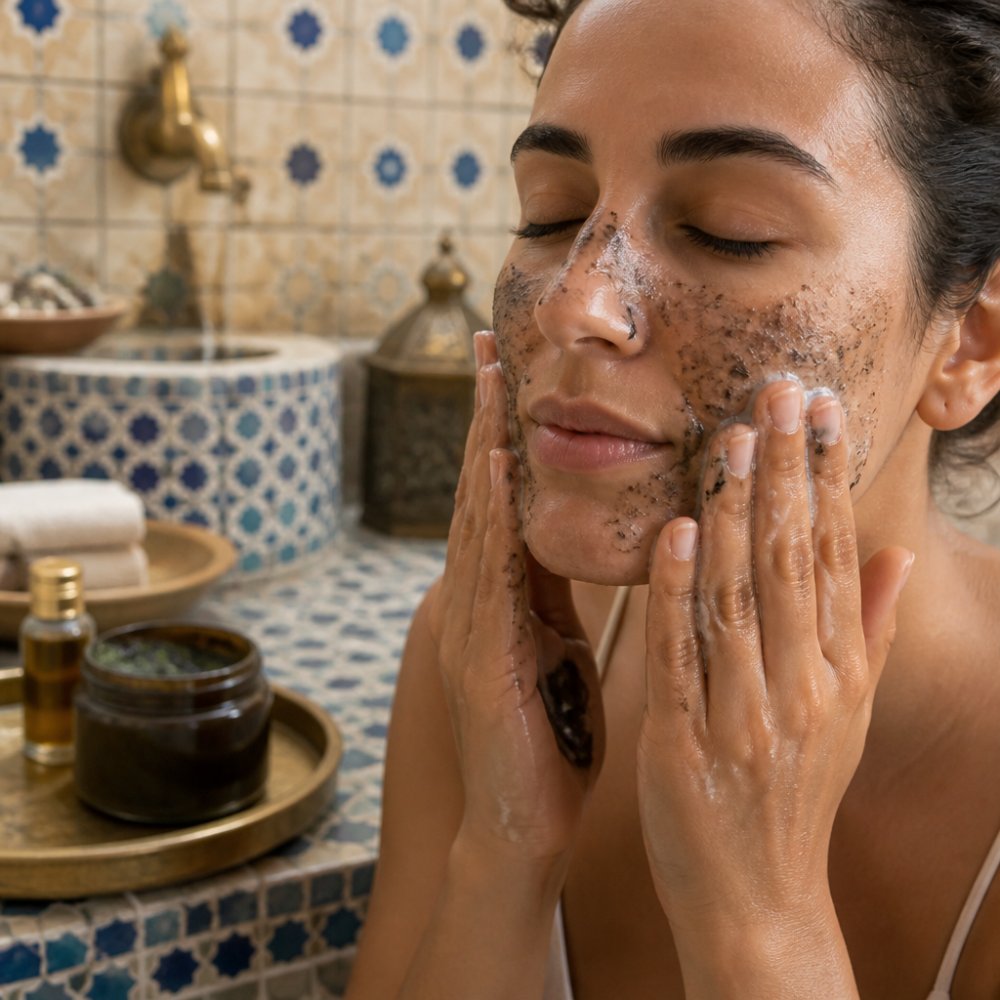
Apply gently. Using your fingertips only, never an exfoliating glove or washcloth on your face, apply the lather to your face in gentle circular motions. Avoid the delicate eye area entirely.
-
Leave on for no more than three minutes. Set a timer. Do not exceed this contact time.
-
Rinse thoroughly. Rinse with plenty of lukewarm water. Continue rinsing until no soap residue remains and the water runs clear.
-
Pat dry gently. Use a clean, soft towel. Pat, don't rub.
Rinsing and Post-Cleanse Care
Rinsing is as important as application. Soap residue can cause irritation, dryness, and sensitivity, so rinse thoroughly with lukewarm water, not hot, which can further stress your barrier.
After cleansing with Beldi soap, your skin needs immediate hydration and protection:
- Apply a hydrating toner or essence while skin is still slightly damp
- Apply serums or treatments, then a lightweight moisturizer for your skin type
- Consider a facial oil as the final step to lock in moisture
Beldi soap removes oils and impurities, so you must restore hydration and protection afterward.
How Long to Leave Black Soap on Your Face
Contact time is one of the most important variables when using Beldi soap on your face. Too short, and you won't get the cleansing benefit. Too long, and you risk irritation and barrier damage.
The Three-Minute Rule Explained
The safe maximum contact time for Beldi soap on facial skin is three minutes, long enough to dissolve excess sebum, gently exfoliate dead skin cells, and penetrate pores, yet short enough to avoid stripping protective oils.
If you're new to using Beldi soap on your face, start with one minute and gradually increase to two, then three, as your skin adapts.
Contact Time and Skin Response
Your skin will tell you if you're leaving the soap on too long. Watch for tightness, a dry, squeaky feeling, redness, itching or burning, or discomfort during or immediately after rinsing.
Different skin types respond differently to contact time:
- Oily skin can often tolerate closer to three minutes
- Combination skin typically does well at two to two-and-a-half minutes
- Dry or sensitive skin should stick to one to two minutes
Pay attention to how your skin feels after cleansing. If your skin feels tight, dry, or uncomfortable several hours later, you either left the soap on too long or used it too frequently.
Beldi Soap for Sensitive Skin
Sensitive skin requires extra caution with Beldi soap, whose strength can easily trigger irritation, redness, or flare-ups in reactive skin types.
Identifying Skin Sensitivity and Risk Factors
Sensitive skin reacts to products most people tolerate without issue. If your skin regularly experiences redness, itching, burning, or stinging with new products, you have sensitive skin.
Risk factors include:
- A history of eczema, rosacea, or dermatitis
- Recent use of prescription acne treatments or retinoids
- Sunburn or recent sun damage
If you have any of these, approach Beldi soap with caution and consider whether a gentler cleanser might suit you better.
Precautions for Irritated, Dry, or Broken Skin
Do not use Beldi soap on your face if your skin is currently irritated, very dry, or has broken skin (cuts, severe rashes, open acne).
If your skin is sensitive but not currently compromised, use Beldi soap with these precautions:
- Patch test first, even if you've used it before
- Start with one minute of contact time
- Use it no more than once per week initially
Watch your skin over the following 24 hours; if redness, sensitivity, or dryness develops, Beldi soap is not right for your face.
Signs of Adverse Reaction and When to Stop
Stop using Beldi soap on your face immediately if you experience:
- Burning or stinging during application
- Persistent redness that doesn't fade within an hour of rinsing
- Itching or hives
If any occur, rinse thoroughly, apply a soothing, fragrance-free moisturizer, and avoid other active ingredients for a few days. If symptoms persist beyond 24 hours, consult a dermatologist.
Beldi Soap vs African Black Soap for Facial Use
African black soap and Moroccan Beldi soap are often confused because both are traditional black soaps used for cleansing. However, they have important differences that affect facial safety.
Ingredient and Formulation Differences
Moroccan Beldi soap is made from olive oil, potassium hydroxide, and sometimes plant extracts like eucalyptus, emphasizing olive oil's moisturizing properties while maintaining strong cleansing power.
African black soap (also called Dudu Osun or similar names) is typically made from cocoa pod ash, plantain skin ash, shea butter, and palm oil.
Key differences:
| Feature | Beldi Soap | African Black Soap |
|---|---|---|
| Main base | Olive oil | Ash and plant butters |
| Texture | Smooth paste | Grainier, more abrasive |
| Primary use | Deep cleansing | Exfoliation |
| Facial suitability | Can be used with precautions | Generally too harsh for face |
| Moisturizing properties | Higher | Lower |
Which Is Gentler for the Face?
Beldi soap is the gentler option for facial use: its olive oil base provides some moisturizing benefit alongside cleansing, while African black soap's ash content makes it more abrasive and drying, raising the risk of irritation and barrier damage.
If you're choosing between the two for facial cleansing, Beldi soap is the safer choice, though even it should be used sparingly and only with proper technique.
Building Your Facial Cleansing Routine with Beldi Soap
If Beldi soap works well for your skin, incorporate it strategically, not as your daily cleanser.
Frequency and Integration into Your Skincare
Beldi soap should not be your everyday facial cleanser. Use it as a weekly or bi-weekly deep-cleansing treatment to get the benefits without overwhelming your skin barrier.
A typical routine might look like:
- Daily (morning and evening): Use a gentle, pH-balanced facial cleanser
- Once or twice per week: Use Beldi soap as a deep-cleansing treatment
- As needed: Use Beldi soap when your skin feels congested
Never use Beldi soap on consecutive days; your skin needs time to restore its natural balance. If you use retinoids, vitamin C, acids, or prescription treatments, use Beldi soap on a night without actives, or leave at least one day between treatments.
What to Apply After Cleansing
After using Beldi soap, your skincare routine becomes your recovery routine. Follow this sequence:
- Hydrating toner or essence (while skin is still damp) to replenish water content
- Targeted treatments (serums, spot treatments) for specific concerns
- Moisturizer to seal in hydration and protect your barrier
- Facial oil (optional) for extra protection and nourishment
This layering ensures you get Beldi soap's deep-cleansing benefit without over-drying or barrier damage. On Beldi soap nights, consider a richer moisturizer; products containing argan oil provide excellent recovery support.
Beldi soap can be a powerful addition to your facial skincare routine when used correctly. For those seeking authentic Moroccan beauty rituals adapted safely for facial skin, Renaissance de Beaute Argan Treatments offers personalized guidance through Treatment Consultations tailored to your skin type and concerns, as well as curated Renaissance Bath & Body Combos and products available in our Renaissance Online Shop.
Frequently Asked Questions
Can you use Beldi soap on your face every day?
Beldi soap is potent and can disrupt your skin barrier with daily use. Most skin types benefit from 1-3 times per week for facial cleansing. If you have dry, sensitive, or irritated skin, start with once weekly. Monitor how your skin responds and adjust frequency based on dryness, tightness, or irritation. Those with oily skin may tolerate more frequent use, but even then, daily application risks over-cleansing and stripping natural skin oils.
Is Beldi soap safe for sensitive skin on the face?
Beldi soap requires caution on sensitive skin. Always perform a patch test on a small area first and wait 24 hours for any reaction. If your skin is currently irritated, broken, freshly shaved, or prone to allergic reactions, avoid Beldi soap on your face and choose a gentler alternative. Those with diagnosed conditions like rosacea or eczema should consult a dermatologist before use. If you do use it, limit contact time to 1-2 minutes and follow with a hydrating moisturizer.
How long should you leave Beldi soap on your face?
The recommended contact time is no more than 3 minutes for facial use. Start with 1-2 minutes, especially if your skin is sensitive or you're new to Beldi soap. Longer contact increases the risk of dryness and irritation. Rinse thoroughly with warm water once you've completed the gentle massage. If your skin feels tight or irritated after rinsing, you may have left the soap on too long or need to reduce frequency.
What is the difference between Beldi soap and African black soap for facial use?
Beldi soap is a Moroccan black soap traditionally made with olive oil, while African black soap typically comes from West Africa and contains different plant bases like shea butter or palm oil. Beldi soap tends to be slightly gentler for facial skin. African black soap can be more abrasive and drying on facial skin. Both require caution, but Beldi's formulation makes it a better choice for facial cleansing when used with proper technique and frequency.
What should you apply after using Beldi soap on your face?
After rinsing thoroughly with warm water, apply a hydrating moisturizer within a few minutes while your skin is still slightly damp. This helps lock in moisture and restore your skin barrier after deep cleansing. If you have dry skin, consider using a facial oil or richer cream. Many people benefit from a hydrating serum followed by moisturizer. Avoid other active ingredients (like retinoids or acids) on the same day you use Beldi soap to prevent over-treatment and irritation.