 blog
7 Best Argan Oils for Face That Deliver Real Anti-Aging Results
Last Updated: October 25, 2026
Quick Summary
The best argan oil for face is a cold-pressed, 100% pure oil from Morocco that contains 43-49% oleic acid and 29% linoleic acid, delivering anti-aging results by strengthening your skin barrier, improving moisture retention, and reducing fine lines within 8-12 weeks of consistent use.
- Cold-pressed argan oil preserves fatty acids and vitamin E that heat-processed oils lose, making it more effective for anti-aging.
- Pure argan oil has one ingredient: Argania spinosa kernel oil; anything else signals dilution and reduced anti-aging potency.
- Apply 2-3 drops to clean, slightly damp skin at night, layering it after water-based serums but before heavier creams.
- A 2024 review found argan oil may increase elasticity and minimize wrinkles, leaving skin firmer and smoother.
- Store argan oil in dark glass away from light and heat; it stays fresh for about 12 months after opening.
Table of Contents
- What Makes the Best Argan Oil for Face Stand Out
- Argan Oil Benefits for Skin You Should Know About
- Cold-Pressed Argan Oil: What the Label Really Means
- How to Use Argan Oil on Face for Maximum Results
- Argan Oil for Sensitive Skin: Safety and Patch Testing
- How to Verify Authenticity and Quality
- Understanding the Evidence: What Research Actually Shows
- Choosing Your Argan Oil Based on Skin Type and Concerns
- Frequently Asked Questions
What Makes the Best Argan Oil for Face Stand Out
Not all argan oil is created equal: when shopping for the best argan oil for face, you're choosing between authentic, cold-pressed oils and cheaper blends loaded with additives. At Renaissance de Beaute Argan Treatments, quality matters, especially for anti-aging skincare.
The best argan oil for face delivers results because it retains the right fatty-acid profile and its potency. Cold-pressed production, Moroccan origin, and purity are non-negotiable quality markers.
Argan Oil Benefits for Skin You Should Know About
A 2024 review of plant-based cosmetic oils found that argan oil may increase elasticity and minimize the appearance of wrinkles, leaving skin firmer, softer, and smoother. Discover the benefits of organic argan oil for aging skin and how its anti-aging properties support mature complexions. In practice, argan oil works because of its composition and how it interacts with your skin barrier.
Fatty Acids and Vitamin E: The Core Anti-Aging Agents
Argan oil contains 43-49% oleic acid and 29% linoleic acid, a profile that closely mirrors your skin's natural barrier, which is why it absorbs quickly without a greasy residue. Vitamin E acts as an antioxidant, protecting skin from free-radical damage from sun and environmental stress.
The result: your skin barrier strengthens, moisture retention improves, and visible signs of aging diminish over weeks of consistent use, especially for aging skin compromised by sun damage or neglect.
Why Cold-Pressed Argan Oil Matters More Than You Think
Cold-pressing preserves the oil's nutrient density. Heat damages fatty acids and breaks down antioxidants, leaving a product that looks right but delivers less. Cold-pressed argan oil keeps the full anti-aging payload intact.
The difference shows in absorption speed, skin feel, and results: cold-pressed oils absorb faster and leave a natural sheen rather than a slick coating. If argan oil felt heavy or ineffective before, you likely used a heat-processed blend.
Cold-Pressed Argan Oil: What the Label Really Means
"Cold-pressed" means the oil was extracted without heat, typically by mechanical pressing, protecting the delicate fatty acids and antioxidants that make argan oil effective for anti-aging.
Look for "100% Pure," "Organic," "Moroccan," and "Cold-Pressed" on the label, and an ingredient list containing only argan oil.
Research on argan oil's importance in cosmetic applications confirms that purity directly affects efficacy. Blended oils may feel luxurious, but they dilute the active compounds your skin needs.
How to Use Argan Oil on Face for Maximum Results
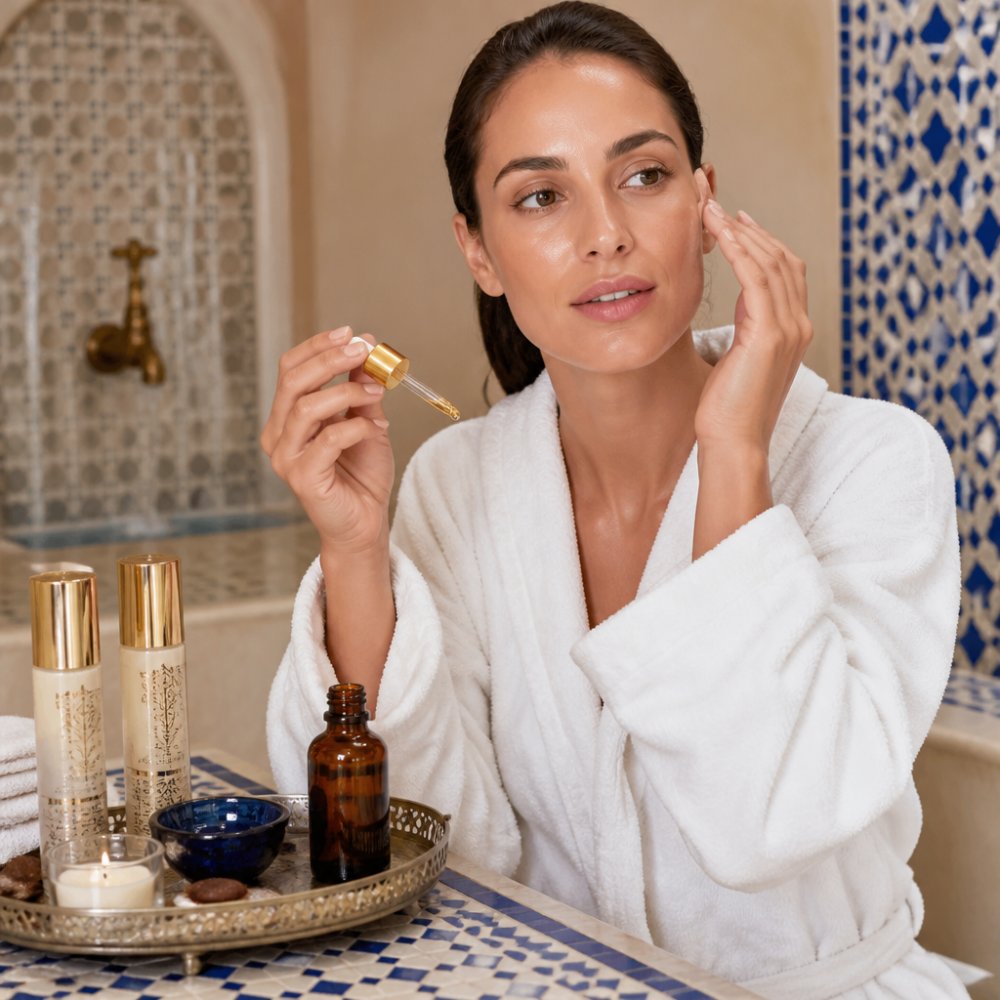
The best argan oil for face is only effective if you use it correctly. Apply 2-3 drops to clean, slightly damp skin, which helps the oil penetrate deeper and hydrate more effectively than dry skin.
Application Methods by Skin Concern
For dry skin, apply argan oil as your final step after serums or lightweight moisturizers. For oily or acne-prone skin, use it sparingly, one drop on the cheeks and forehead, skipping the T-zone.
Timing matters too. Apply argan oil at night when your skin's repair cycle is active. Morning application works, but the oil may interfere with makeup application or sunscreen absorption.
Layering Argan Oil With Other Skincare Products
Argan oil plays well with most products, but order matters: apply water-based serums and toners first, then argan oil, then heavier creams, so each product penetrates without being blocked by oil.
If you use vitamin C serums, retinoids, or prescription treatments, argan oil can enhance their effectiveness by supporting your skin barrier, which means less irritation and better tolerance of actives.
Argan Oil for Sensitive Skin: Safety and Patch Testing
Argan oil is generally well-tolerated, but sensitive skin requires caution. Before applying it to your face, patch test behind your ear or on your inner arm and wait 24-48 hours. If no redness, itching, or irritation appears, it's safe to use.
Information on argan oil's potential effects on skin and sebum secretion suggests it may help balance oil production in some individuals, but reactions vary. If you'd like personalized guidance on whether argan oil is right for your skin, consider scheduling a Treatment Consultation with a skincare specialist.
Watch out: If you experience redness, swelling, or itching after application, discontinue use immediately. Pure argan oil rarely causes reactions, but contaminated or blended products may contain irritants.
How to Verify Authenticity and Quality
Authenticity is the biggest variable in whether a facial oil works, because adulterated argan oil can look, feel, and smell plausible while delivering a fraction of the fatty acids and vitamin E you're paying for. Here is the practical framework that separates genuine argan oil from the rest.
Read the Ingredient List Like a Label Auditor
The ingredient list is your most reliable signal. Genuine argan oil has exactly one ingredient: Argania spinosa kernel oil (sometimes listed as argan oil). Anything else, sunflower oil, safflower oil, fragrance, added tocopherol, or "argan blend", means the argan content is diluted. Ingredients are listed in descending order of concentration, so if argan oil appears after a carrier oil, argan is the minority ingredient.
Watch for these label red flags:
- "Argan oil-infused" or "with argan oil", marketing language that signals a blend, not a pure oil.
- "Fragrance" or "parfum", pure argan oil has a natural nutty scent; added fragrance usually masks a lower-grade or rancid base oil.
- "Cold-pressed" with no origin statement, cold-pressing is a process claim, not a purity claim. Pair it with a stated Moroccan origin.
Use Sensory Cues as a Secondary Check
Sensory checks catch obvious problems:
- Scent: nutty and slightly earthy, never fruity, floral, or perfume-like.
- Color: golden-amber; very dark oil may be over-roasted, and clear oil is likely refined.
- Texture: absorbs within a minute or two on the back of your hand; a slick, lingering film suggests a heavier carrier oil.
Check Packaging and Sourcing Documentation
Argan oil is fragile: light and heat accelerate oxidation, so opaque or dark glass bottles with a pump or dropper protect it far better than clear plastic. A brand shipping in clear plastic with no shelf-life claim either doesn't understand the product or doesn't expect it to last.
Sourcing transparency is the other half of the equation. Reputable sellers typically publish:
- The region of origin (the Souss-Massa area is the traditional growing region).
- Whether the oil is cold-pressed, and often the pressing method.
- Cooperative or producer partnerships, which are common in the argan trade.
If a listing gives you none of this, treat the "pure argan oil" claim as unverified.
Know the Signs of Adulteration
Common adulterants in the argan trade include sunflower, safflower, and other inexpensive carrier oils, sometimes with added color or fragrance to mimic the real thing. Signs to watch for:
- A scent that fades almost immediately after opening (real argan oil's nutty note lingers).
- Oil that separates or looks cloudy at room temperature.
- A greasy feel that doesn't absorb, especially on the back of the hand.
Learn how to identify authentic Moroccan argan oil with detailed verification steps and quality markers.
Renaissance de Beaute Argan Treatments sources directly from Moroccan producers, ensuring every bottle meets strict purity standards. You can also explore curated argan oil options and complementary skincare products in the Renaissance Online Shop.
Understanding the Evidence: What Research Actually Shows
The science supports argan oil's anti-aging benefits, but it's important to understand what studies actually demonstrate. A comprehensive review of plant-based cosmetic oils confirms that argan oil may increase elasticity and minimize wrinkles.
Realistic expectations: Most people see visible improvements in skin texture and hydration within 4-6 weeks of consistent use. Anti-aging benefits like reduced fine lines take 8-12 weeks. Results are gradual, not dramatic.
Choosing Your Argan Oil Based on Skin Type and Concerns
Skin type should drive three decisions: how much you use, when you apply it, and what else is in the bottle. The right product and routine differ enough that a single recommendation doesn't fit everyone. Here's how to match argan oil to your skin.
Match Application to Skin Type
| Skin Type | Amount per Use | Timing | What to Watch For |
|---|---|---|---|
| Dry skin | 2-3 drops | Nightly, on damp skin | Needs a pure, unblended oil to maximize barrier support |
| Aging skin | 2-3 drops | Nightly, layered under moisturizer | Pair with SPF and, if tolerated, a retinoid |
| Sensitive skin | 1-2 drops | Nightly, patch test first | Avoid oils with added fragrance or essential oils |
| Oily or acne-prone skin | 1 drop | Nightly, on cheeks and dry areas only | Skip the T-zone; watch for clogging |
| Combination skin | 1-2 drops | Nightly, on dry zones | Apply selectively rather than all over |
Dry skin sees the most immediate change because the oleic and linoleic acid profile addresses moisture loss and barrier damage. Aging skin benefits from the antioxidant and regenerative properties, but the payoff depends on consistency and pairing argan oil with sun protection.
Explore whether argan oil is suitable for acne-prone skin with specific guidance on application and potential benefits or drawbacks for breakout-prone complexions.
Compare Products on the Criteria That Matter
When you compare argan oils side by side, four criteria do most of the work:
- Purity and ingredient list. One ingredient, ideally with a stated Moroccan origin and cold-pressed process. Blends and "infused" oils are not equivalent products.
- Bottle size and price per ounce. Bottles commonly range from about 1 to 4 ounces. Price per ounce is the only fair comparison, because a small bottle at a low sticker price can cost more per ounce than a larger one. Calculate it before you buy.
- Packaging. Dark glass with a dropper or pump protects the oil; clear plastic shortens its useful life.
- Intended use. A cosmetic-grade facial oil should be labeled for facial use and carry a shelf-life or batch number. Culinary argan oil is roasted and not formulated for skin.
A simple decision rule: if you have dry or aging skin, prioritize purity and packaging over bottle size, since you'll use more per application and want the oil to stay fresh. If you have oily or sensitive skin, prioritize a small bottle with a single ingredient, since you'll use less and want to finish it before it oxidizes.
Factor In Shelf Life and Routine Fit
Argan oil stays fresh for about 12 months after opening when stored away from light and heat. Store it in a cool, dark place and replace it if the scent turns sharp or rancid.
The best argan oil for face is one that matches your specific skin needs, comes from a trusted source, and fits into a realistic skincare routine you'll actually maintain.
Frequently Asked Questions
Is argan oil good for your face?
Yes. Research from a 2024 review published in PubMed Central shows that argan oil may increase skin elasticity and minimize the appearance of wrinkles, leaving skin feeling firmer, softer, and smoother. The oil contains oleic acid (43-49%) and linoleic acid (29%), which mirror your skin's natural barrier composition. However, results vary by skin type and product quality. Patch testing before full application is recommended, especially for sensitive skin.
How do you choose a high-quality argan oil for your face?
Look for cold-pressed, organic certification, and dark glass bottles that protect against light degradation. Check the ingredient list, pure argan oil should list only argan oil, with no additives or fillers. Verify the country of origin (authentic argan oil comes from Morocco) and check for a strong, nutty aroma, which indicates freshness. Avoid unusually cheap options, as they often contain diluted or adulterated oil. Request transparency on sourcing and production methods from the supplier.
Can you use argan oil on sensitive or acne-prone skin?
Argan oil can work for sensitive skin when applied correctly, but patch testing is essential first. Apply a small amount to your inner arm or behind your ear and wait 24 hours to check for irritation. For acne-prone skin, use sparingly, argan oil is non-comedogenic for most people, but overuse can clog pores. If you have active acne or severe sensitivity, consult a dermatologist before adding any new oil to your routine. Start with one drop mixed into your moisturizer rather than applying directly.
How often should you apply argan oil to your face?
Most skin types benefit from argan oil applied once or twice daily. For dry or mature skin, use it morning and night after cleansing and toning. For oily or combination skin, apply only at night or mix one drop into your moisturizer. Begin with minimal amounts, a few drops go a long way. If you notice increased oiliness or congestion, reduce frequency to every other day or use less product per application. Consistency over time yields better results than heavy daily use.