 blog
blog
7 Best Natural Anti-Aging Products for Sensitive Skin
Table of Contents
- Why Sensitive Skin Needs a Different Anti-Aging Approach
- How We Selected These 7 Natural Anti-Aging Products
- 1. Pure Argan Oil: The Gentle Carrier Oil for Fine Lines and Dryness
- 2. Bakuchiol for Sensitive Skin: A Retinol Alternative Without the Burn
- 3. Best Anti-Aging Oils for Face: Rosehip, Prickly Pear, and Beyond
- 4. Fragrance-Free Niacinamide Serums for Uneven Skin Tone
- 5. Ceramide Moisturizers That Support the Skin Barrier
- 6. Mineral Sunscreen: Non-Negotiable Sun Protection for Aging Skin
- How to Patch Test Skincare Before Adding It to Your Routine
- Building a Natural Anti-Aging Skincare Routine That Lasts
- Frequently Asked Questions
Last Updated: October 7, 2026
Why Sensitive Skin Needs a Different Anti-Aging Approach
If your skin stings, flushes, or peels every time you try a new "miracle" cream, you're not imagining it. Sensitive skin reacts to anti-aging actives differently, and the fix isn't to try harder.
Sensitive skin is a skin type that reacts more easily to ingredients, weather, and stress, showing up as redness, stinging, or tightness. That reaction changes what you can safely put on your face.
This guide from Renaissance de Beaute Argan Treatments breaks down seven natural anti-aging products chosen specifically for reactive skin. We built it around one idea: the best anti-aging routine for sensitive skin isn't the strongest one.
Most conventional anti-aging advice pushes high-strength retinol and acids. For sensitive skin, that's often a fast track to irritation.
So we flipped the approach. Here's what matters most, and why.
How We Selected These 7 Natural Anti-Aging Products
We judged every product on five things: ingredient concentration, fragrance and essential-oil content, evidence for the active, how well it layers with other steps, and value. But before any of that, we had to answer a harder question: what does "natural" even mean on a label?
Natural skincare means products built around plant-derived and minimally processed ingredients rather than synthetic actives, though "natural" is not a regulated term in the U.S. The FDA does not define or enforce "natural" on cosmetic labels, so any brand can print it.
That matters because natural ingredients can absolutely trigger reactions. Essential oils, botanical extracts, and plant acids are among the most common sensitizers in skincare. A product can be 100% plant-derived and still leave your face red and stinging. So we screened labels ourselves instead of trusting the word on the front.
Our screening looked for:
- Fragrance and essential-oil content: the most common trigger for reactive skin. We flagged any formula listing "fragrance," "parfum," or a long list of essential oils (lavender, citrus, eucalyptus, peppermint, and tea tree are frequent offenders).
- Allergen disclosure: whether the brand lists potential sensitizers individually rather than hiding them under "fragrance."
- Active concentration: enough to work, not so much it burns. Where a brand discloses a percentage, we noted it; where it doesn't, we treated that as a strike against transparency.
- Barrier support: ceramides, fatty acids, cholesterol, and oils that reinforce skin rather than strip it.
- Routine compatibility: whether it layers cleanly with sunscreen and moisturizer without pilling, and whether it plays well with other actives.
Here's how the seven products map to your main concerns:
| Product Type | Main Concern It Targets | Key Ingredient | Best For |
|---|---|---|---|
| Pure Argan Oil | Fine lines, dryness | Vitamin E, fatty acids | Dry, reactive skin |
| Bakuchiol serum | Wrinkles, firmness | Bakuchiol | Retinol-sensitive skin |
| Rosehip & prickly pear oils | Texture, tone | Vitamin A precursors | Dull, mature skin |
| Niacinamide serum | Uneven tone | Niacinamide | Redness-prone skin |
| Ceramide moisturizer | Barrier, hydration | Ceramides | Dry, compromised skin |
| Mineral sunscreen | Sun damage | Zinc oxide | All sensitive skin |
1. Pure Argan Oil: The Gentle Carrier Oil for Fine Lines and Dryness
Pure argan oil is the safest starting point for sensitive skin because it delivers moisture and antioxidant support without fragrance or harsh actives.
Cold-pressed argan oil is rich in vitamin E and fatty acids, which help soften the look of fine lines and support a dry complexion. Because it's a single-ingredient oil, there's far less to react to than in a multi-ingredient cream.
Our own Renaissance de Beaute Argan Oil is cold-pressed and unrefined, so it keeps the natural compounds that make it worth using. A few drops pressed into damp skin, morning or night, is enough.
Where it falls short: argan oil won't remodel deep wrinkles the way a retinoid can. Think of it as the hydration and comfort layer, not the heavy hitter.
2. Bakuchiol for Sensitive Skin: A Retinol Alternative Without the Burn
Bakuchiol is a plant-derived compound that behaves like a gentle retinol alternative, making it a strong option when true retinoids cause peeling and redness.
Bakuchiol is a meroterpene found in the seeds of the Psoralea corylifolia plant, used as a retinol alternative for its smoothing and firming effects. For sensitive skin, the appeal is simple: similar anti-aging goals, far less irritation.
It's not identical to retinol. The evidence base is smaller, and results build more slowly. But if you've abandoned retinoids because your skin couldn't handle them, bakuchiol keeps you in the game.
Use it at night, start two to three times a week, and build up. Pair it with a ceramide moisturizer to cushion the effect.
3. Best Anti-Aging Oils for Face: Rosehip, Prickly Pear, and Beyond
The best anti-aging oils for face are cold-pressed plant oils rich in antioxidants and vitamin A precursors, and rosehip and prickly pear lead the list for mature, reactive skin.
Rosehip oil contains natural vitamin A precursors and fatty acids that support skin renewal and a more even skin tone. Prickly pear is lighter and high in antioxidants, which helps with glow without heaviness.
These oils work as a finishing step to seal in moisture. Layer them over a serum, not under sunscreen, and use them at night if your skin is oily.
A common mistake is layering too many oils at once. Pick one, use it for two weeks, then decide.
4. Fragrance-Free Niacinamide Serums for Uneven Skin Tone
Niacinamide is one of the few brightening actives that most sensitive skin tolerates well, and a fragrance-free serum is the safest way to use it. It's also one of the most misunderstood, because the concentration on the label matters more than the marketing around it.
The catch is concentration. Very high percentages can trigger flushing, tingling, and warmth in reactive skin, especially in the first week. A common pattern practitioners see is that lower, well-formulated percentages deliver most of the benefit with far less risk of a reaction.
What to look for on the label:
- Niacinamide listed clearly, ideally with a disclosed percentage rather than a vague "niacinamide complex."
- No added fragrance and no essential oils. Citrus, lavender, and peppermint oils are common in brightening serums and are frequent triggers.
- A short ingredient list. Fewer ingredients means fewer chances for a reaction.
- No alcohol denat. high on the list, which can sting compromised skin.
- A pump or airless bottle rather than a dropper, since vitamin B3 formulas are more stable when protected from light and air.
How to use it without irritating your skin:
- Apply after cleansing, before moisturizer, on damp skin.
- Start every other night for the first week, then move to nightly if your skin stays calm.
- If you're also using bakuchiol, alternate them rather than layering both on the same night at first.
- Always follow with a ceramide moisturizer to cushion the active.
- Wear mineral sunscreen every morning, brightening actives are pointless if UV exposure keeps creating new dark spots.
A common mistake is stacking niacinamide with vitamin C, exfoliating acids, and bakuchiol all in the same routine. For sensitive skin, pick one brightening active and one renewal active, and give each a few weeks before adding anything else.
5. Ceramide Moisturizers That Support the Skin Barrier
A ceramide moisturizer is the backbone of any sensitive-skin routine because it rebuilds the barrier that keeps irritants out and moisture in.
Ceramides are lipids your skin naturally produces, and they decline with age. Replacing them helps with dryness, tightness, and the look of sagging skin over time. For mature skin, this step matters as much as any active.
Choose a fragrance-free cream with ceramides plus cholesterol or fatty acids for the best barrier support. Apply it while skin is still slightly damp.
6. Mineral Sunscreen: Non-Negotiable Sun Protection for Aging Skin
Mineral sunscreen with zinc oxide is the least irritating sun protection for sensitive skin, and sun protection is the single most effective anti-aging step you can take.
UV exposure drives most visible aging: fine lines, dark spots, and loss of firmness. Physical filters sit on top of skin rather than absorbing in, which is why reactive skin often tolerates them better than chemical formulas.
The Skin Cancer Foundation's sun protection guidance recommends daily broad-spectrum use, not just at the beach. Reapply every two hours outdoors.
How to Patch Test Skincare Before Adding It to Your Routine
Patch testing is how you find out whether a product will irritate your skin before it touches your face, and it takes about 48 hours.
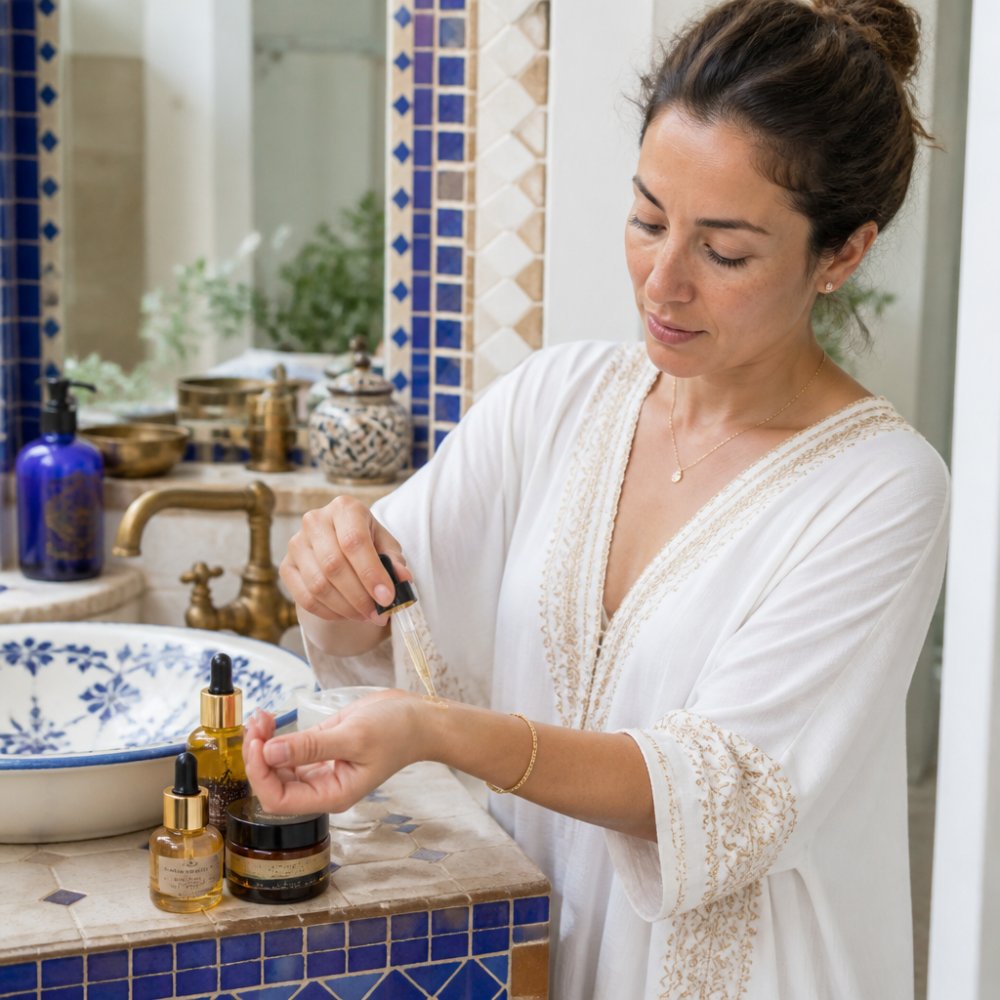
Here's the routine we recommend:
- Clean a small patch on your inner forearm or behind your ear.
- Apply a pea-sized amount of the product.
- Wait 24 hours and check for redness, itching, or swelling.
- If clear, repeat on the same spot for a second day.
- If still clear, introduce it to your face, one product at a time.
- Wait a week before adding the next new product.
Introducing one product at a time is the part most people skip. If you add three at once and react, you won't know which one caused it.
The FDA's guidance on cosmetics and skin reactions is a useful reference if a product causes a lasting reaction.
Building a Natural Anti-Aging Skincare Routine That Lasts
A natural anti-aging skincare routine for sensitive skin follows a simple order: cleanse, treat, moisturize, protect, and it works best when you add products slowly.
Start with a gentle cleanse, then a single treatment like bakuchiol or niacinamide. Seal with a ceramide moisturizer or argan oil, and finish every morning with mineral sunscreen.
That order keeps your barrier intact while still targeting fine lines, uneven tone, and dryness. Consistency beats intensity every time.
If you want a curated starting point, our Renaissance Online Shop carries cold-pressed argan treatments and Hammam-inspired essentials made for exactly this kind of gentle routine.
Frequently Asked Questions
What is the best anti-aging skincare for sensitive skin?
The best approach pairs gentle, fragrance-free formulas with proven ingredients like bakuchiol, niacinamide, peptides, and hyaluronic acid. Mineral sunscreen is essential for preventing further fine lines. Avoid harsh retinoids and essential oils until your skin barrier is stable. Introduce one natural anti-aging product at a time, waiting two weeks before adding another, so you can identify what works and what causes irritation.
Can natural skincare ingredients irritate sensitive skin?
Yes. Natural does not automatically mean gentle. Essential oils, botanical extracts, and fragrances are common triggers for redness and irritation, even in products labeled clean or organic. Look for short ingredient lists, fragrance-free formulas, and ingredients backed by evidence. If you are unsure how to patch test skincare, apply a small amount behind your ear or on your inner forearm and wait 48 hours before using it on your face.
Is bakuchiol a safe retinol alternative for sensitive skin?
Bakuchiol is widely considered gentler than retinol and is often recommended for sensitive skin. It supports skin renewal and helps soften fine lines without the peeling and redness that retinoids can cause. Start with a low concentration two or three nights per week, then increase gradually. If your skin tolerates it well, bakuchiol can become a core step in your evening routine.
How do I introduce new anti-aging products without triggering a reaction?
Add one product at a time and wait at least two weeks before introducing the next. Patch test on your inner forearm first, then apply to a small area of your face. Keep the rest of your routine simple during this period: a gentle cleanser, a moisturizer, and sunscreen. If redness or stinging appears, stop the new product and let your skin recover before trying something else.
Sensitive skin makes anti-aging feel like a guessing game, but it doesn't have to be. Renaissance de Beaute Argan Treatments offers cold-pressed organic argan oil, traditional Hammam-inspired essentials, and spa-quality products designed to revitalize skin without triggering irritation. If you're ready to build a routine your barrier can actually handle, explore our collection and find your starting point.