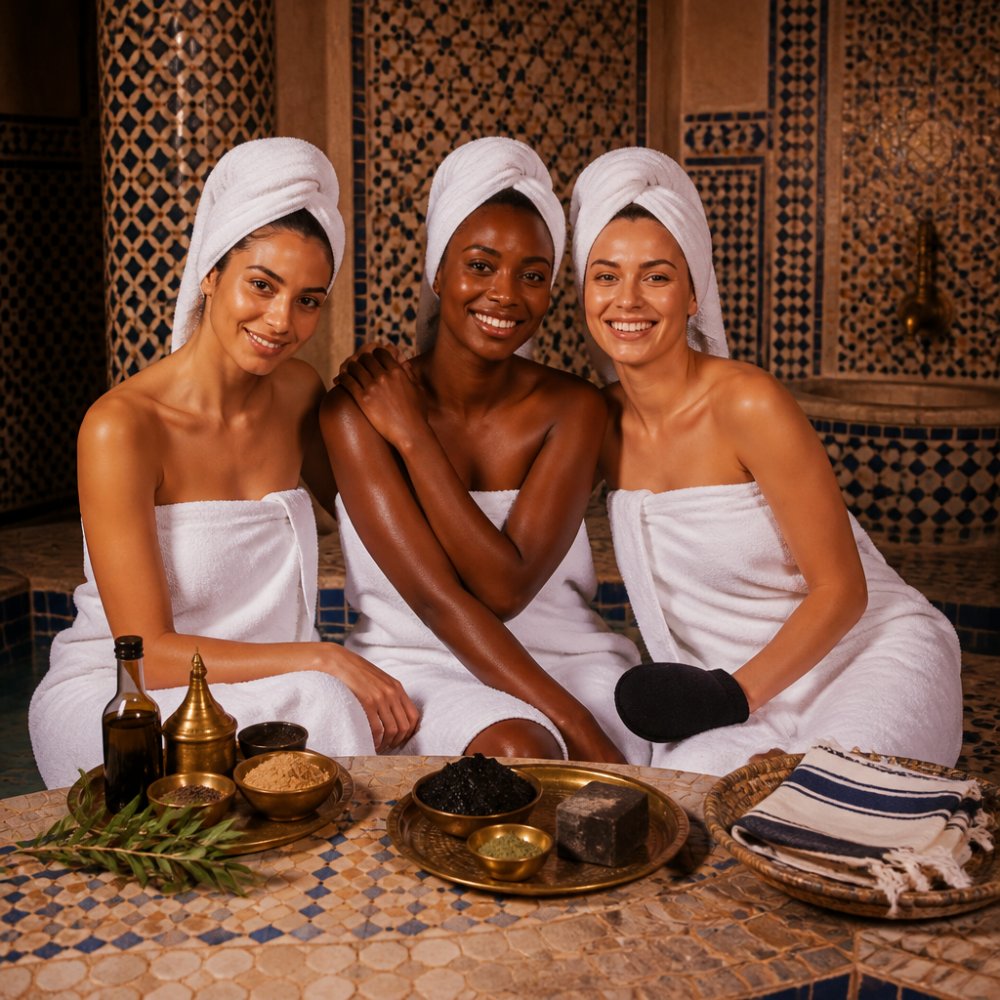
 how-to
Traditional Moroccan Hammam Routine at Home: 7 Steps
Table of Contents
- What You'll Need for a Traditional Moroccan Hammam Routine at Home
- Step-by-Step: Your Traditional Moroccan Hammam Routine at Home
- Exfoliating with a Kessa Glove: Technique and Tips
- How to Use Ghassoul Clay Mask for Deep Cleansing
- Natural Ways to Detoxify Skin: Beyond the Basics
- Adapting the Hammam Routine for Different Skin Types
- Post-Hammam Skincare Layering for Lasting Glow
- Troubleshooting Common Mistakes in Your At-Home Hammam
- Frequently Asked Questions
Last Updated: September 10, 2026
What You'll Need for a Traditional Moroccan Hammam Routine at Home
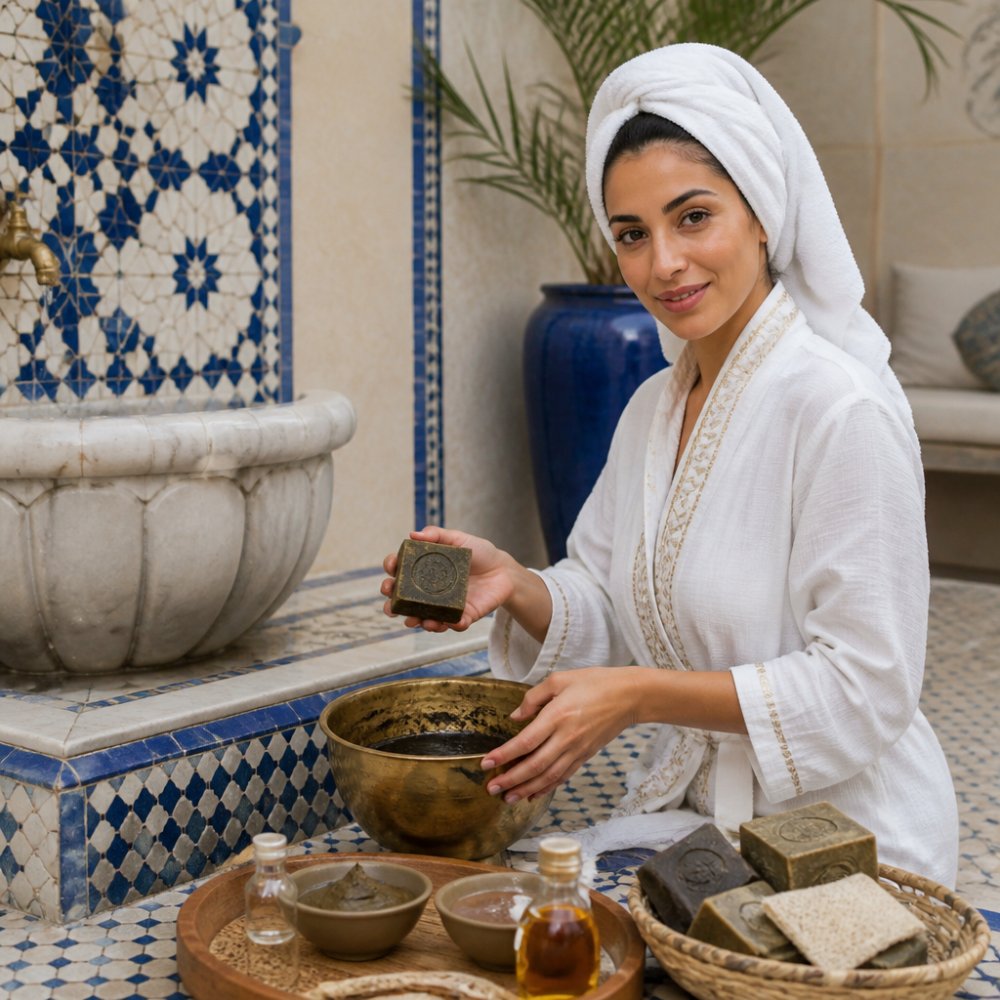
A traditional Moroccan hammam routine at home requires five essentials: Beldi black soap, a kessa exfoliating glove, ghassoul clay, pure argan oil, and a steam-filled bathroom. Together they recreate the deep-cleansing ritual that has defined Moroccan bathing for centuries.
Each step builds on the last: warm water opens pores, black soap softens dead skin, and the kessa glove sweeps it away.
Here's what to gather before you begin:
- Savon beldi (Beldi black soap): A soft, olive-oil-based soap that prepares skin for exfoliation.
- Kessa glove: A coarse exfoliating mitt designed to lift dead skin cells.
- Ghassoul clay (rhassoul): A mineral-rich clay that draws out impurities and smooths skin texture.
- Pure argan oil: A lightweight moisturizer rich in vitamin E for post-ritual hydration.
- A warm, steamy space: Your bathroom, sealed and heated, becomes your steam room.
Authentic ingredients make a difference.
Setting Up Your Bathroom for Steam and Relaxation
Turn your bathroom into a steam room by running hot water for 10-15 minutes with the door closed. Add eucalyptus or essential oil if you enjoy aromatherapy, and lay out your towel, kessa glove, and products within arm's reach so you never break the warmth. The goal is sustained warmth, not a quick rinse: steam loosens dead skin cells and prepares your skin for deep cleansing.
Step-by-Step: Your Traditional Moroccan Hammam Routine at Home
Follow these five steps in order. Each prepares your skin for the next, so skipping ahead rarely delivers the same glow.
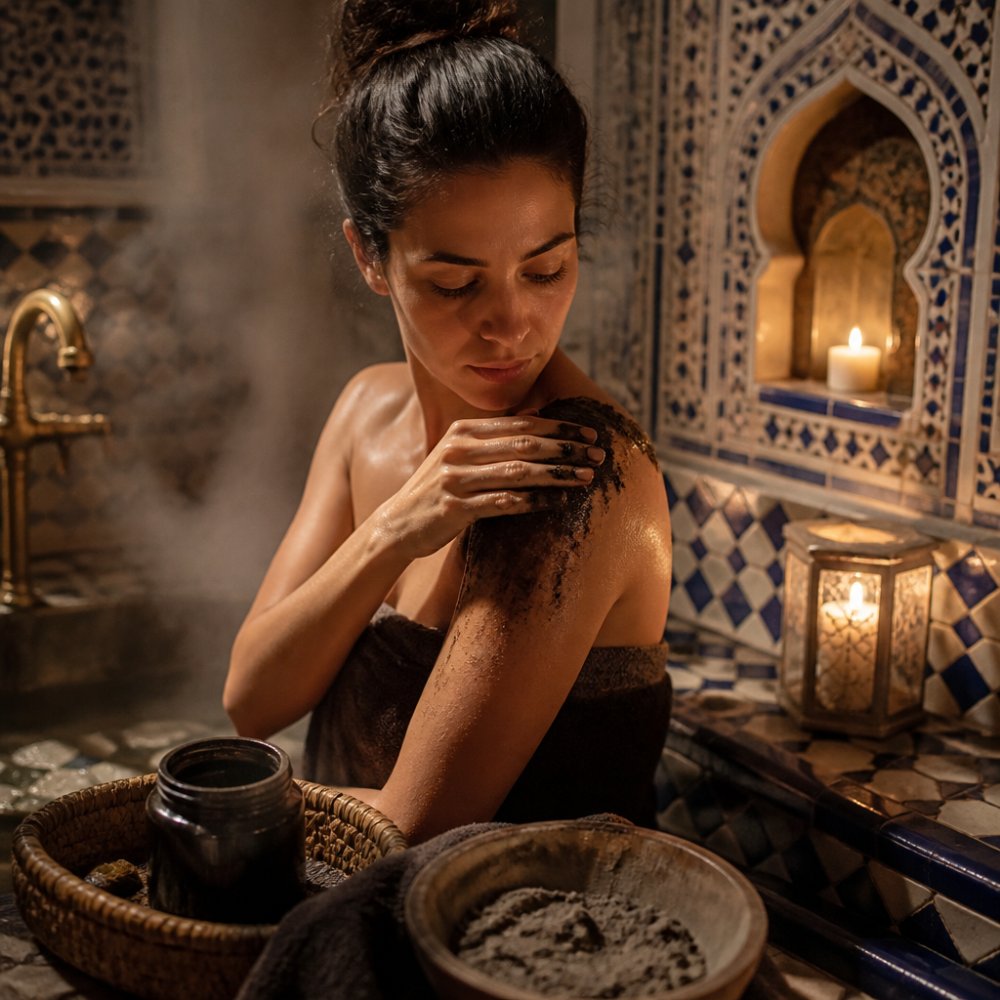
Step 1: Warm Up and Apply Beldi Black Soap
Rinse under warm water for several minutes to soften skin, then apply a generous layer of Beldi black soap to your entire body, avoiding the face. The olive-oil base coats skin and loosens dead cells without stripping natural oils.
Step 2: Steam and Let the Soap Work
Let the soap sit for 5-10 minutes while the steam does its work. This waiting period is where most at-home routines fall short: the warmth opens pores and lets the soap penetrate, making the exfoliation that follows far more effective.
Step 3: Rinse and Exfoliate with a Kessa Glove
Rinse the soap off, then exfoliate with your kessa glove using firm, circular motions, working from your feet upward and spending extra time on elbows, knees, and heels. Rinse the glove between sections and keep your skin damp throughout.
Step 4: Apply Ghassoul Clay Mask and Rinse
Mix ghassoul clay with warm water into a smooth paste, apply it to body and face, and leave it for 5-10 minutes. The clay draws out impurities as it dries. Rinse thoroughly with warm water, then finish with a cool rinse to close pores.
Step 5: Moisturize with Argan Oil
Pat skin dry and massage pure argan oil into damp, still-warm skin. Argan absorbs quickly and locks in hydration without a greasy finish, leaving the soft, glowing skin the ritual is known for.
Contact Us for Personalized Spa Packages →
Exfoliating with a Kessa Glove: Technique and Tips
Exfoliating with a kessa glove separates a real hammam from an ordinary shower: its coarse texture lifts dead skin cells that soap alone can't remove. Use firm pressure, but never scrub until skin turns red or stings, and always exfoliate wet, warm skin, the glove doesn't work on dry skin. Replace your kessa glove every few months and let it dry fully between uses.
How to Use Ghassoul Clay Mask for Deep Cleansing
To use a ghassoul clay mask, mix the powder with warm water into a smooth paste, apply an even layer, and rinse after 5-10 minutes before it fully dries. Ghassoul, also called rhassoul, is mined in the Atlas Mountains and has absorbed excess oil and impurities for centuries. Mix only what you'll use in one session; if skin feels tight afterward, follow immediately with argan oil.
Natural Ways to Detoxify Skin: Beyond the Basics
Natural ways to detoxify skin go beyond a single product: regular steam sessions, gentle exfoliation, and mineral-rich clay all support your skin's renewal process, as does daily hydration and moisturizing. What most guides miss is consistency.
Adapting the Hammam Routine for Different Skin Types
Apply the same logic at home by adjusting four variables: steam duration, exfoliation pressure, clay contact time, and oil richness. The table below gives starting points, but the mechanism behind each adjustment matters more than the numbers.
| Skin Type | Steam Time | Exfoliation Frequency | Kessa Pressure | Clay Contact Time | Key Adjustment |
|---|---|---|---|---|---|
| Sensitive | 3-5 minutes | Every 2-3 weeks | Very light, one pass | 3-5 minutes | Patch-test first; skip clay on face |
| Dry | 8-10 minutes | Weekly | Moderate, two passes | 5-7 minutes | Layer argan oil twice; avoid hot water |
| Oily | 10-12 minutes | Weekly | Firm, two passes | 10 minutes | Extend clay time; rinse with cool water |
| Combination | 8 minutes | Weekly | Adjust by area | 5-8 minutes | More clay on back and chest, less on legs |
| Mature | 7-8 minutes | Every 10-14 days | Light to moderate | 5 minutes | Focus on hydration, not scrubbing |
Why steam time changes with skin type. Steam softens the stratum corneum, the outermost layer of dead cells, so the kessa glove can lift them without tearing live skin. Sensitive skin has a thinner or more reactive barrier, so 3-5 minutes is enough to soften without triggering redness. Dry skin needs longer steam because its barrier holds less water, but the water temperature should stay lukewarm, hot water strips the lipids that dry skin already lacks. Oily skin tolerates longer, hotter steam because sebum provides a buffer, and the heat helps loosen comedones before clay draws them out.
Why exfoliation frequency changes. The kessa glove removes cells whether they are ready to shed or not. Sensitive and mature skin renew more slowly, so weekly scrubbing can cause microtears and a compromised barrier. Dry skin handles weekly exfoliation only if you follow immediately with oil on damp skin. Oily skin often tolerates weekly or twice-weekly exfoliation because sebum supports faster recovery, but shiny, tight, or stinging skin means over-exfoliation regardless of type.
Why clay contact time changes. Ghassoul clay works by adsorption: its negatively charged particles attract positively charged impurities and excess oil. The longer it stays on, the more oil it pulls, helpful for oily skin, harmful for dry or sensitive skin. Rinse before it fully dries and cracks, or it starts pulling moisture from live skin. For sensitive skin, keep clay off the face and use it only on back, chest, and feet.
Why oil layering changes. Argan oil is rich in oleic and linoleic fatty acids and vitamin E, but it is an occlusive, not a humectant, it seals in water rather than adding it. So apply argan to damp skin within three minutes of patting dry, then follow with a richer butter or cream if skin still feels tight. Dry and mature skin benefit from a second layer; oily skin should use a lighter layer and skip heavy butters on the back and chest.
A practical adjustment rule. Change one variable at a time. If skin feels tight, reduce steam time by two minutes before reducing exfoliation. If you see irritation, reduce pressure before frequency. If results feel flat, increase clay contact time by two minutes before increasing scrub pressure. This lets you identify what your skin actually responds to instead of guessing.
Post-Hammam Skincare Layering for Lasting Glow
Most hammam guides stop at rinsing. The 10-15 minutes after you step out of the steam are when skin is most receptive to hydration, and most vulnerable to moisture loss. Exfoliation removes the outermost layer of dead cells, temporarily increasing transepidermal water loss (TEWL). Without replacing that water and sealing it in, your glow fades within hours. Layering prevents that.
The three-minute window. Pat skin dry with a clean towel, do not rub, and apply your first layer within three minutes. Skin that is still slightly damp absorbs humectants more effectively and loses less water to the air. Waiting until skin is fully dry means moisturizing dead surface cells instead of hydrating the live layers beneath.
Contact Us for Personalized Spa Packages →
The layering order, and why it works.
- Humectant first (optional but powerful). A glycerin- or hyaluronic acid-based body serum or lotion pulls water into the upper layers of skin. Apply this to damp skin before any oil. If you skip this step, your oil will still seal in the water already on your skin, but a humectant extends the effect.
- Argan oil second. Argan is an occlusive and emollient: it slows water loss and softens the surface. Apply 5-10 drops per limb, massaging in upward strokes. On damp skin, it spreads further and absorbs faster than on dry skin.
- Body butter or cream third. A richer butter, shea, cocoa, or a blend, goes on top of the oil to seal everything in. This is the layer that carries you through the next 24 hours. Dry and mature skin should not skip it; oily skin can use it only on legs, elbows, and heels.
- Face last, and differently. The face has thinner skin and more sebaceous glands than the body, so it needs a different sequence. After cleansing, apply your usual serum, then a facial moisturizer, then, if it is daytime, sunscreen. Do not use body-grade argan oil on the face if it is heavily fragranced; look for a cosmetic-grade, unscented version.
Wait time between layers. Give each layer 30-60 seconds to absorb. If a product is still tacky after a minute, you applied too much, blot the excess rather than layering over it.
What to avoid in the first hour. Skip alcohol-based toners, astringents, and high concentrations of active acids (glycolic, salicylic, lactic), your barrier is temporarily more permeable after exfoliation, and these will sting or over-sensitize. Save them for a non-hammam day, and skip tight clothing over freshly exfoliated skin.
How to make the glow last a week. What you do between sessions determines how long your glow lasts. Moisturize daily, drink water, and avoid hot showers that strip the lipids you just replenished. Exfoliate on Sunday and skin looks its best Monday through Wednesday; by Thursday, surface cells dull again, the signal that your next session is approaching.
Troubleshooting Common Mistakes in Your At-Home Hammam
The most common mistakes are rushing the steam, exfoliating too aggressively, and skipping moisturizer. Each one undermines the ritual. If your skin feels irritated, you've scrubbed too hard; give it a few days before your next session. If results feel underwhelming, check your products: authentic Beldi soap and pure argan oil perform differently than diluted versions. For a personalized routine, contact our team for a treatment consultation or browse the Renaissance online shop to build your kit.
Building a hammam ritual at home takes the right ingredients and a little patience, but the payoff is skin that feels genuinely renewed. Renaissance de Beaute Argan Treatments offers authentic Beldi black soap, ghassoul clay, and pure organic argan oil, each chosen to bring spa-quality results to your bathroom. Explore our Renaissance Bath & Body Combos to start your ritual, and get started with Renaissance de Beaute Argan Treatments for deep cleansing, hydration, and a lasting glow.
Frequently Asked Questions
How often should I do a traditional Moroccan hammam routine at home?
For most skin types, once a week is ideal. If your skin is dry or sensitive, every 10 to 14 days is gentler. Those with oily skin may benefit from twice weekly, but avoid daily use because over-exfoliating with a kessa glove can weaken the skin barrier. Start with one session and adjust based on how your skin feels.
What are the essential products for an at-home hammam?
You need four core items: Beldi black soap (savon beldi) for cleansing, a kessa glove for exfoliating, ghassoul clay for a purifying mask, and pure argan oil for moisturizing. Optional additions include a bucket for rinsing, a loofah, and a hydrating mist. These products recreate the traditional Moroccan hammam routine at home without a professional steam room.
Can I use ghassoul clay if I have sensitive skin?
Yes, but with adjustments. Ghassoul clay is gentle compared to many clays, but sensitive skin may react to frequent use. Try a patch test on your inner arm first. Limit use to once every 10 days, mix the clay with rose water instead of plain water, and keep it on for no more than 5 minutes. Rinse with lukewarm water and follow with a soothing moisturizer.
Is a traditional Moroccan hammam routine safe for people with dermatologist-prescribed treatments?
If you are under a dermatologist's care, check before adding exfoliation or clay masks to your routine. Ingredients like salicylic acid or retinoids can make skin more sensitive, and combining them with a kessa glove may cause irritation. Ask your dermatologist whether a gentle hammam routine fits your treatment plan, and always patch-test new products.