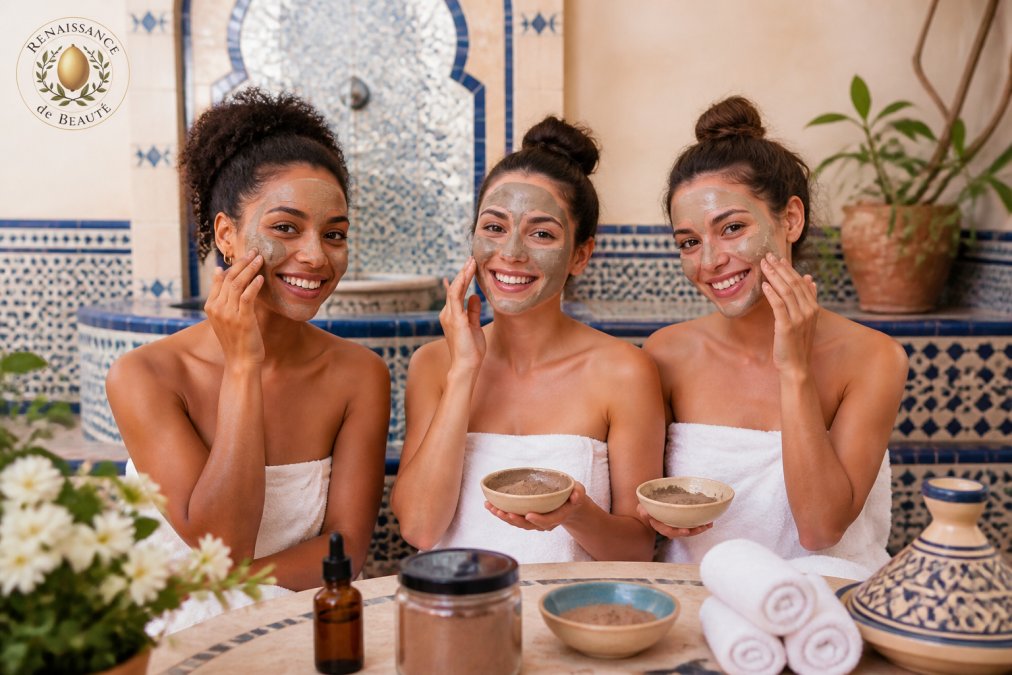
 how-to
How to Use Ghassoul Clay for Face Detox
Table of Contents
- What Is Ghassoul Clay and Why It Works for Face Detox
- How Long to Leave Ghassoul Clay on Your Face
- DIY Ghassoul Clay Face Mask Recipes and Application Steps
- Ghassoul Clay vs. Bentonite Clay: Which Works Better
- Frequently Asked Questions
Last Updated: August 27, 2026
What Is Ghassoul Clay and Why It Works for Face Detox
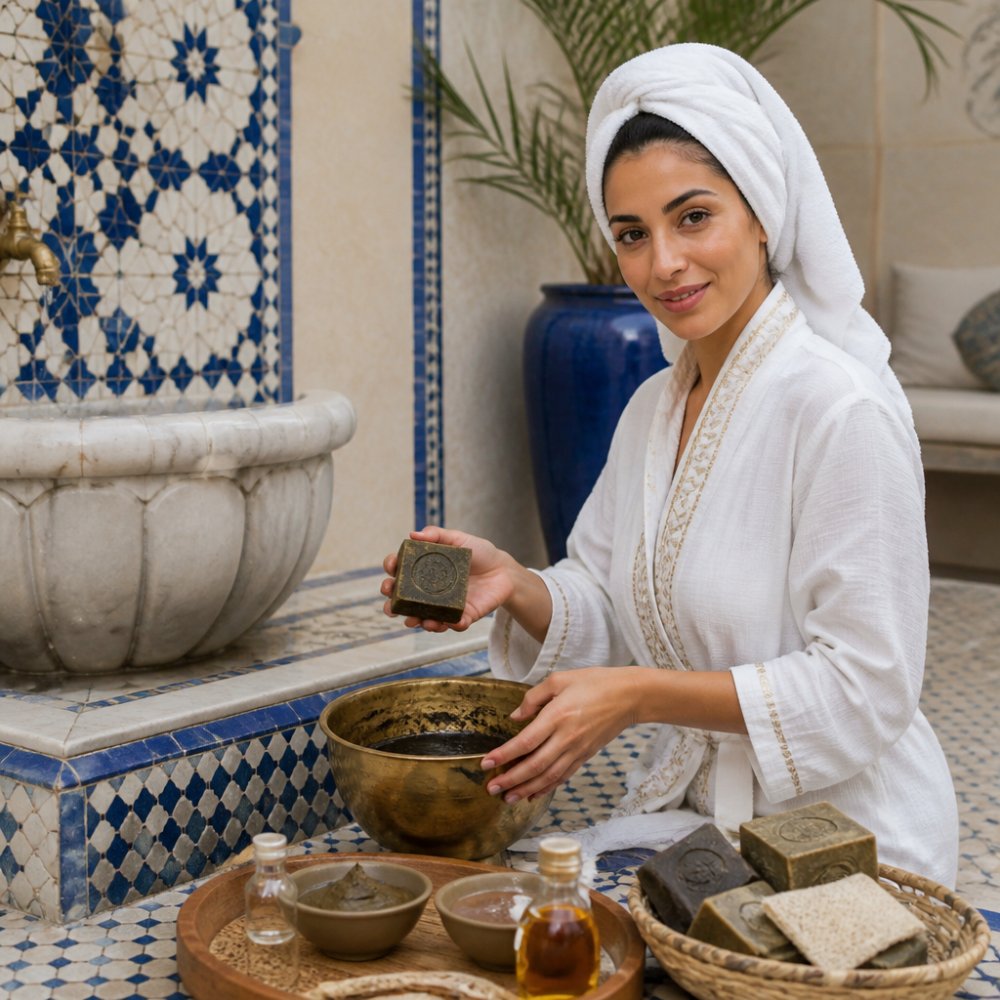
Ghassoul clay is a mineral-rich natural clay from the Atlas Mountains used in traditional Moroccan beauty rituals for centuries. It contains silica, magnesium, potassium, and calcium that work through cation exchange, positively charged ions in the clay attract and bind to negatively charged impurities on your skin's surface (peer-reviewed research). This composition allows ghassoul to absorb sebum and impurities without over-drying, making it ideal for deep cleansing while maintaining your skin barrier. When applied as a mask, it gently exfoliates dead skin cells while trace minerals soothe and brighten your complexion.
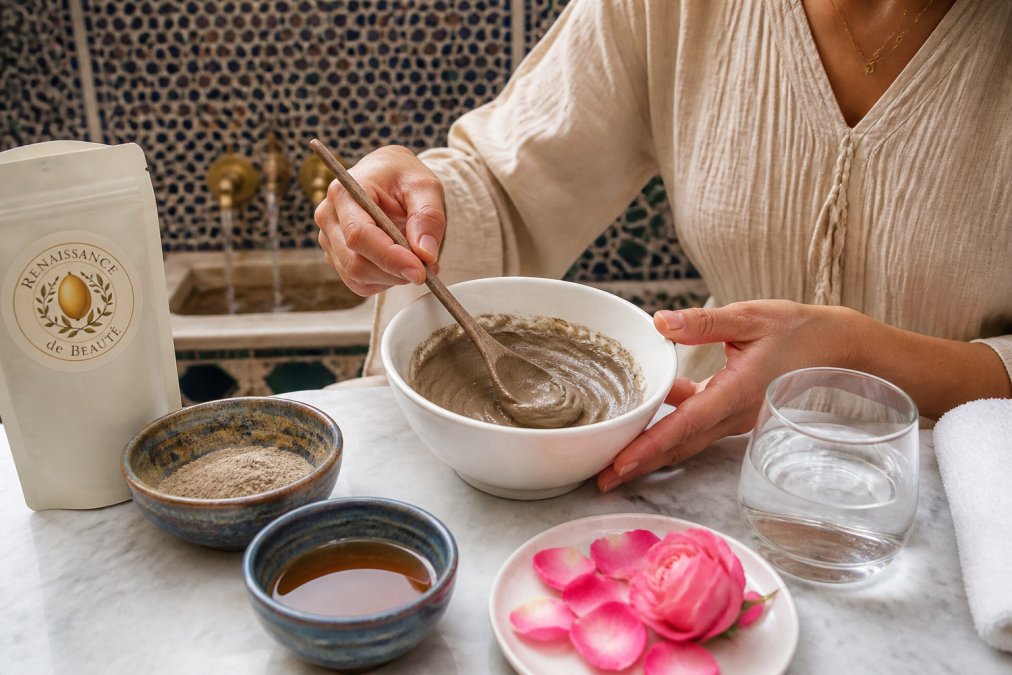
At Renaissance de Beaute Argan Treatments, we recognize that authentic Moroccan beauty traditions offer science-backed benefits for modern skincare concerns. Ghassoul clay is ideal for those seeking natural alternatives to harsh chemical treatments, especially if you have sensitive or compromised skin.
How Long to Leave Ghassoul Clay on Your Face
The recommended duration is 10 to 15 minutes for most skin types (the American Academy of Dermatology). This timeframe allows sufficient contact to absorb impurities without over-drying. For very sensitive skin, start with 8 to 10 minutes. Those with oily or congested skin can extend to the full 15 minutes. Never exceed 20 minutes, as extended contact can strip moisture and compromise your skin barrier (the American Academy of Dermatology).
Remove the mask once it begins to feel tight or shows visible cracks, usually around 12 to 15 minutes. The mask should still feel slightly moist, not completely rigid.
DIY Ghassoul Clay Face Mask Recipes and Application Steps
Creating a ghassoul clay face mask at home requires minimal ingredients and takes just minutes.
Basic Ghassoul Paste Recipe: Mix 1 tablespoon of ghassoul powder with 2 to 3 tablespoons of rose water or filtered water until smooth and spreadable. Add water one teaspoon at a time if too thick, or a pinch more powder if too runny.
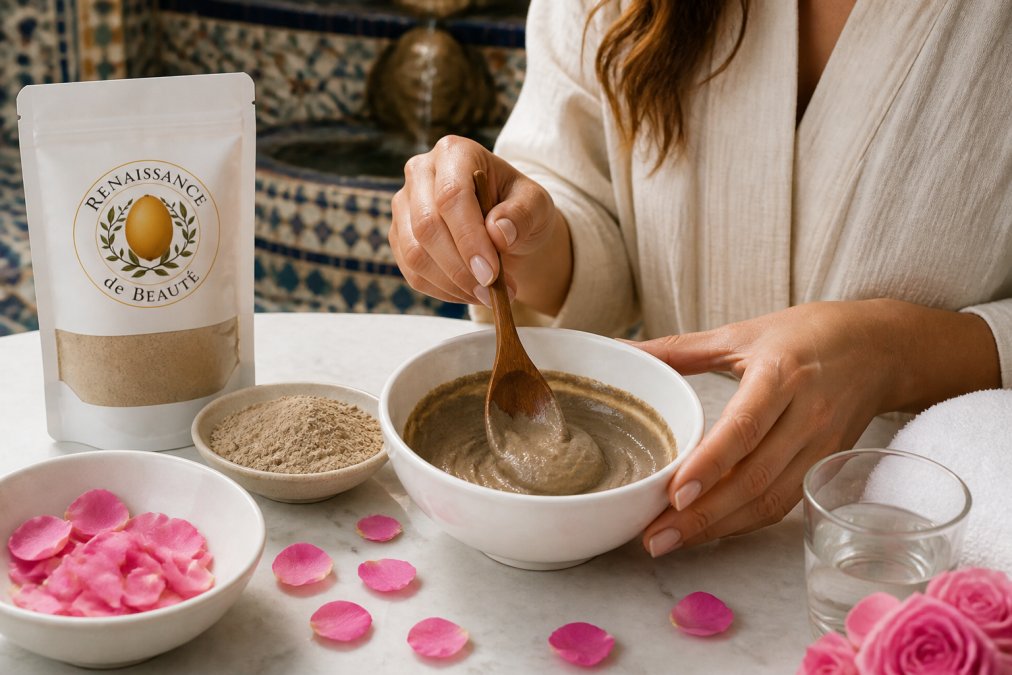
Application Steps:
-
Start with damp skin. Rinse your face with lukewarm water and pat gently, slightly moist skin helps the clay spread evenly and prevents over-drying.
-
Apply the paste evenly across your face, avoiding the eye area and lips. Use your fingertips or a non-metal brush, working in upward motions.
-
Allow the mask to set for 10 to 15 minutes without facial expressions that might crack it prematurely.
-
Rinse thoroughly with warm water using gentle circular motions for light exfoliation.
-
Pat your skin dry with a clean, soft towel.
For dry skin, mix ghassoul with rose water for added hydration. For acne-prone skin, add a few drops of tea tree oil to enhance detoxifying effects.
Ghassoul Clay vs. Bentonite Clay: Which Works Better
Both clays offer detoxifying benefits but work differently. Bentonite clay is highly absorbent and creates a stronger pulling sensation, popular for deep pore cleansing, but can be more drying and irritating to sensitive skin.
Ghassoul clay provides gentler detoxification while maintaining your skin's natural pH balance. Its mineral profile is less likely to strip essential oils, making it ideal for reactive or compromised skin barriers. Ghassoul also rinses away more easily than bentonite, requiring less scrubbing.
Choose ghassoul for sensitive, dry, or irritation-prone skin. Select bentonite for very oily, congested skin if you can tolerate intense pulling. For beginners, ghassoul is recommended first, then experiment with bentonite after your skin adapts to regular clay masking. Ghassoul's gradual, gentle absorption delivers better long-term results without compromising your skin barrier.
Discovering how to use ghassoul clay for face detox opens the door to authentic Moroccan beauty rituals that deliver real results. Whether addressing congestion, seeking anti-aging benefits, or elevating your skincare routine, ghassoul clay offers a natural, non-comedogenic option that respects your skin's delicate balance. Contact Renaissance de Beaute Argan Treatments for personalized guidance on incorporating traditional Hammam-inspired treatments into your home spa routine, or explore our Renaissance Bath & Body Combos to experience spa-quality essentials crafted from authentic Moroccan ingredients.
Frequently Asked Questions
What does ghassoul clay do for skin during a face detox?
Ghassoul clay works through cation exchange, where mineral-rich particles absorb sebum and skin impurities without stripping your skin barrier. The trace minerals like magnesium, silica, potassium, and calcium provide natural exfoliation and pore purification. Unlike harsher alternatives, ghassoul clay is non-comedogenic and soothing, making it effective for detoxifying while maintaining skin pH balance and hydration.
How long should I leave ghassoul clay on my face?
Leave ghassoul clay on your face for 10-15 minutes on damp skin. For sensitive skin types, start with 8-10 minutes and gradually increase duration as your skin adapts. Never leave it on longer than 20 minutes, as over-drying can occur. Remove with warm water when the mask begins to crack slightly but before it hardens completely.
How does ghassoul clay differ from bentonite clay?
Ghassoul clay is gentler and mineral-rich with natural soothing properties, making it ideal for sensitive and dry skin. Bentonite clay is more absorbent and aggressive, better suited for oily skin but potentially drying for others. Ghassoul provides skin brightening and hydrating benefits alongside detoxification, while bentonite focuses primarily on sebum absorption. Choose ghassoul for a balanced, nourishing detox experience.