 ultimate-guide
Why Premium Argan Oil Costs More: 2026 Price Guide
Table of Contents
- The Labor-Intensive Argan Oil Extraction Process
- Geographic Exclusivity: Why Only One Region Can Produce It
- How to Spot Fake Argan Oil Before You Buy
- Pure Argan Oil Benefits for Hair That Justify the Price
- The 'Goat' Myth, Cooperatives, and Supply Chain Realities
- Cost-Per-Use Analysis: Why Cheap Argan Oil Costs More Long-Term
- Conclusion
- Frequently Asked Questions
Last Updated: September 12, 2026
The Labor-Intensive Argan Oil Extraction Process
Premium argan oil costs more because making it is slow, physical work that machines cannot fully replace. The premium argan oil you see priced well above mass-market bottles reflects hours of hand labor, a short harvest window, and a fruit that only grows in one part of the world.
At Renaissance de Beaute Argan Treatments, we source oil made the traditional way, and the difference shows in the bottle. This guide explains exactly where your money goes, and how to tell real oil from diluted imitations before you spend a cent.
Here is the core tension most buyers never hear about: the price gap is not marketing. It is labor, geography, and chemistry.
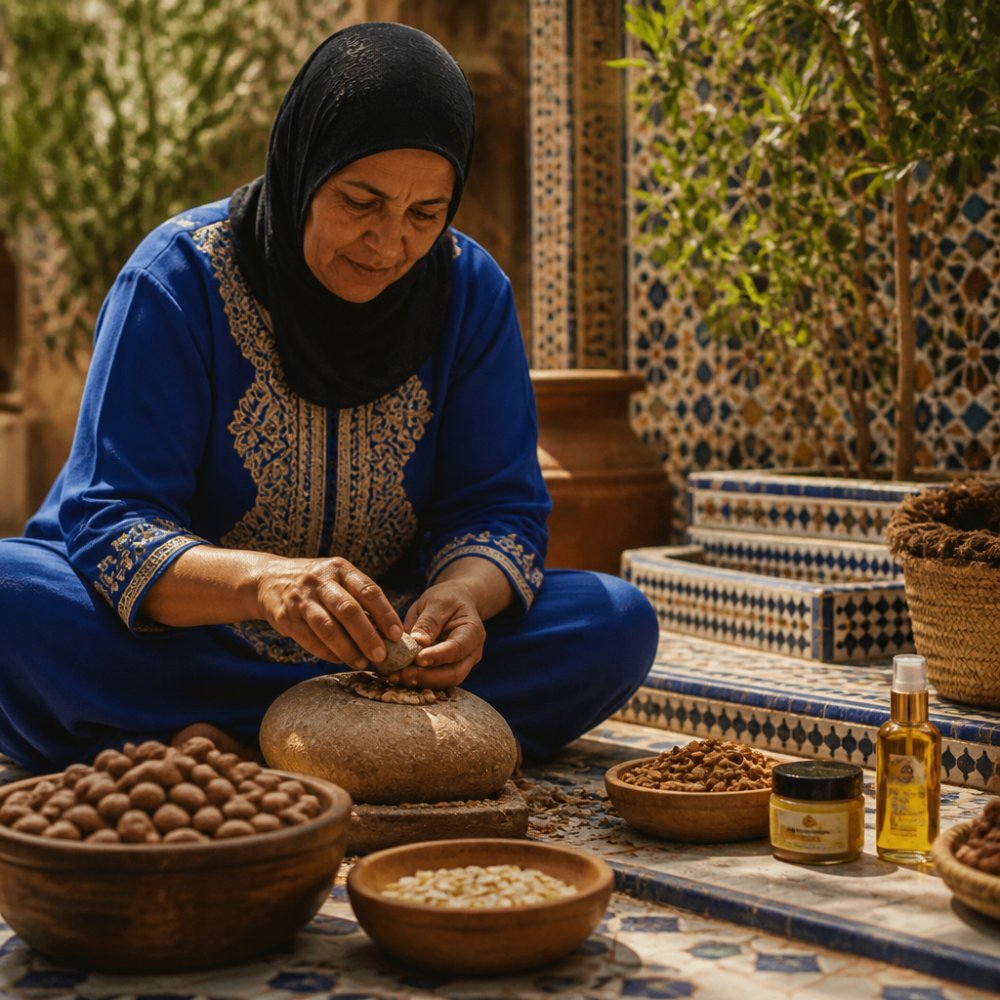
From Kernel to Oil: A Hands-On Harvest
The argan fruit looks like a small yellow-green olive with a thick, bitter shell. Inside that shell sits a hard nut, and inside the nut, one or two tiny kernels.
Getting from fruit to oil takes days of manual work:
- Harvest the fallen fruit by hand
- Dry the fruit in the sun
- Crack the shell and remove the nut
- Crack the nut to extract the kernel
- Cold-press the kernels into oil
A skilled worker can crack only a limited number of nuts per day. It takes a substantial quantity of kernels to produce a single liter of oil, which is why the raw material alone sets a price floor that cheap bottles cannot honestly meet.
Cold-Pressed vs. Machine-Extracted: What Changes
Cold-pressed argan oil is extracted by pressing kernels at low temperatures without chemical solvents. This preserves the fatty acids, tocopherols, and antioxidant properties that give the oil its value for skin and hair.
Machine extraction with heat or solvents increases yield, which lowers cost per liter. The trade-off is real: heat and chemicals degrade some of the compounds that make argan oil worth buying in the first place. A nut-based oil stripped of its antioxidants is just an expensive carrier oil.
Geographic Exclusivity: Why Only One Region Can Produce It
Argan oil comes from the argan forest of southwest Morocco, and nowhere else on earth at commercial scale. The argan tree is endemic to this region, which means the entire global supply depends on a single, geographically restricted raw material. That exclusivity is not a marketing story. It is a hard economic constraint that shapes every price in the category.
The Yield Math Behind the Price Floor
The argan tree produces fruit once a year, and the harvest window is short. A single tree yields a modest amount of fruit, and only a fraction of that becomes usable kernels. Most practitioners find that it takes a substantial quantity of kernels to press a single liter of oil, which is why the raw material alone sets a price floor that cheap bottles cannot honestly meet.
When a drought year cuts the harvest, supply tightens and legitimate oil gets more expensive. Cheap oil does not magically dodge this reality. A bottle that stays suspiciously inexpensive through a bad harvest season is one of the clearest signals that something is off.
Cooperatives, Middlemen, and Where the Money Goes
The argan supply chain has historically been long, and every hand the oil passes through adds a margin. In the worst cases, middlemen captured most of the profit while paying harvesters very little. Women-led cooperatives changed that dynamic by setting a fair baseline price for the raw material and selling more directly to brands.
Contact Us for Personalized Spa Packages →
That shift is a major reason premium pricing exists. When you buy from a brand that sources directly from a cooperative, more of your money reaches the people cracking the nuts. When you buy from a brand that resells rebottled mystery oil, the opposite is true. Supply chain length is a hidden cost driver, and it is also a traceability question: a short chain from cooperative to brand makes it possible to verify the botanical source.
Sustainability as a Price Component
The argan forest is a protected ecosystem, and responsible harvesting supports both the trees and the communities that depend on them. According to UNESCO's biosphere reserve documentation, the argan forest is recognized as a globally significant landscape. Fair trade sourcing and long-term stewardship are built into the price of good oil because they cost money to maintain. A brand that skips those commitments can charge less, but the savings come from somewhere.
How to Spot Fake Argan Oil Before You Buy
You can spot fake argan oil by checking three things: the smell, the feel, and the label. Real cosmetic-grade argan oil has a faint, nutty scent, absorbs without a greasy film, and lists its botanical source clearly.
Adulteration is the industry term for cutting pure oil with cheaper fillers. Common offenders include sunflower, soybean, and silicone-based oils. Dilution is the same problem in milder form: a little real argan oil stretched with a lot of something else.
The Sensory Identification Guide
Your senses catch what a label hides. Run these checks:
- Smell: Genuine cosmetic argan oil has a light, nutty aroma. Culinary-grade oil smells toastier and stronger. Odorless oil is a red flag.
- Texture: Pure oil sinks in within a minute or two. If it sits greasy on your skin, it is likely cut with a heavier oil.
- Color: Expect a clear, golden-yellow tone. Cloudy or unusually pale oil suggests processing shortcuts.
- Absorption: Real argan oil leaves skin soft, not slick.
Certification Verification: What to Look For
Certification is your fastest filter. Look for USDA Organic certification on the label, since organic claims in the United States are legally regulated and require verification. A trustworthy brand will also publish GC/MS testing results, which is a lab analysis that confirms the oil's fatty acid profile and detects adulteration.
If a seller cannot or will not show a certificate of analysis, treat that as your answer.
Pure Argan Oil Benefits for Hair That Justify the Price
Pure argan oil benefits for hair come down to its fatty acid profile. Argan oil is rich in oleic acid and linoleic acid, plus tocopherols, a form of vitamin E that supports antioxidant properties.
For hair, that translates to real, practical results:
- Smooths the cuticle to reduce frizz and flyaways
- Adds shine without weighing hair down
- Helps protect against heat and environmental stress
- Supports a healthier-looking scalp when massaged in
The catch is concentration. A diluted oil delivers a fraction of these benefits, so you use more product to see any change. That is the quiet math behind cheap bottles: you pay less per bottle but more per actual result.
The 'Goat' Myth, Cooperatives, and Supply Chain Realities
The famous story goes that goats climb argan trees, eat the fruit, and their undigested kernels get collected and pressed into oil. It is a great story. It is also largely a myth in modern production, and it is worth retiring with some scientific clarity.
Why the Goat Story Persists
Goats do climb argan trees and do eat the fruit. That part is real. What is not real is the implication that modern argan oil is made from goat-digested kernels. The digestive process would damage the kernel and introduce contamination that no reputable producer would accept. The story survives because it is memorable and because it reinforces a romantic image of traditional production. It is not how the oil in a legitimate bottle is made.
What Actually Happens in a Cooperative
Real argan oil today is made by cooperatives, many of them women-led, that crack the nuts by hand. A skilled worker can crack only a limited number of nuts per day, and the work is physical and repetitive. These cooperatives matter for two reasons. First, they set a fair baseline price for the raw material, which is a major reason premium pricing exists. Second, they cut out middlemen who historically captured most of the profit while paying harvesters very little.
Contact Us for Personalized Spa Packages →
Supply Chain Length as a Hidden Cost
Supply chain length is a hidden cost driver. Every hand the oil passes through adds a margin. A short chain from cooperative to brand keeps more money with the people doing the work, and it also makes traceability possible. When you can trace the botanical source, you can trust the authenticity. When you cannot, you are relying on the front label, which is exactly what adulterated products count on.
Cost-Per-Use Analysis: Why Cheap Argan Oil Costs More Long-Term
Cheap argan oil often costs more per use, not less. This is the calculation most buyers skip, and it flips the whole value question.
Here is how to run a cost-per-use analysis on any bottle:
| Factor | Pure Cold-Pressed Oil | Diluted Cheap Oil |
|---|---|---|
| Amount needed per use | A few drops | A larger pour |
| Visible results | Noticeable in weeks | Slow or none |
| Shelf life | Long, stable when stored cool | Shorter, prone to oxidation |
| Repurchase frequency | Less often | More often |
| Real cost per month | Lower | Higher |
Oxidation is the other hidden tax. A diluted or poorly stored oil breaks down faster, turns rancid, and loses its antioxidant properties. You end up replacing it sooner, which erases the savings you thought you were getting.
Run the numbers on a per-month basis and the premium bottle usually wins.
Conclusion
The real challenge is not finding argan oil. It is finding oil that is actually argan oil, pressed from real kernels, without fillers quietly doing the work of the real thing.
Renaissance de Beaute Argan Treatments exists for exactly that problem. Our collection centers on pure organic healing ingredients from Morocco, including authentic Moroccan Argan Oil and traditional Hammam-inspired essentials like Beldi Black Soap and Ghassoul, made for skin, scalp, and hair revitalization at home. If you want help building a routine that fits your skin and hair, our team offers personalized treatment consultations and a full online shop to explore.
Get started with Renaissance de Beaute Argan Treatments and experience the difference real, traceable argan oil makes in your daily ritual.
Frequently Asked Questions
How much should pure argan oil cost?
Pure, cold-pressed argan oil typically costs more than diluted alternatives because of the labor and rarity involved. Pricing depends on quantity, dates, and delivery. For current prices, please check our online shop. Renaissance de Beaute offers premium options; check their online shop for current pricing.
Why is argan oil so expensive?
The price reflects the labor-intensive extraction process: it takes about 30 kilograms of argan fruit and 15 hours of manual work to produce just 1 liter of oil. The trees grow only in a specific region, harvests are limited, and cooperatives pay fair wages. Cold-pressing without heat or chemicals further reduces yield but preserves nutrients like vitamin E and fatty acids, making premium argan oil a costly but worthwhile investment.
How can I tell the difference between real and fake argan oil?
Real argan oil has a faint nutty scent, a golden-yellow hue, and absorbs quickly without leaving a greasy film. Fake or diluted versions often smell perfume-like or have no scent, feel overly oily, and come in clear bottles that let light degrade the oil. Check for dark glass packaging and third-party testing claims. If the price seems too low, it is probably not pure. For guaranteed authenticity, buy from trusted brands like Renaissance de Beaute.
Does the extraction process affect the price of argan oil?
Yes, significantly. Cold-pressed oil, which avoids heat and chemicals, retains more antioxidants and vitamin E but yields less oil per kernel, driving up costs. Machine extraction can be faster but may use heat that degrades nutrients. Hand-pressed traditional methods are the most labor-intensive and expensive. Premium brands often use cold-pressing and pay cooperatives fair wages, which is reflected in the final price.