 ultimate-guide
Pure Argan Oil Benefits for Hair: A 2026 Guide
Table of Contents
- What Pure Argan Oil Actually Does to Your Hair
- Key Argan Oil Hair Benefits You'll Notice First
- Argan Oil for Hair Growth: What the Evidence Shows
- How to Apply Argan Oil to Hair by Hair Type
- How Often to Use Argan Oil on Hair Without Buildup
- Ingredient Compatibility and What to Avoid Mixing
- Sourcing and Purity: Why Cold-Pressed, Organic Oil Matters
- Conclusion
Last Updated: August 23, 2026
What Pure Argan Oil Actually Does to Your Hair
Pure argan oil benefits for hair go far beyond surface-level shine. Argan oil is a cold-pressed botanical extract derived from the kernels of the Argania spinosa tree, native to Morocco. What makes it exceptional for hair is the rare combination of fatty acids, antioxidants, and vitamin E working together to address moisture loss, cuticle damage, and scalp inflammation simultaneously. The practical result: hair that looks smoother, feels softer, and breaks less.
The Fatty Acids and Antioxidants Behind the Results
The two dominant fatty acids in pure argan oil are oleic acid and linoleic acid. Oleic acid penetrates the hair shaft and supports moisture retention from within. Linoleic acid reinforces the lipid layer on the cuticle surface, reducing water loss between washes. Together, they improve hair elasticity, the quality that determines whether your hair stretches under tension and springs back, or snaps.
Vitamin E acts as an antioxidant, neutralizing oxidative stress from UV exposure, heat styling, and chemical treatments. According to National Institutes of Health overview of vitamin E, topical vitamin E supports tissue repair and protects lipid membranes, the same mechanism that makes it effective on the hair cuticle. The result is a natural oil that conditions, protects, and repairs without synthetic silicones or heavy waxes.
Key Argan Oil Hair Benefits You'll Notice First
The most immediate benefits of pure argan oil for hair appear within the first few uses. Understanding which benefits come from which mechanisms helps you apply the oil correctly and set realistic expectations.
Frizz Control and Cuticle Sealing
Frizz is largely a cuticle problem. When the cuticle layer lifts or becomes uneven, moisture escapes and humidity enters, causing the hair to swell unevenly. Argan oil addresses this directly. The oleic and linoleic acids coat and partially seal the cuticle, smoothing the scales and reducing the surface's responsiveness to ambient humidity.
This differs from silicone-based smoothing products. Silicones create a physical barrier that washes away. Argan oil's fatty acids integrate with the existing lipid structure of the cuticle, making the effect more durable and less dependent on re-application.
Heat and Styling Protection
Thermal protection is one of the most practical benefits of argan oil for hair. Heat styling tools damage hair by disrupting protein bonds within the cortex and drying out the cuticle layer. The fatty acids in argan oil create a thin thermal barrier that slows heat transfer to the hair shaft.
The protection is real but not unlimited. Argan oil works well as a pre-styling treatment for everyday heat use. For very high heat settings, layer it with a dedicated heat protectant. Apply two to three drops on towel-dried hair before styling.
Scalp Health and Sebum Regulation
Scalp health directly determines hair density and the hair growth cycle. Argan oil has demonstrated anti-inflammatory properties, making it useful for scalps prone to irritation, flaking, or sensitivity. According to Journal of Ethnopharmacology research on Argania spinosa, argan oil's phenolic compounds show meaningful anti-inflammatory activity in topical application contexts.
Argan oil is non-greasy and non-comedogenic, meaning it doesn't block follicles or trigger excess sebum production. For oily scalps, a light application can help normalize sebum output over time.
Argan Oil for Hair Growth: What the Evidence Shows
Argan oil does not stimulate hair follicles the way minoxidil does. It won't reverse pattern baldness or dramatically increase hair density on its own. What it does is create conditions under which healthy hair growth becomes more likely.
Scalp inflammation is one of the most underappreciated factors in hair thinning. Chronic low-grade inflammation around the follicle disrupts the hair growth cycle, shortening the anagen (growth) phase. By reducing scalp inflammation and supporting a healthier scalp environment, argan oil may help hair spend more time in active growth. The American Academy of Dermatology guidance on hair loss notes that scalp health is foundational to any hair retention strategy.
Argan oil supports hair growth indirectly by protecting existing strands from breakage and maintaining scalp conditions that allow follicles to function well. For someone experiencing significant hair loss, it's a supportive tool, not a standalone treatment.
How to Apply Argan Oil to Hair by Hair Type
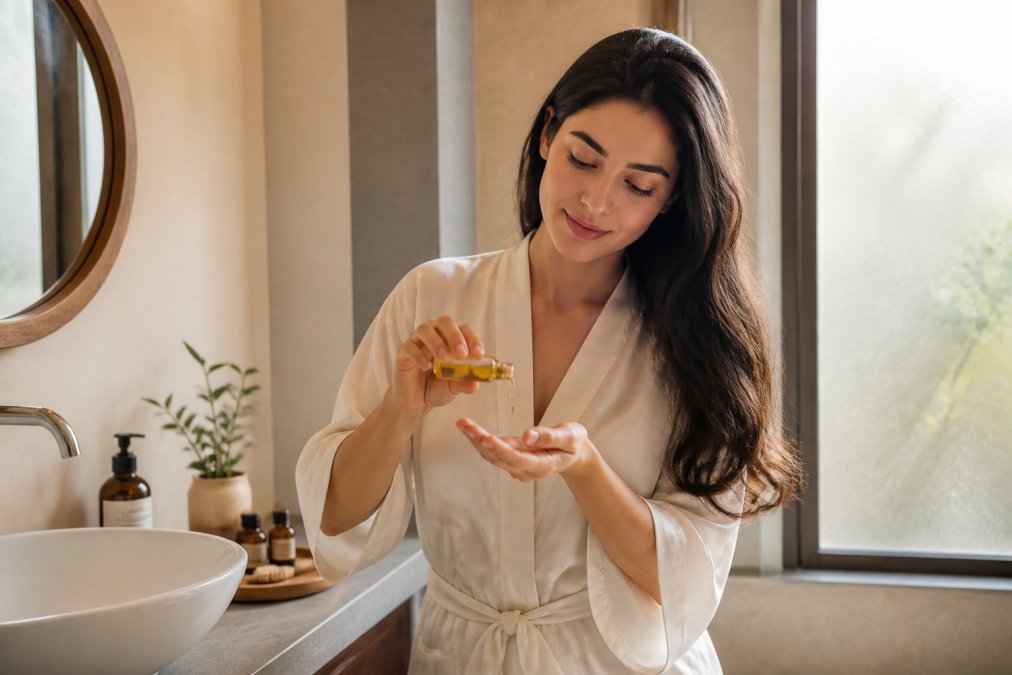
How to apply argan oil to hair correctly depends almost entirely on your hair's porosity and texture. The biggest application error most people make is using the same amount and method regardless of hair type.
| Hair Type | Amount per Application | Best Timing | Primary Benefit |
|---|---|---|---|
| Fine / Low-Porosity | 1-2 drops | On dry hair, ends only | Shine, frizz control |
| Thick / Coarse / High-Porosity | 4-6 drops | On damp hair, mid-length to ends | Moisture retention, smoothing |
| Color-Treated / Chemically Processed | 3-4 drops | On damp hair before styling | Cuticle sealing, breakage reduction |
| Curly / Wavy | 3-5 drops | On soaking wet hair | Definition, frizz reduction |
Fine or Low-Porosity Hair
Fine or low-porosity hair is most likely to look greasy after argan oil application. The cuticle layer is tightly closed, so oil sits on the surface rather than absorbing quickly. Use one to two drops warmed between your palms, applied only to the ends and mid-lengths. Avoid the roots entirely. Argan oil works best as a finishing treatment after styling, not a pre-wash mask.
Thick, Coarse, or High-Porosity Hair
High-porosity hair absorbs oil readily because the cuticle layer has more gaps. Apply four to six drops to damp hair, working from ends upward to the mid-shaft. High-porosity hair can tolerate argan oil as a pre-shampoo treatment: apply generously, leave for 20 to 30 minutes, then wash.
Color-Treated or Chemically Processed Hair
Chemical processing disrupts the cuticle and depletes the hair's natural lipid content. For color-treated hair, apply three to four drops to damp hair before blow-drying. The oil acts as both a heat protectant and a cuticle sealant, locking color molecules in and reducing fade.
How Often to Use Argan Oil on Hair Without Buildup
Two to three times per week is the sweet spot for most hair types. Daily use tends to cause buildup, particularly for fine or low-porosity hair. The oil accumulates on the cuticle surface faster than it absorbs, eventually leaving hair looking dull and heavy.
Contact Us for Personalized Spa Packages →
For very dry or high-porosity hair, daily light application to the ends is acceptable, but the amount should stay small. One drop per day causes far less buildup than three drops twice a week applied inconsistently.
The pre-shampoo treatment method sidesteps the buildup issue entirely. The shampoo removes any excess, leaving only the conditioning benefit behind.
Ingredient Compatibility and What to Avoid Mixing
Argan oil is compatible with most hair care ingredients, but a few combinations reduce its effectiveness.
What works well with argan oil:
- Leave-in conditioners (the oil seals in the moisture the conditioner provides)
- Aloe vera (complementary hydration without competing for absorption)
- Protein treatments (argan oil applied after helps seal the protein into the hair shaft)
- Heat protectants (layering argan oil beneath a silicone-based protectant adds thermal defense)
What to approach carefully:
- Sulfate-heavy shampoos used daily will strip the oil before it has time to work. Switch to a sulfate-free formula if you're washing daily.
- Heavy butters like shea or coconut oil applied on top of argan oil can block absorption and cause buildup faster.
- Alcohol-based styling products used directly on top of argan oil can dilute it and reduce its cuticle-sealing effect.
Apply argan oil as a base layer on clean, damp hair, then layer lighter products on top. Never apply it over heavy waxes or pomades.
Sourcing and Purity: Why Cold-Pressed, Organic Oil Matters
Not all argan oil is equal. The difference between authentic cold-pressed oil and a diluted or heat-extracted alternative is significant enough to explain why some people see no results at all.
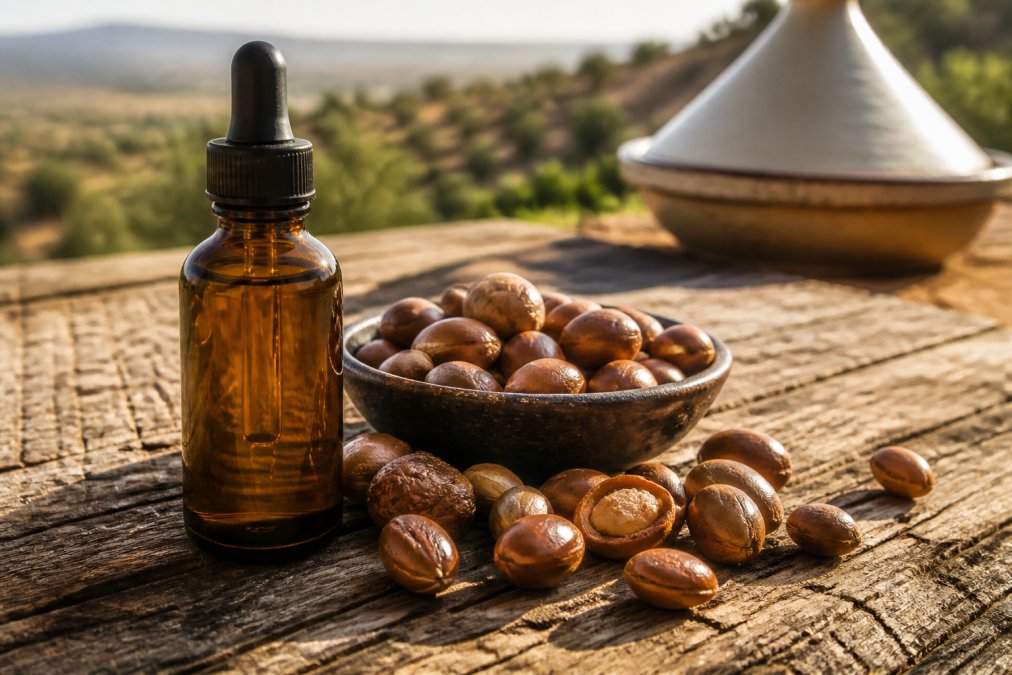
Cold-pressed argan oil is extracted without heat, which preserves the fatty acid profile, vitamin E content, and antioxidant compounds that make the oil effective. Heat extraction is faster and cheaper but degrades those active compounds.
Organic certification matters because argan trees are grown in a UNESCO-protected biosphere reserve in Morocco. Authentic organic sourcing means the trees are harvested without synthetic pesticides and the oil is processed without chemical solvents. The USDA's National Organic Program provides the certification framework used for imported organic oils sold in the United States, as noted in USDA National Organic Program guidelines.
What to look for on a label:
- "100% pure argan oil" with no added ingredients
- Cold-pressed or expeller-pressed extraction method
- Dark glass bottle (UV exposure degrades the oil)
- Country of origin listed as Morocco
- Organic certification from a recognized body
Many products sold at low prices contain as little as two to five percent actual argan oil, with the remainder being carrier oils, silicones, or fragrance. The label may say "argan oil" while the product delivers almost none of the benefits described here.
Renaissance de Beaute Argan Treatments sources authentic, cold-pressed Moroccan argan oil as the foundation of its hair and scalp treatments, the same oil used in traditional Moroccan beauty rituals, without the dilution or shortcuts that undermine cheaper alternatives.
Choosing the right argan oil is only half the equation; knowing how to use it for your specific hair type and needs determines whether you see real results. Renaissance de Beaute Argan Treatments offers pure organic argan oil sourced directly from Morocco, formulated to deliver the full spectrum of benefits described in this guide: cuticle sealing, moisture retention, scalp health support, and thermal protection. Contact us for personalized guidance on building a hair care routine around authentic Moroccan argan treatments.
Frequently Asked Questions
Is 100% argan oil good for your hair?
Pure, 100% cold-pressed argan oil is one of the most well-regarded natural oils for hair health. Its high concentration of oleic acid, linoleic acid, and vitamin E works to seal the hair cuticle, reduce breakage, and improve moisture retention without heavy residue. The key is using a genuine, unrefined product. Diluted or synthetic blends labeled as argan oil deliver far weaker results, so checking that the ingredient list reads only 'Argania Spinosa Kernel Oil' is worth the effort.
Is it better to put argan oil on wet or dry hair?
Both work, but the goal determines which is better. Applied to damp hair after washing, argan oil locks in moisture before the hair shaft dries, making it ideal for conditioning and frizz control. Applied to dry hair, it works best as a finishing oil to add shine and tame flyaways. For heat protection before styling, apply a small amount to damp hair and distribute evenly before using a blow dryer or flat iron. Avoid applying directly to the scalp when hair is wet to prevent buildup.
Can you use argan oil on your hair every day?
Daily use is fine for most hair types when the amount is kept small, typically two to four drops for medium-length hair. Fine or low-porosity hair is more prone to greasiness, so every two to three days is usually enough. Coarse, thick, or chemically treated hair can tolerate more frequent application. If your hair starts to feel weighed down or looks dull, reduce frequency or clarify with a gentle sulfate shampoo to remove any buildup before resuming your routine.
Does argan oil help with hair growth?
Argan oil does not directly stimulate hair follicles the way clinically proven treatments do, but it supports the conditions that allow healthy growth. By reducing scalp inflammation, improving moisture retention, and minimizing breakage along the hair shaft, it helps retain length that would otherwise be lost to damage. Its antioxidant content also protects follicles from oxidative stress. Consistent use as part of a broader hair care routine can result in visibly fuller, longer hair over time.
This article was written using GrandRanker