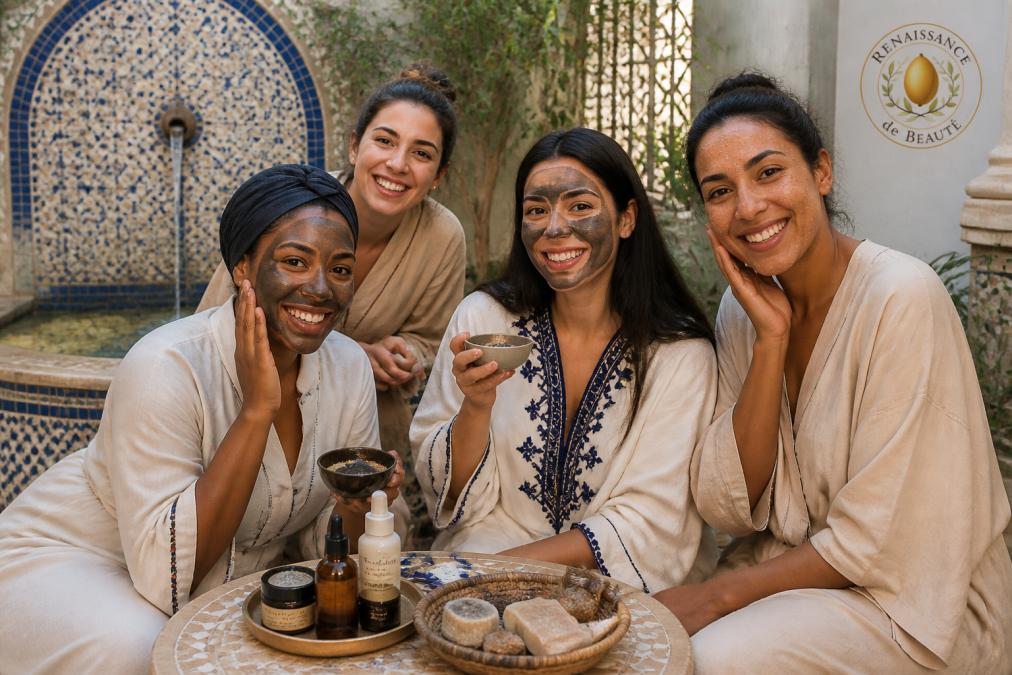
 ultimate-guide
Natural Ways to Detoxify Skin: A 2026 Guide
Table of Contents
- What 'Skin Detox' Actually Means (And What It Doesn't)
- Traditional Moroccan Hammam Ritual Steps to Detoxify Skin
- Benefits of Ghassoul Clay for Skin Purification
- How to Use Beldi Black Soap for Deep Cleansing
- Frequently Asked Questions
Last Updated: August 26, 2026
What 'Skin Detox' Actually Means (And What It Doesn't)
Skin detoxification supports your skin's natural ability to eliminate waste, regulate sebum, and renew itself through cellular turnover, not a dramatic flush of "toxins." The skin is not a detox organ like your liver and kidneys. According to American Academy of Dermatology guidance on skin function, the epidermis acts primarily as a barrier. Genuine dermatological health comes from reducing pore congestion, calming inflammation, and reinforcing the skin barrier.
Your skin responds to consistent, nourishing care: hydration, exfoliation, antioxidant-rich nutrition, and targeted topical application of purifying ingredients all support measurable rejuvenation. At Renaissance de Beaute Argan Treatments, we ground every recommendation in this understanding: work with your skin's biology, not against it.
Traditional Moroccan Hammam Ritual Steps to Detoxify Skin
Few practices match the Hammam ritual for effectiveness at clearing pore congestion and stimulating lymphatic drainage.
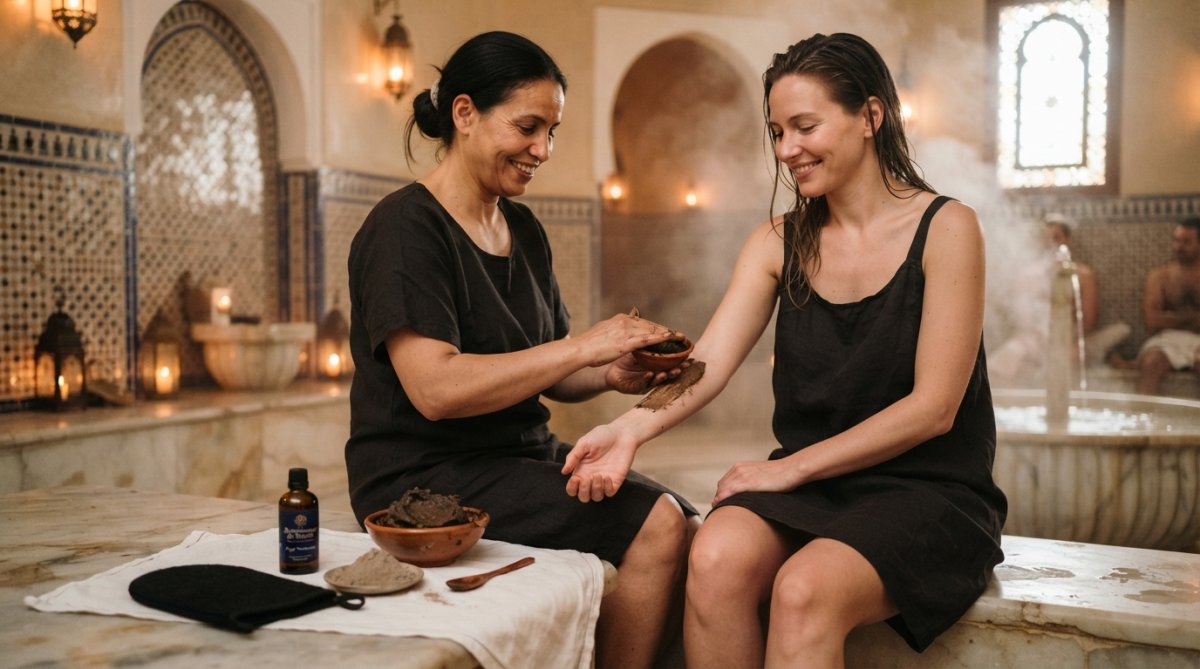
Follow these steps to detoxify skin the traditional way at home:
- Steam your skin for 10-15 minutes. Heat opens pores and prepares the epidermis for deeper cleansing.
- Apply Beldi Black Soap generously. Massage into damp skin and leave for 5-10 minutes to soften dead cells.
- Exfoliate with a kessa mitt. Use firm, circular strokes to remove dead skin. Avoid scrubbing the same area more than twice.
- Rinse thoroughly with warm water. Remove all residue before the clay step.
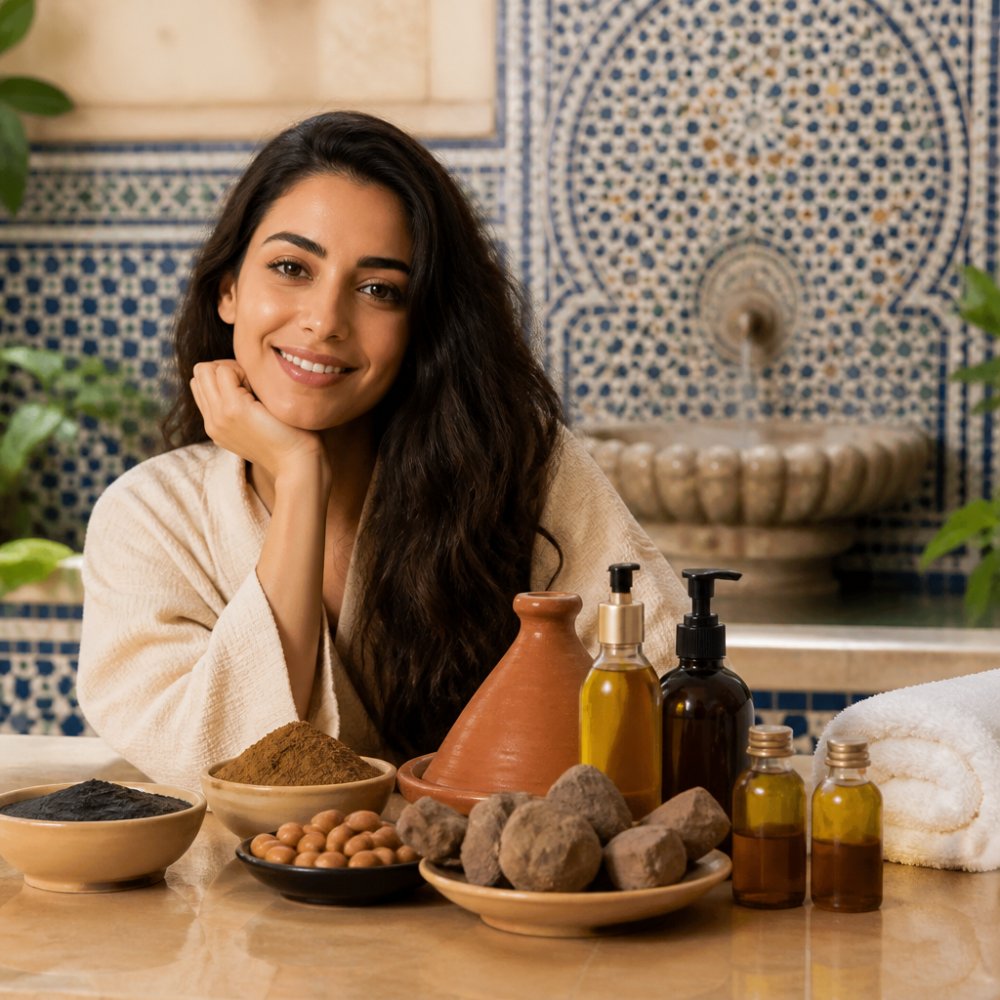
- Apply Ghassoul clay as a mask. Mix to a smooth paste and leave for 5-8 minutes to absorb excess sebum and pollutants.
- Rinse and moisturize immediately. Apply Argan Oil while skin is still slightly damp to seal hydration and support collagen synthesis.
Perform this ritual weekly, or fortnightly for sensitive skin. If you'd like personalized guidance on adapting these steps to your specific skin type or concerns, our Treatment Consultations can help you create a tailored approach.
Benefits of Ghassoul Clay for Skin Purification
Ghassoul clay is one of the most effective natural detoxifying agents for topical application. Sourced from ancient volcanic deposits, it contains high concentrations of silica, magnesium, and potassium. As documented in mineral clay research published by the National Institutes of Health, swelling clays like Ghassoul absorb oils and particulate matter through ion exchange, genuinely reducing pore congestion without stripping the skin microbiome.
Key benefits include sebum regulation, environmental pollution protection, and hydration balance. For dry or mature skin, mix Ghassoul with rose water or a few drops of Argan Oil before application.
How to Use Beldi Black Soap for Deep Cleansing
Beldi Black Soap is the foundation of the Hammam deep cleanse and works differently from conventional cleansers.
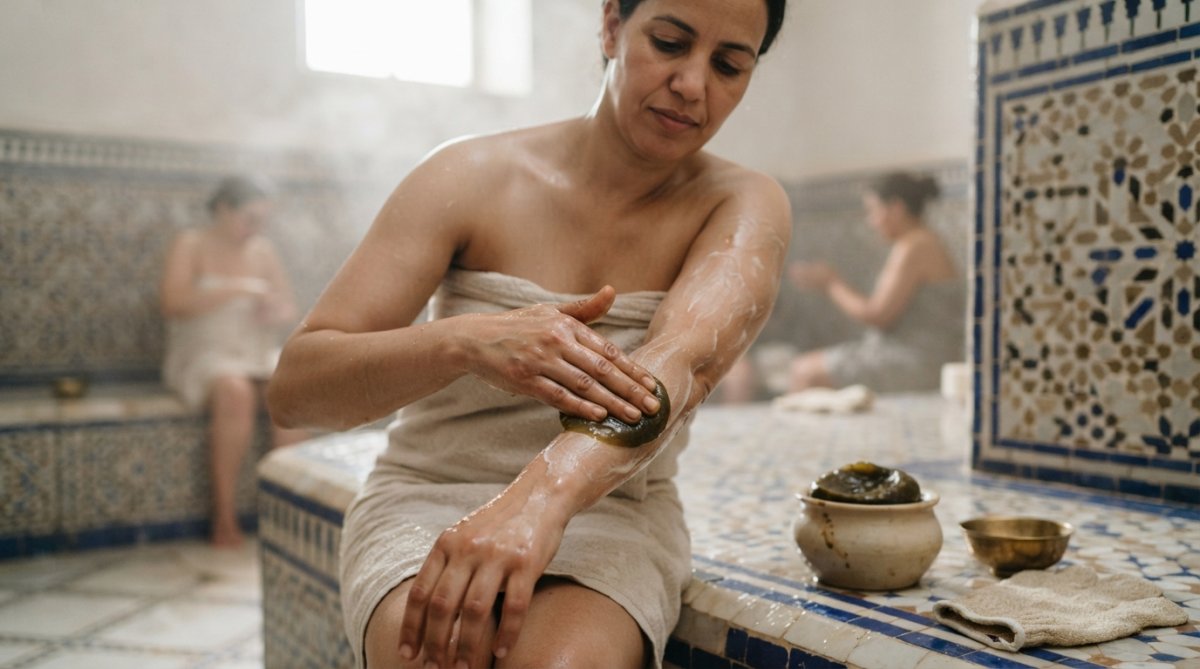
Traditional Beldi is made from macerated olives and olive oil, fermented with potassium hydroxide. The result is a soft, gel-like paste rich in vitamin E and oleic acid that softens the epidermis while supporting nutrient absorption. According to olive oil skin research from the Journal of Cosmetic Dermatology, oleic acid penetrates the outer skin layers effectively, supporting moisture retention and reducing surface inflammation.
Step-by-step guide for home use:
| Step | Action | Duration |
|---|---|---|
| 1. Prepare | Steam skin in warm shower or bath | 10-15 min |
| 2. Apply | Massage Beldi generously onto damp skin | 2-3 min |
| 3. Rest | Leave soap on skin to work | 5-10 min |
| 4. Exfoliate | Use kessa mitt in circular motions | 3-5 min |
| 5. Rinse | Wash off completely with warm water | 2 min |
| 6. Finish | Apply Argan Oil to damp skin | 1-2 min |
Always apply Beldi to damp skin after steaming, it needs moisture to activate properly. Never skip post-cleanse moisturizer; Argan Oil at this stage supports collagen synthesis and locks in benefits. For sensitive skin, start with a patch test on your inner arm and wait 24 hours before full application. Our Renaissance Bath & Body Combos bundle these essentials together, making it easy to maintain a consistent ritual.
Frequently Asked Questions
Can toxins actually leave the body through the skin?
The skin does release small amounts of waste through sweat, but it is not a primary detox organ, the liver and kidneys handle that work. What skin-focused cleansing routines genuinely do is remove surface buildup: sebum, dead cells, environmental pollutants, and pore congestion. Practices like exfoliation with a kessa mitt, ghassoul clay masks, and double cleansing with Beldi Black Soap support the skin barrier and promote healthy cellular turnover, which gives skin a cleaner, more radiant appearance.
How does ghassoul clay help in removing skin impurities?
Ghassoul clay, mined from Morocco's Atlas Mountains, carries a natural negative charge that draws positively charged impurities, excess sebum, environmental pollutants, and dead skin cells, out of pores. Unlike harsher detoxifying agents, it cleanses without stripping the skin microbiome or disrupting the skin barrier. It also delivers trace minerals that support collagen synthesis and hydration, making it well-suited for adults with dry or mature skin who want purification without inflammation.
How often should you perform a deep skin detoxification routine?
For most skin types, a full Hammam-style deep cleanse, including steam, Beldi Black Soap application, kessa exfoliation, and a ghassoul clay mask, works well once a week. Those with sensitive skin or a compromised skin barrier should start every 10 to 14 days and adjust based on how their skin responds. Daily habits like gentle cleansing, sunscreen application, and adequate hydration support ongoing dermatological health between deeper sessions.
The path to a genuinely glowing complexion rarely comes from the newest formula, it comes from working consistently with ingredients that have proven themselves across centuries of use. Renaissance de Beaute Argan Treatments offers authentic Beldi Black Soap, Ghassoul, and pure Argan Oil crafted to bring the full Hammam experience home. Explore our Renaissance Bath & Body Combos or reach out for a personalized consultation to find the ritual that fits your skin's specific needs.