 ultimate-guide
Moroccan Hammam Ritual Benefits: A Complete Guide
Table of Contents
- What Is a Moroccan Hammam?
- Health and Wellness Benefits of Moroccan Hammam Rituals
- Skin Benefits and Deep Pore Cleansing
- Benefits of Beldi Black Soap in Hammam Rituals
- At-Home Moroccan Hammam Routine: Step-by-Step
- Exfoliation Frequency for Glowing Skin
- Etiquette, Safety, and Post-Hammam Aftercare
- The Mind-Body Connection: Ritualized Pause and Holistic Wellbeing
- Frequently Asked Questions
Last Updated: September 19, 2026
What Is a Moroccan Hammam?
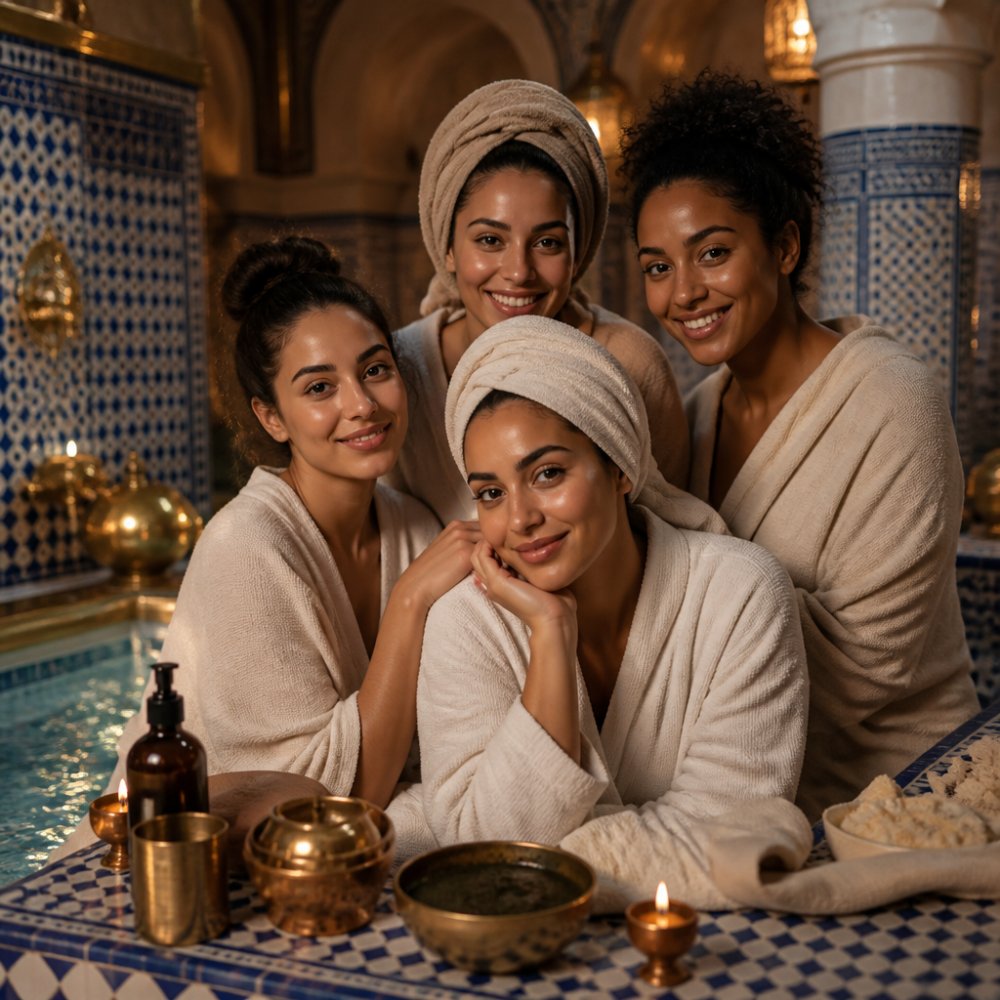
A Moroccan hammam is a traditional steam bath ritual combining heat, moisture, and specialized cleansing techniques to purify the body and mind. Unlike modern saunas, it involves multiple stages with specific tools and products, creating a holistic sensory experience that goes far beyond basic bathing.
The hammam experience unfolds in progressively warmer stages, allowing your body to acclimate to the heat. At Renaissance de Beaute Argan Treatments, we've curated authentic Moroccan hammam-inspired products that allow you to recreate this ritual at home.
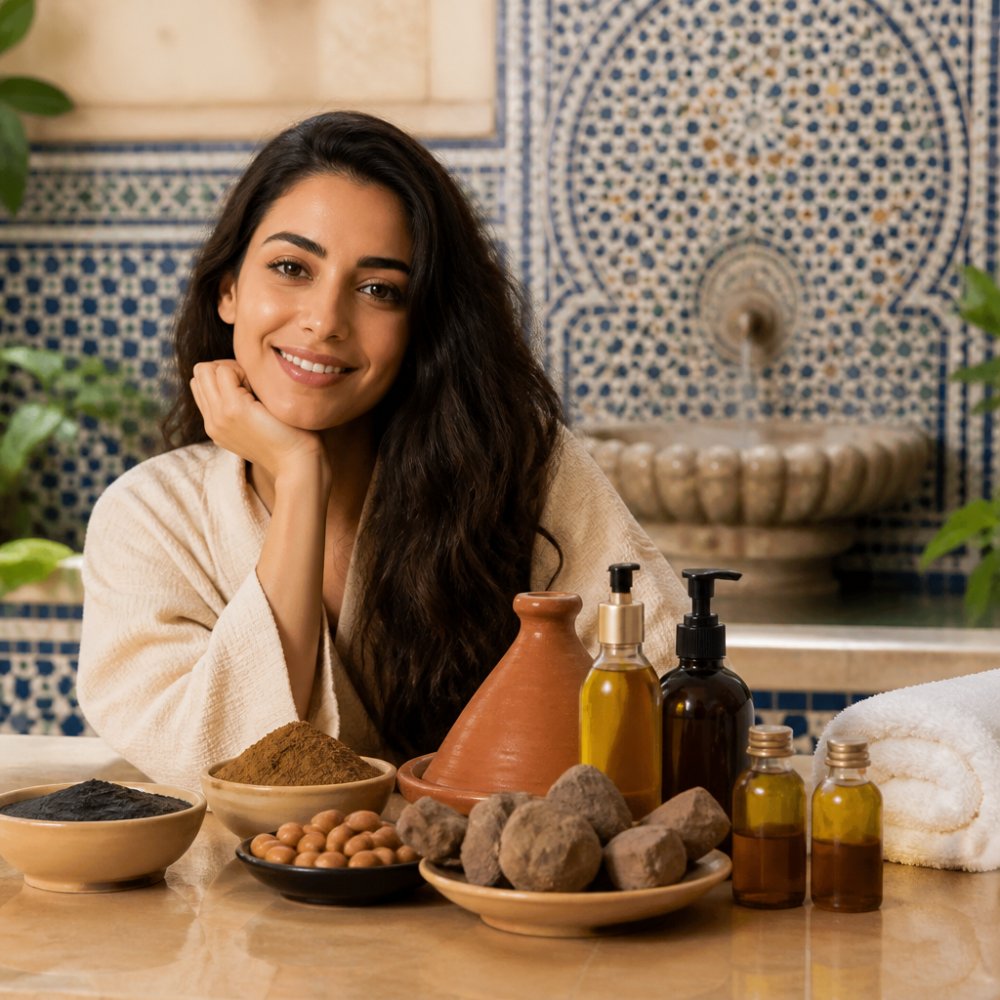
The ritual centers on exfoliation, deep cleansing, and skin renewal using black soap, ghassoul clay, and the kessa glove, each playing a specific role in purification.
Health and Wellness Benefits of Moroccan Hammam Rituals
The moroccan hammam ritual benefits extend far beyond cosmetic improvements, activating multiple physiological systems through heat exposure, manual exfoliation, and herbal preparations.
Stress Reduction and Nervous System Calming
The heat and ritualized pause calm your nervous system by triggering the parasympathetic response, reducing cortisol and promoting emotional equilibrium.
The ritualized nature demands presence, slowing down, moving deliberately, and engaging all senses. This mind-body connection becomes active meditation, quieting mental chatter.
Improved Blood Circulation and Lymphatic Drainage
Heat exposure dilates blood vessels, increasing circulation and oxygen delivery while supporting metabolic waste removal. Manual massage and exfoliation further stimulate lymphatic drainage and detoxification.
The combination of heat and kessa glove stimulation moves lymphatic fluid through your system, creating faster recovery, reduced inflammation, and better nutrient delivery to skin cells.
Respiratory System Support
The warm, humid environment opens respiratory passages and promotes deeper breathing. Steam inhalation with eucalyptus eases congestion and improves oxygen exchange.
Skin Benefits and Deep Pore Cleansing
The moroccan hammam ritual benefits for skin are among the most visible and transformative, opening pores and preparing skin for deep cleansing that daily routines cannot achieve.
Exfoliation and Dead Skin Removal
The kessa glove provides mechanical exfoliation that removes accumulated dead skin cells. Heat softens the outer layer, allowing gentle removal that reveals fresher, more luminous skin.
Regular exfoliation prevents ingrown hairs, improves texture, and enhances product penetration. Gentle consistency produces better results than aggressive force.
Contact Us for Personalized Spa Packages →
Skin Hydration and Rejuvenation
After exfoliation, your skin is primed to absorb moisture and nourishing ingredients, as heat opens pores and dead skin removal eliminates barriers to hydration.
Post-ritual nourishing oils work more effectively on enhanced permeable skin, delivering anti-aging benefits and deep hydration.
Benefits of Beldi Black Soap in Hammam Rituals
Beldi black soap is the cornerstone of traditional hammam cleansing. This olive oil and potassium hydroxide paste cleanses while maintaining your skin's natural moisture balance, unlike conventional soaps.
Applied to warmed skin, black soap softens dead skin cells for efficient removal while its olive oil base prevents dryness. Natural compounds support skin clarity and prevent bacterial colonization.
Black soap reduces sensitivity compared to conventional cleansers and suits reactive skin types when used correctly.
At-Home Moroccan Hammam Routine: Step-by-Step
Recreating the hammam at home requires the right tools, proper preparation, and understanding of the ritual's sequence adapted to your personal space.
Preparing Your Space and Essential Tools
Transform your bathroom into a sanctuary before beginning. Warm the space with hot water running in the shower or bath to build steam. Light candles or use soft, warm lighting to create a sensory environment that signals to your nervous system that this is a pause from ordinary time. Consider adding eucalyptus or another aromatics to the steam, the scent enhances the respiratory and sensory benefits.
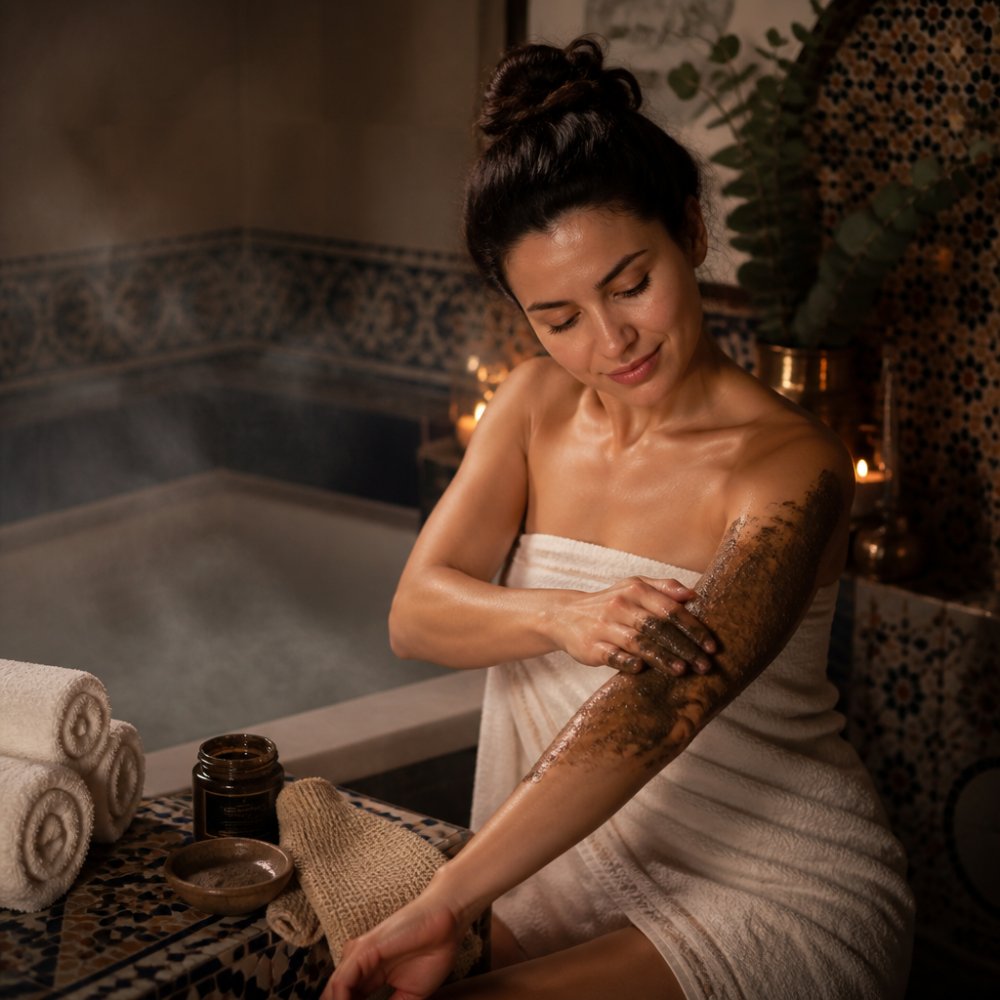
Gather your essential tools before entering the steam: a kessa glove, beldi black soap, ghassoul clay (optional but recommended), a soft washcloth, and warm towels. Have nourishing oils or serums within arm's reach for post-ritual application. This preparation prevents you from breaking the ritual's flow by searching for items mid-session.
The Complete Ritual Process
Stage 1: Acclimation (5-10 minutes). Begin by sitting in the warm, steamy environment without exfoliating. Let your body acclimate to the heat, allowing your pores to open and your nervous system to shift into parasympathetic mode. Your skin will begin to soften and warm. This stage is essential, rushing into exfoliation before your skin is properly prepared risks irritation.
Stage 2: Black Soap Application (5-7 minutes). Apply beldi black soap generously to your entire body, working it into a light lather.
Exfoliation Frequency for Glowing Skin
The question of how often to perform a full hammam ritual depends on your skin type and individual tolerance. The question of how often to perform a full hammam ritual depends on your skin type and individual tolerance.
Etiquette, Safety, and Post-Hammam Aftercare
The hammam is a sacred ritual with cultural significance. Approaching it with respect and understanding enhances both the experience and the results.
Contact Us for Personalized Spa Packages →
Cultural Sensitivity and Respectful Practice
The hammam is rooted in Islamic bathing traditions and remains an important social and spiritual practice in Moroccan culture. When practicing hammam rituals, especially if you're learning from traditional sources or visiting authentic bathhouses, approach with genuine respect for the tradition's origins and meaning.
Contraindications and When to Avoid Hammam Rituals
Certain conditions warrant caution or avoidance of hammam rituals. Avoid hammam sessions if you have active fever, acute inflammation, or uncontrolled high blood pressure. The heat stress of a full ritual may be contraindicated during these states. Similarly, if you have severe eczema, psoriasis, or open wounds, the exfoliation and heat may aggravate your condition, consult a dermatologist before proceeding.
Recovery and Skin Nourishment After Your Ritual
The post-hammam period is when nourishment becomes critical. Your skin is deeply cleansed and highly receptive to beneficial ingredients. Apply hydrating serums, oils, or moisturizers within minutes of completing your ritual while your skin is still slightly damp. This locks in hydration and delivers anti-aging benefits.
The Mind-Body Connection: Ritualized Pause and Holistic Wellbeing
The true power of the moroccan hammam ritual benefits lies in its integration of physical, mental, and spiritual dimensions. This is not a transaction where you exchange time for cleaner skin. It's a practice that rewires your relationship with self-care and presence.
| Ritual Stage | Duration | Key Benefit |
|---|---|---|
| Acclimation in steam | 5-10 minutes | Opens pores, calms nervous system |
| Black soap application | 5-7 minutes | Softens dead skin, begins cleansing |
| Kessa glove exfoliation | 10-15 minutes | Removes dead skin, improves texture |
| Ghassoul clay (optional) | 5-10 minutes | Deep pore cleansing, mineral infusion |
| Final rinse and cool-down | 5 minutes | Transitions body, prepares for aftercare |
| Post-ritual nourishment | Immediate | Locks in hydration, delivers anti-aging benefits |
Frequently Asked Questions
What actually happens during a traditional Moroccan hammam ritual?
A Moroccan hammam ritual involves three main stages: first, you relax in a warm steam room to open pores and soften skin; second, a practitioner (or you, at home) applies black soap and uses a Kessa glove to exfoliate away dead skin; finally, you rinse and often receive a massage with argan oil or ghassoul clay. The entire experience combines thermal therapy, deep cleansing, and rejuvenation into a holistic sensory experience.
What are the primary benefits of beldi black soap in a hammam ritual?
Beldi black soap is a traditional Moroccan cleanser made from olive oil and potassium that softens skin in warm steam, making exfoliation more effective. It removes impurities and dead skin cells without harsh chemicals, leaving skin deeply cleansed and hydrated. When used with a Kessa glove during your hammam routine, black soap enhances the ritual's purification and skin-softening effects, making it essential to the authentic hammam experience.
How often should you perform an at-home Moroccan hammam routine?
Exfoliation frequency depends on your skin condition. Start conservatively and observe how your skin responds. Over-exfoliation can damage your skin barrier, so consistency and moderation matter more than frequency.
Can you safely recreate a Moroccan hammam experience at home?
Yes, you can recreate an authentic at-home hammam ritual using black soap, a Kessa glove, ghassoul clay, and warm steam from your bathroom. The key is creating adequate steam (a hot shower or bath works well), using proper technique with the Kessa glove, and following with nourishing post-ritual care. Many people find home rituals equally effective and more convenient than visiting a public hammam, especially when using high-quality, authentic Moroccan products.
Does a Moroccan hammam ritual actually improve skin texture and reduce ingrown hairs?
Yes, the combination of steam, exfoliation with a Kessa glove, and black soap effectively removes dead skin and unclogs pores, which reduces ingrown hairs. Regular hammam rituals improve overall skin texture by promoting even cell turnover and enhancing blood circulation to the skin's surface. Many users report smoother, more radiant skin.
What should I do immediately after a Moroccan hammam ritual to protect my skin?
After your hammam ritual, rinse thoroughly with cool water to close pores, pat skin dry gently, and immediately apply a nourishing oil or moisturizer while skin is still slightly damp. Argan oil is ideal for post-hammam care because it locks in hydration and provides anti-aging benefits. Avoid sun exposure and skip other active skincare products for a period to allow your skin to recover fully.
Are there any contraindications or safety concerns with hammam rituals?
Avoid hammam rituals if you have active wounds, severe sunburn, eczema flare-ups, or certain skin conditions like psoriasis. People with cardiovascular issues, pregnancy-related concerns, or high blood pressure should consult their healthcare provider before using intense heat. Never over-exfoliate, as this damages your skin barrier. If you have sensitive skin or are new to the ritual, start gently and watch for irritation.