 comparison
Ghassoul Clay vs Bentonite Clay: Benefits Compared
Table of Contents
- Ghassoul Clay vs Bentonite Clay: Side-by-Side Comparison
- What Is Ghassoul Clay?
- What Is Bentonite Clay?
- How to Use Ghassoul Clay for Face Detox
- Rhassoul Clay vs Bentonite Clay for Oily Skin
- Benefits of Ghassoul Clay for Hair
- Key Mineral Differences and Sourcing
- Conclusion
- Frequently Asked Questions
Last Updated: September 1, 2026
Ghassoul Clay vs Bentonite Clay: Side-by-Side Comparison
Ghassoul clay and bentonite clay are two of the most mineral-rich natural clays used in skincare and hair care, yet they work through fundamentally different mechanisms. Choosing between ghassoul clay vs bentonite clay depends entirely on your skin type, climate, and what you're actually trying to achieve. Ghassoul clay comes from Morocco's Atlas Mountains and excels at gentle detoxification without over-drying. Bentonite clay, sourced from volcanic ash deposits, offers aggressive oil absorption and deep impurity removal. The real difference isn't which is "better", it's which matches your skin's actual needs.
Below, we'll compare these two clays across mineral composition, sourcing, skin benefits, and practical application so you can decide which one belongs in your routine.
| Feature | Ghassoul Clay | Bentonite Clay |
|---|---|---|
| Primary Origin | Morocco's Atlas Mountains | Volcanic ash deposits (US-sourced options available) |
| Main Minerals | Magnesium, silica, calcium | Montmorillonite, hectorite |
| Best For | Sensitive, normal, combination skin | Oily, acne-prone skin |
| Oil Absorption | Moderate, gentle | Intense, aggressive |
| Drying Effect | Minimal | Can be strong |
| Hair Application | Excellent for scalp health | Good for oil control |
| Mixing | Water, milk, oils | Water, apple cider vinegar |
| Frequency | 2-3 times weekly | 1-2 times weekly |
What Is Ghassoul Clay?
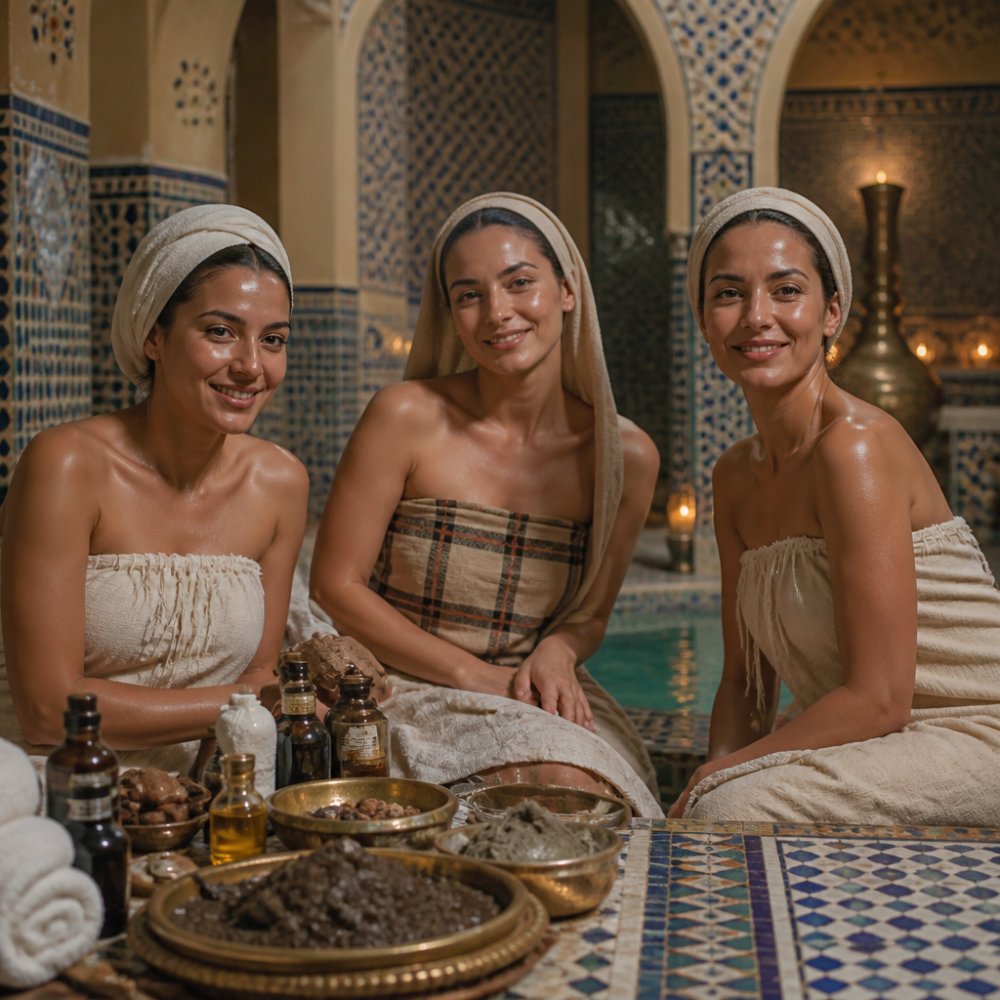
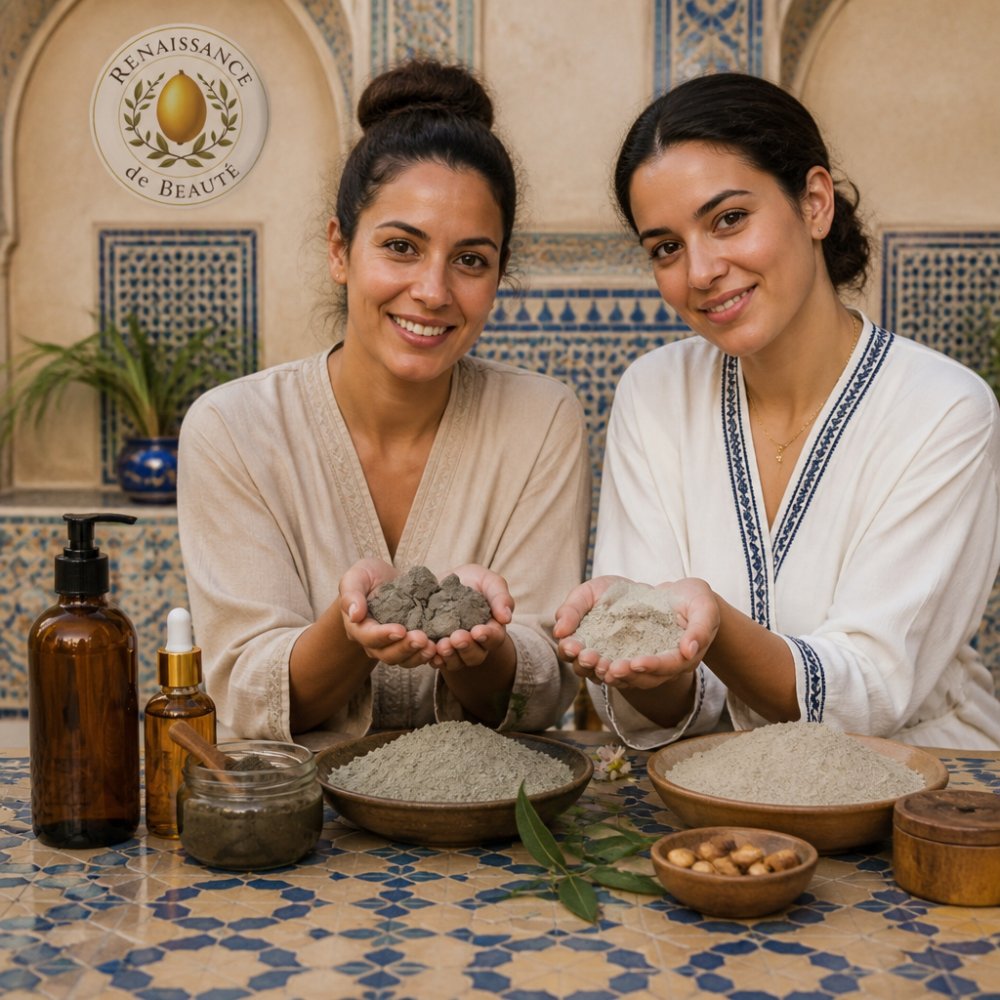
Ghassoul clay (also spelled rhassoul) is a fine, mineral-rich clay traditionally used in Moroccan hammam rituals for centuries. It's extracted from the Atlas Mountains and contains high concentrations of magnesium, silica, and calcium, minerals that work together to gently cleanse without stripping skin's natural protective barrier.
The name "ghassoul" comes from the Arabic word meaning "to wash," which speaks to its primary function. Unlike bentonite clay, ghassoul doesn't rely on aggressive ionic exchange to pull impurities from pores. Instead, it works through gentler absorption and mild exfoliation. This makes it ideal for people with sensitive skin, mature skin, or anyone whose skin reacts poorly to harsh clay masks.
Ghassoul clay's mineral composition creates what's known as a non-comedogenic formula, meaning it unclogs pores without clogging them further. The silica content provides light exfoliation, while magnesium supports skin barrier function. For those seeking authentic Moroccan beauty rituals, Renaissance de Beaute Argan Treatments offers ghassoul sourced directly from traditional suppliers, ensuring purity and potency.
The texture is finer than bentonite, which means it mixes more smoothly and applies more evenly. Many users report that ghassoul feels less "gritty" during application and rinses away more easily, reducing the harsh drying sensation some experience with other clays.
What Is Bentonite Clay?
Bentonite clay is a volcanic ash-derived clay composed primarily of montmorillonite minerals. It's one of the most studied clays in skincare science, with a well-documented ability to absorb excess sebum and draw out deep impurities through a process called cationic exchange.
When bentonite clay hydrates, its mineral structure creates an ionic charge that attracts and binds to positively charged charged particles, including bacteria, toxins, and excess oil. This mechanism is what makes bentonite so effective for acne-prone and oily skin. The clay literally pulls impurities from deep within pores, which is why many users report visible results after a single application.
The trade-off is intensity. Bentonite clay can over-dry skin if used too frequently or left on too long. People with sensitive skin often experience redness, tightness, or irritation. The heavy mineral load means bentonite requires careful mixing and application protocols to avoid disrupting your skin barrier.
Bentonite sourced from volcanic deposits in the United States (like options from Mountain Rose Herbs or Aztec Secret) tends to be more potent than imported varieties. The sun-drying process some suppliers use intensifies the clay's drawing power, which explains why some bentonite products create that distinctive "pulling and tightening" sensation as they dry.
For hair, bentonite works as an intensive scalp detox, removing product buildup, excess oil, and environmental debris. However, it should be used sparingly on hair, as frequent application can leave residue and create dryness.
How to Use Ghassoul Clay for Face Detox
Ghassoul clay face masks work best when mixed to a smooth paste and applied to clean, slightly damp skin. The ideal mixing ratio is one part clay to two parts liquid, typically water, rose water, or milk. Some practitioners add a small amount of honey or argan oil to boost hydration, especially for dry or sensitive skin.
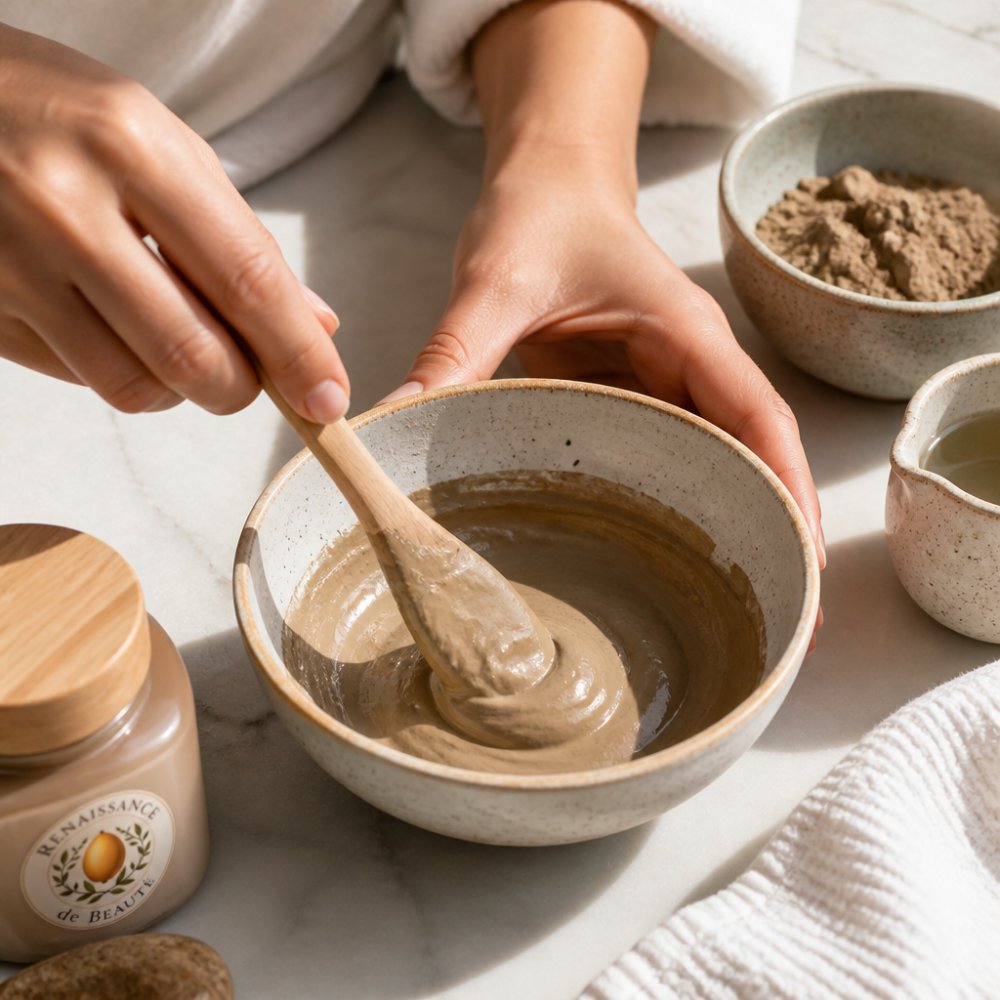
Application steps:
Start with a clean face. If your skin is very dry, lightly mist it with water or rose water before applying the mask. Apply the ghassoul paste evenly, avoiding the delicate eye and lip areas. Leave it on for 10-15 minutes, not longer, as extended contact can begin to over-dry even resilient skin.
As the mask dries, you'll notice a slight tightening sensation, but it shouldn't feel uncomfortable. If it does, rinse immediately. When time's up, rinse thoroughly with lukewarm water, using gentle circular motions to allow the clay's mild exfoliating properties to work. Pat dry and follow with your regular moisturizer or facial oil.
For detoxification benefits, use ghassoul clay 2-3 times per week. This frequency allows your skin barrier to recover between applications while still providing consistent deep cleansing. Many people notice reduced congestion, clearer pores, and a more even skin tone within two weeks of regular use.
:::pro-tip Mix ghassoul with milk (dairy or plant-based) instead of water for sensitive skin. The proteins and fats in milk buffer the clay's drying effect while maintaining its cleansing power. :::
The beauty of ghassoul for detox is that it works gently enough for daily use if needed, though 2-3 times weekly is the sweet spot for most skin types. Unlike bentonite, you won't need to worry about over-drying or disrupting your skin barrier with consistent application.
Rhassoul Clay vs Bentonite Clay for Oily Skin
For oily and acne-prone skin, bentonite clay typically outperforms ghassoul in terms of sebum absorption and impurity removal. Bentonite's cationic exchange mechanism is specifically designed to bind and extract excess oil, making it the more aggressive choice for heavy congestion or active breakouts.
However, this doesn't mean bentonite is always the right choice. Many people with oily skin also have sensitive or reactive skin, and bentonite's intensity can trigger inflammation, redness, or barrier damage if overused. This is where understanding your specific skin needs becomes critical.
Ghassoul clay works differently for oily skin, it provides moderate oil absorption without the harsh drying effect. It's better suited for oily skin that's also sensitive, or for people who want to use clay masks frequently without risking irritation. The mineral content in ghassoul still absorbs excess sebum, but through gentler mechanisms that don't strip the skin.
When to choose bentonite for oily skin:
- You have persistent congestion or active acne
- Your skin tolerates strong treatments without irritation
- You're willing to limit use to 1-2 times weekly
- You can follow with a hydrating moisturizer to prevent over-drying
When to choose ghassoul for oily skin:
Contact Us for Personalized Spa Packages →
- Your oily skin is also reactive or sensitive
- You want to use clay masks 2-3 times weekly
- You prefer gentler, more gradual results
- You're concerned about disrupting your skin barrier
The key insight many people miss: oily skin isn't automatically "strong" skin. Oily skin can be sensitive, reactive, and prone to barrier damage just like any other type. Bentonite's power is an asset only if your skin can tolerate it without consequences.
Benefits of Ghassoul Clay for Hair
Ghassoul clay is one of the most underrated natural treatments for scalp health and hair revitalization. Traditional Moroccan hammam rituals have relied on ghassoul for hair care for centuries, and modern usage confirms why: the mineral composition directly supports hair elasticity, scalp health, and natural shine.
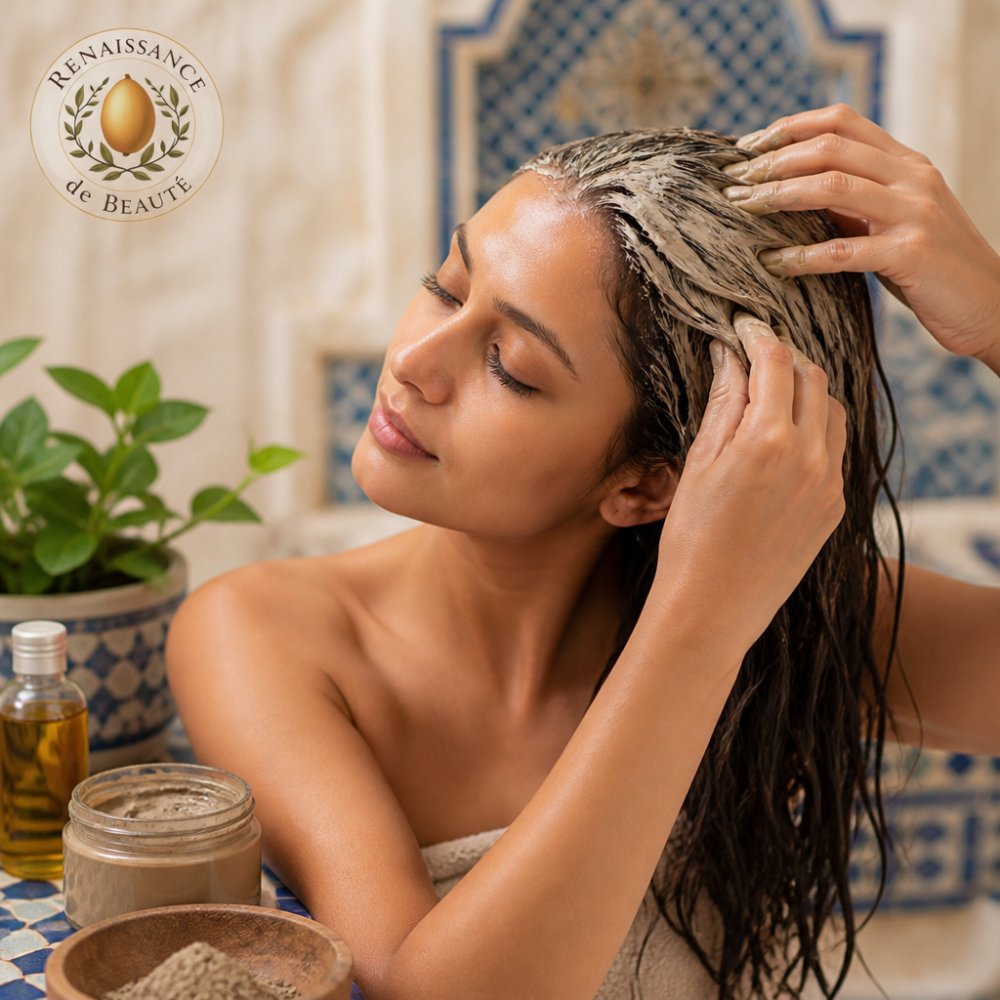
Scalp health: Ghassoul gently removes excess oil, product buildup, and environmental debris without stripping the scalp's natural protective layer. This is crucial because over-stripping the scalp triggers a rebound oil production cycle, your scalp produces even more oil to compensate for being stripped. Ghassoul's gentler approach breaks this cycle.
Hair elasticity: The magnesium and silica in ghassoul strengthen hair fibers and improve elasticity, reducing breakage and split ends. This is especially valuable for damaged, color-treated, or heat-styled hair that's lost structural integrity.
Natural shine: Unlike some clay masks that leave hair dull or straw-like, ghassoul enhances natural shine by removing buildup that blocks light reflection. Your hair's natural luminosity emerges once the accumulated product residue is cleared.
Application for hair: Mix ghassoul with water, milk, or a small amount of argan oil to create a spreadable paste. Apply to damp hair, focusing on the scalp and working through the lengths. Leave on for 10-20 minutes, then rinse thoroughly. Use once weekly for maintenance, or 2-3 times weekly if your hair is heavily product-laden or oily.
Bentonite clay can also be used for hair, but it's more aggressive and better suited for intensive scalp detox rather than regular maintenance. If you're looking for consistent, gentle hair health benefits, ghassoul is the superior choice.
Key Mineral Differences and Sourcing
The mineral composition of ghassoul clay vs bentonite clay explains their different mechanisms and benefits. Understanding these differences helps you choose based on your skin's actual needs rather than marketing claims.
Ghassoul clay mineral profile: Ghassoul contains high concentrations of magnesium, silica, calcium, and trace minerals like potassium. These minerals work synergistically to support skin barrier function while providing gentle cleansing. The magnesium is particularly important, it's involved in over 300 biochemical reactions in the body, including skin barrier regulation and inflammation response. Silica provides light exfoliation and supports collagen production. The mineral balance in ghassoul is why it rarely causes irritation even on sensitive skin.
Bentonite clay mineral profile: Bentonite's primary active component is montmorillonite, a clay mineral with exceptional absorption properties. The cationic exchange mechanism, where the clay's positive charge attracts and binds negatively charged particles, is what makes bentonite so effective at pulling impurities. Hectorite is another mineral sometimes found in bentonite clay, which adds to its absorption capacity. This composition makes bentonite more of a "heavy hitter" for serious congestion and oil control.
Sourcing and ethical considerations: Authentic ghassoul comes from Morocco's Atlas Mountains, where it's been harvested for centuries. The region's geological history created mineral-rich deposits that are difficult to replicate elsewhere. When you purchase ghassoul, sourcing matters, authentic Moroccan ghassoul maintains higher mineral potency than clay marketed as "ghassoul" but sourced from other regions.
Bentonite sourcing varies. United States-sourced bentonite (from volcanic deposits in California and other states) is often considered higher quality and more ethically sourced than imported varieties. Companies like Mountain Rose Herbs prioritize organic certification and ethical harvesting practices, which affects both quality and environmental impact.
The environmental impact of mining also differs. Bentonite mining is more industrial and can have larger environmental footprints, though responsible suppliers work to minimize this. Ghassoul mining, when done ethically, maintains smaller environmental impact due to traditional, small-scale extraction methods. Renaissance de Beaute Argan Treatments sources ghassoul directly from traditional Moroccan suppliers who practice sustainable harvesting, ensuring both authenticity and ethical responsibility.
Conclusion
Choosing between ghassoul clay vs bentonite clay comes down to your skin type, sensitivity level, and what you're trying to accomplish. Ghassoul clay wins for gentle, consistent detoxification and is better suited for sensitive, normal, or combination skin. Bentonite clay is more powerful for aggressive oil absorption and deep impurity removal, making it the choice for oily or acne-prone skin that can tolerate its intensity.
For most people, the ideal approach combines both: use ghassoul regularly for maintenance and gentle detox, and reserve bentonite for intensive treatments when congestion demands it. This balanced approach gives you flexibility without risking over-drying or barrier damage.
If you're new to clay masks or have sensitive skin, start with ghassoul. If you have persistent congestion or oily skin that tolerates strong treatments, bentonite delivers faster, more visible results. Either way, consistency matters more than intensity, regular, gentle use beats occasional aggressive treatment every time.
Not sure which clay is right for your skin? Our Treatment Consultations can help you identify your ideal routine, and our Renaissance Bath & Body Combos pair authentic ghassoul clay with complementary argan oil products for spa-quality results at home. Experience the difference that ethically sourced, traditionally crafted clay treatments can make for your skin and hair.
Frequently Asked Questions
Q: What is ghassoul clay good for?
A: Ghassoul clay excels at deep cleansing, detoxification, and mineral replenishment for both skin and hair. Its mineral-rich composition absorbs excess sebum and impurities without stripping natural oils, making it ideal for sensitive, mature, and combination skin. For hair, ghassoul restores elasticity, improves scalp health, and removes buildup while preserving moisture. It's particularly effective for those seeking natural, spa-quality treatments that align with traditional Moroccan beauty rituals.
Q: Which clay is best for aging skin?
A: Ghassoul clay is often recommended for aging skin because it provides mineral-rich nourishment while gently exfoliating without harsh abrasion. Its magnesium and potassium content support skin barrier function and moisture retention, which mature skin requires. Bentonite clay, while effective for oil control, can be overly drying and may compromise the skin barrier in aging skin that already struggles with dehydration. Ghassoul's gentler action makes it a suitable choice for those 40+ with sun-damaged or compromised skin.
Q: Can you use ghassoul clay as a daily cleanser?
A: Yes, ghassoul clay can be used as a daily cleanser when properly diluted or mixed into a gentle paste. Many people incorporate it into their routine 3-5 times per week without irritation, though daily use depends on your skin sensitivity and water quality. For daily use, mix it with rose water or hydrosol rather than plain water to maintain hydration. Start with 2-3 times weekly and gradually increase frequency while monitoring your skin's response.
Q: What toxins does bentonite clay remove compared to ghassoul?
A: Bentonite clay's cationic exchange capacity allows it to bind to negatively charged toxins and heavy metals more aggressively than ghassoul. It's particularly effective at absorbing excess sebum and drawing out bacterial impurities from deep pores. However, this intense pulling action can also strip beneficial minerals from skin. Ghassoul works more gently, removing impurities while depositing minerals, making it a good option for sensitive skin that may not tolerate bentonite's intensity.
Q: Is ghassoul clay better than bentonite clay for sensitive skin?
A: Yes, ghassoul clay is generally considered gentler for sensitive skin. Its mineral composition and lower pH balance can create a non-comedogenic, non-irritating cleansing experience, whereas bentonite clay's powerful absorption can trigger redness, tightness, and irritation in reactive skin. If you have a history of sensitivity or allergic reactions, ghassoul's nourishing properties and traditional use in Moroccan beauty rituals make it a suitable choice. Always patch-test any new clay product on a small area first.