 comparison
Argan Oil vs Jojoba Oil for Hair: Which Works Best
Table of Contents
- What Is Argan Oil and What Is Jojoba Oil?
- Key Differences Between Argan and Jojoba Oil
- Benefits of Pure Argan Oil for Hair
- Benefits of Jojoba Oil for Hair and Scalp Health
- Argan Oil vs Jojoba Oil for Hair Porosity
- How to Use Argan Oil for Hair Growth and Scalp Health
- Which Oil Is Best for Your Hair Type?
- Sustainability, Sourcing, and Quality Considerations
- Frequently Asked Questions
Last Updated: September 22, 2026
What Is Argan Oil and What Is Jojoba Oil?
When comparing argan oil vs jojoba oil hair care, both are plant-derived carrier oils that have become staples in natural hair care, each with distinct properties suited to different hair types.
Argan oil comes from the kernels of the argan tree, native to Morocco. It's rich in essential fatty acids, vitamin E, and antioxidants that penetrate the hair shaft to provide deep nourishment. Cold-pressed argan oil retains these compounds, making it effective for dryness and damage. It has a nutty aroma and absorbs quickly, leaving subtle shine without greasiness.
Jojoba oil is extracted from the seeds of the jojoba plant, which grows in desert regions. What makes jojoba unique is its chemical composition: it closely mimics the sebum naturally produced by your scalp. This structural similarity means jojoba oil can balance your scalp's oil production rather than simply adding moisture on top. Jojoba is lightweight, non-comedogenic, and absorbs rapidly, making it ideal for those concerned about clogged pores or weighed-down hair.
Both oils moisturize but work through different mechanisms. Understanding argan oil vs jojoba oil hair benefits requires knowing how they interact with your specific hair type and scalp condition.
Key Differences Between Argan and Jojoba Oil
Composition and Fatty Acid Profile
Argan oil contains oleic and linoleic acids in roughly equal proportions, plus vitamin E. This combination makes it an excellent humectant that draws moisture into the hair shaft and locks it in, while its antioxidants protect against environmental stressors.
Jojoba oil's eicosenoic and oleic acid ratio closely matches human sebum, so your scalp recognizes it as natural, triggering less inflammatory response. For sensitive scalps, this compatibility improves comfort and long-term scalp health.
Argan oil's linoleic acid makes it prone to oxidation, requiring dark bottle storage. Jojoba oil is more stable with a longer shelf life.
Absorption Rate and Feel on Hair
Argan oil absorbs within 15-30 minutes, making it effective as both treatment and styling aid. Apply to damp hair before blow-drying without creating a heavy appearance.
Jojoba oil absorbs within 10-15 minutes and requires less product, a few drops go far. Argan oil typically requires more for noticeable conditioning on longer hair.
Argan oil leaves a subtle, luxurious feel; jojoba feels imperceptible once absorbed. The choice is partly practical and partly psychological.
Benefits of Pure Argan Oil for Hair
Argan oil's vitamin E and antioxidants reduce frizz by sealing the cuticle and protecting against humidity. If your hair puffs up in humid conditions, argan oil's barrier makes a noticeable difference.
Argan oil's fatty acids temporarily bind broken cuticles, making damaged ends appear smoother. While not permanent, this cosmetic improvement extends time between cuts.
Argan oil enhances shine by reflecting light across a sealed cuticle surface.
Contact Us for Personalized Spa Packages →
Argan oil's antioxidants counteract damage from heat styling, sun exposure, and chemical treatments, restoring healthier appearance to stressed hair.
Benefits of Jojoba Oil for Hair and Scalp Health
Jojoba oil's primary strength is scalp health. Because it mimics sebum, it regulates production rather than disrupting balance. For oily scalps, this leads to less frequent shampooing and fewer bad-hair days.
For dry scalps, jojoba oil provides lipid barrier support without triggering overproduction, making it ideal for dandruff, itching, and inflammation.
Jojoba oil prevents transepidermal water loss, supporting long-term hydration without constant reapplication, reducing need for frequent deep conditioning.
The lightweight nature of jojoba oil makes it suitable for daily use without buildup concerns. You can use it as a leave-in conditioner, a scalp treatment, or a styling aid without worrying about product accumulation that would require frequent clarifying shampoos.
Argan Oil vs Jojoba Oil for Hair Porosity
Hair porosity, how easily your hair absorbs and retains moisture, is the most important factor in choosing between these oils.
High-Porosity Hair Needs
High-porosity hair has cuticle gaps, absorbing moisture quickly but retaining it poorly. It tends to feel dry, frizzy, and prone to breakage.
For high-porosity hair, argan oil is typically better. Its heavier weight and fatty acids fill cuticle gaps and seal moisture in. Apply to damp hair after shampooing on mid-lengths and ends. Improvement appears within one to two weeks.
Jojoba oil can work for high-porosity hair but requires more frequent use. Some layer it under argan oil for enhanced retention.
Low-Porosity Hair Needs
Low-porosity hair has a tightly sealed cuticle that resists moisture absorption. This hair type often feels heavy, looks dull, and takes a long time to dry because water sits on the surface rather than penetrating.
Jojoba oil is the superior choice for low-porosity hair. Its lightweight nature means it won't sit on top of already-resistant hair, creating buildup. The oil's sebum-mimicking structure allows it to work with your hair's natural chemistry rather than fighting against it. Apply jojoba oil sparingly to damp hair, focusing on the scalp and working downward.
Argan oil can feel too heavy on low-porosity hair, potentially creating that weighed-down, limp appearance you're trying to avoid. If you prefer argan oil's benefits, use it in smaller quantities or reserve it for weekly treatments rather than regular use.
Normal-Porosity Hair Needs
Normal-porosity hair absorbs and retains moisture reasonably well, maintaining shine without excessive frizz or dryness. You have the most flexibility with this hair type.
Contact Us for Personalized Spa Packages →
Both oils work effectively for normal-porosity hair. The choice comes down to your specific concerns and preference. If you're addressing frizz or damage, argan oil's heavier formulation provides more noticeable conditioning. If you're focused on scalp health or prefer a lightweight feel, jojoba oil excels. Many people with normal porosity use both oils, rotating them based on seasonal needs or specific concerns.
How to Use Argan Oil for Hair Growth and Scalp Health
Proper application technique maximizes argan oil's benefits for both hair growth and scalp condition. Incorrect use often leads to greasy-looking hair and disappointment with the product.
Start with a scalp treatment application. Warm 1-2 teaspoons of argan oil between your palms and massage it directly into your scalp using your fingertips. Work in small sections, spending 2-3 minutes on thorough coverage. This direct scalp application stimulates blood flow and delivers the oil's antioxidants where they support healthy hair growth. Leave it on for at least 30 minutes, or overnight for intensive treatment.
For hair-length conditioning, apply argan oil to damp hair after shampooing. Use only a few drops for medium-length hair, slightly more for longer or thicker hair. Distribute the oil evenly from mid-shaft to ends, avoiding the scalp area to prevent greasiness. Comb through with a wide-tooth comb to ensure even distribution. You can leave this on for 15-20 minutes before rinsing, or apply it as a leave-in treatment in smaller quantities.
A common mistake is using too much product. Argan oil is concentrated, and a little goes far. Start with less than you think you need, you can always add more, but excess oil requires multiple shampoos to remove completely.
For scalp health specifically, consistency matters more than quantity. Weekly scalp treatments with argan oil can help address inflammation and support a healthier microbiome. If you're dealing with a specific scalp condition, dedicate at least 4-6 weeks to regular treatment before evaluating results.
Which Oil Is Best for Your Hair Type?
The answer depends on three interconnected factors: your hair porosity, your scalp condition, and your primary hair concern.
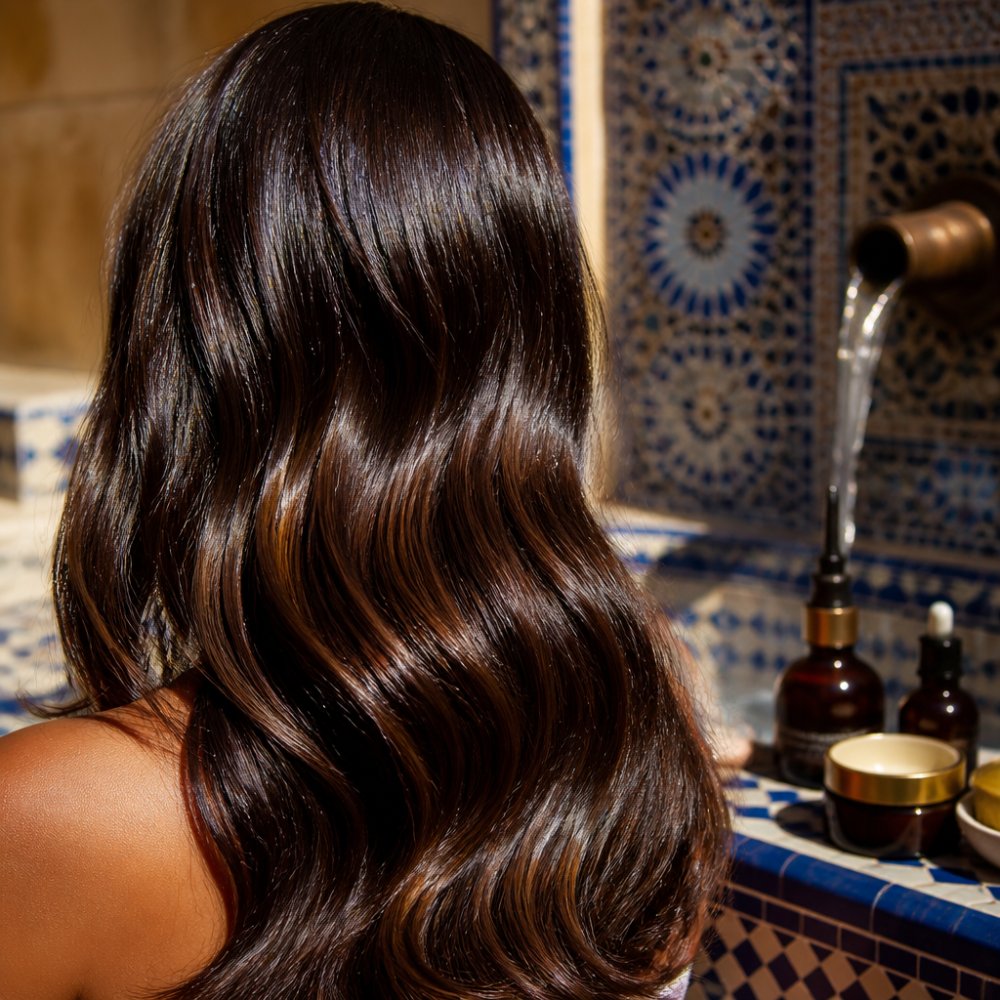
For dry, damaged, or frizz-prone hair: Argan oil is the stronger choice. Its heavier composition and higher antioxidant content directly address these concerns.
Sustainability, Sourcing, and Quality Considerations
Not all argan oil and jojoba oil are created equal. Where and how these oils are produced significantly affects both their efficacy and their environmental impact.
Frequently Asked Questions
Can I mix argan oil and jojoba oil together for my hair?
Yes, blending argan and jojoba oil can work well for many hair types. Argan oil provides deep conditioning and antioxidant benefits, while jojoba oil mimics natural scalp sebum and supports moisture balance. A 50/50 blend or adjusting the ratio to suit your hair's needs can deliver both the penetrating hydration of argan and the lightweight, non-comedogenic properties of jojoba. Start with small amounts to see how your hair responds.
Which oil is more effective for hair growth?
Both oils support scalp health, which creates conditions for healthy hair growth, but neither directly accelerates growth. Argan oil's vitamin E and antioxidants strengthen the scalp and reduce inflammation that can impede growth. Jojoba oil's sebum-mimicry balances scalp microbiome health and reduces dandruff, creating a healthier environment for hair. Consistent use of either oil, combined with a healthy diet and stress management, supports growth more effectively than the oil alone.
Is argan oil better for dry or oily hair?
Argan oil works best for dry, damaged, or curly hair. Its rich fatty acids and vitamin E penetrate the hair shaft deeply, providing intensive moisture and repair. For oily hair or fine, straight hair, jojoba oil is the better choice because it's lightweight and won't weigh hair down. If you have oily hair but dry ends, apply argan oil only to the mid-lengths and ends, avoiding the scalp and roots.
How does jojoba oil compare to the natural sebum your scalp produces?
Jojoba oil's composition closely mimics human sebum, the natural oil your scalp produces. This similarity allows it to balance oil production without clogging pores or triggering excess sebum production. When your scalp recognizes jojoba as similar to its own sebum, it may reduce overproduction of natural oils, making it ideal for oily or combination hair. Argan oil, by contrast, is richer and works better as a conditioning treatment rather than a sebum replacement.