 ultimate-guide
Authentic Moroccan Beauty Products Online: A 2026 Guide
Table of Contents
- What Makes Authentic Moroccan Beauty Products Different
- How to Identify Authentic Moroccan Products and Spot Counterfeits
- Benefits of Pure Argan Oil for Hair and Skin
- How to Use Beldi Black Soap for Deep Cleansing
- Ghassoul Clay and Prickly Pear Seed Oil: Traditional Treasures
- Creating an Authentic Moroccan Hammam Ritual at Home
- Choosing Products for Your Skin Type
- Frequently Asked Questions
Last Updated: September 19, 2026
What Makes Authentic Moroccan Beauty Products Different
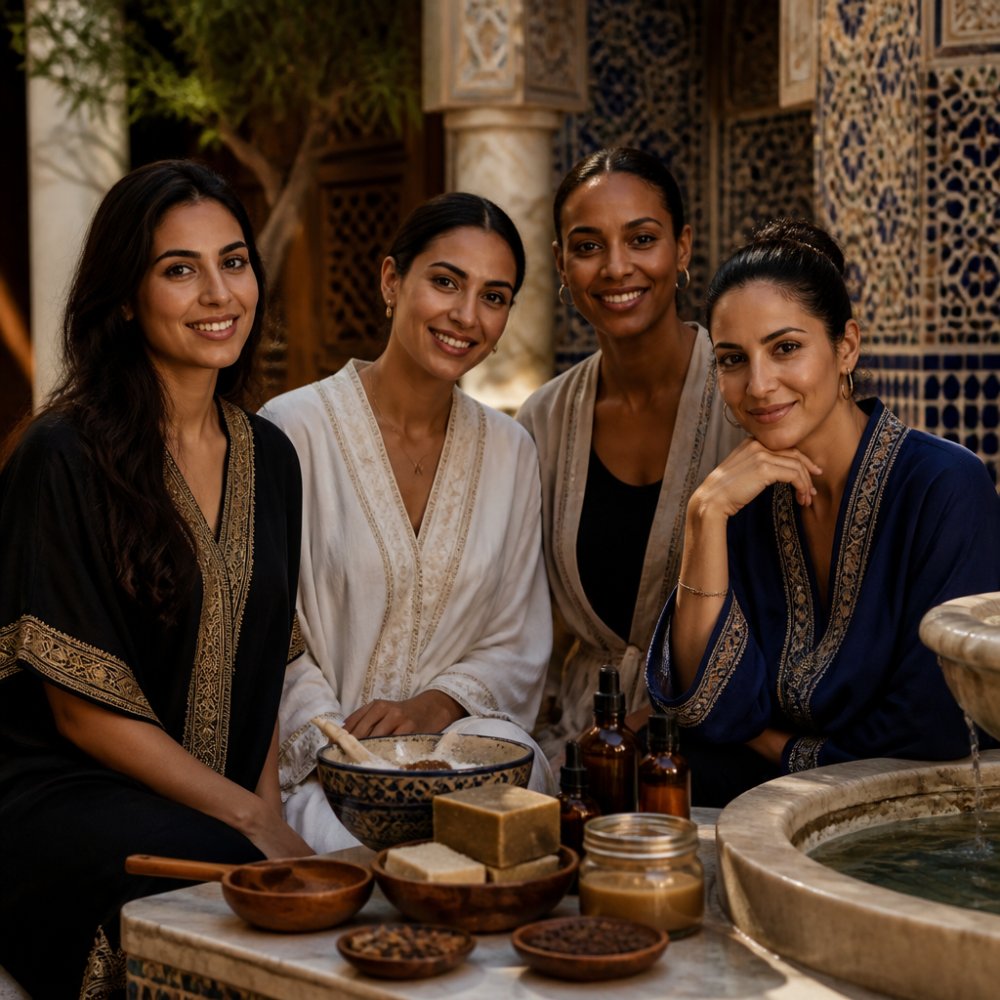
Authentic moroccan beauty products stand apart because they're rooted in centuries of traditional knowledge combined with the potent botanical wealth of the region. The difference isn't marketing, it's ingredient integrity and preparation methods that modern skincare often overlooks.
Traditional Moroccan formulations prioritize cold-pressed extraction, which preserves the delicate nutrients that heat-based processing destroys. When you're evaluating moroccan beauty products, you're looking at oils rich in fatty acids, antioxidant-rich compounds, and naturally occurring vitamins that work synergistically with your skin rather than against it. Pure argan oil, for instance, contains vitamin E, linoleic acid, and oleic acid in ratios that match your skin's natural lipid barrier, something synthesized alternatives simply cannot replicate.
What distinguishes authentic products from mass-market imposters is traceability. Genuine moroccan beauty products come from identifiable cooperatives, use fair-trade sourcing practices, and maintain transparent supply chains. The hammam ritual itself, a cornerstone of Moroccan beauty culture, teaches us that efficacy comes from ritual, consistency, and respect for natural processes. This philosophy permeates every authentic product, from the way ghassoul clay is harvested to how black soap is traditionally made.
At Renaissance de Beaute Argan Treatments, we've curated a collection that honors these principles. Our products deliver the deep cleansing, detoxification, and anti-aging benefits that drew people to Moroccan beauty rituals in the first place, but with the quality assurance and convenience modern consumers expect.
How to Identify Authentic Moroccan Products and Spot Counterfeits
The counterfeit market for moroccan beauty products is substantial, which means knowing what to look for separates genuine treasures from expensive disappointments. Counterfeits exploit the category's growing popularity by mimicking packaging while cutting corners on ingredients and processing.
Start with the ingredient list. Authentic cold-pressed argan oil should list only one ingredient: argan oil. If you see "argan oil extract," "argan oil complex," or anything with added fragrance or preservatives in a pure oil product, you're looking at a diluted version. The color matters too, genuine cold-pressed argan oil has a golden-amber hue, never crystal clear. Clear argan oil has been refined, bleached, or isn't argan oil at all.
Packaging tells a story. Authentic moroccan products use glass bottles or ceramic containers, not plastic. Plastic leaches chemicals into oils over time and suggests the manufacturer cut costs on storage. Check for Arabic labeling alongside English, this signals sourcing from actual Moroccan producers rather than repackagers. Legitimate brands also include batch numbers and harvest dates, which counterfeits omit because they can't trace their supply.
Price is a reliable indicator. Authentic cold-pressed argan oil costs more because the extraction process is labor-intensive and yields are low. If you find moroccan beauty products at suspiciously low prices, the ingredients have almost certainly been compromised. Fair-trade sourcing adds cost too, ethical producers pay cooperatives fairly, and that investment shows in the final price.
Third-party testing matters. Look for certifications from independent labs, organic certifications, or fair-trade badges. These aren't guarantees, but they represent accountability. Counterfeits rarely carry certifications because they can't pass testing.
Contact Us for Personalized Spa Packages →
Benefits of Pure Argan Oil for Hair and Skin
Pure argan oil delivers anti-aging and revitalization benefits that explain why it's become non-negotiable in premium skincare routines. The science is straightforward: argan oil's high concentration of vitamin E and fatty acids penetrates the skin barrier without leaving a greasy residue, making it suitable for nearly every skin type.
For skin, argan oil addresses multiple concerns simultaneously. The linoleic and oleic acids strengthen your skin's natural protective barrier, reducing water loss and improving skin elasticity. This is particularly valuable for aging skin, the vitamin E content acts as an antioxidant, neutralizing free radicals that accelerate visible aging. People with dry or damaged skin often see improvement within two weeks of consistent use because argan oil nourishes deeply without clogging pores.
Hair benefits are equally compelling. The same fatty acids that protect skin strengthen hair shafts from within. Argan oil reduces frizz, adds shine, and repairs damage from heat styling or chemical treatments. When applied to the scalp, it addresses dryness and flaking while promoting a healthier environment for hair growth.
The key to results is consistency and quality. Refined or diluted argan oil won't deliver these benefits, you need the pure, cold-pressed version. Apply to damp skin for maximum absorption, or use as a pre-shampoo treatment for hair. Most people notice visible improvements in skin hydration and hair texture with regular use.
How to Use Beldi Black Soap for Deep Cleansing
Beldi black soap represents a different category of moroccan beauty products, a deep cleanser that works through exfoliation and mineral absorption rather than surfactants. It's the foundation of the traditional hammam ritual, and using it correctly transforms your home cleansing routine.
Authentic black soap has a dark, almost tar-like appearance and a smooth, creamy texture. The preparation is crucial. Warm your skin first, either in a hot shower or by applying warm water for a few minutes. This opens your pores and softens dead skin cells. Apply a small amount of black soap to damp skin and massage gently for 30-60 seconds. Don't scrub aggressively; the soap's mineral content does the work.
After the initial massage, leave the soap on your skin for 5-10 minutes. This allows the minerals to penetrate and loosen buildup. Then use a soft washcloth or your hands to gently exfoliate. The dead skin will roll away in small balls, this is normal and indicates the soap is working. Rinse thoroughly with warm water, then finish with cool water to close your pores.
Frequency matters. Using black soap 2-3 times weekly is ideal for most skin types. Overuse can strip natural oils, particularly if you have sensitive or already dry skin. After cleansing with black soap, follow with a hydrating product like argan oil to restore moisture. The combination of deep cleansing followed by nourishment is what makes the hammam ritual so effective.
Ghassoul Clay and Prickly Pear Seed Oil: Traditional Treasures
Ghassoul clay and prickly pear seed oil represent two underrated components of authentic moroccan beauty products that deserve more attention. Both are mineral-rich, botanical-based ingredients that address specific skin concerns without the irritation synthetic alternatives often cause.
Contact Us for Personalized Spa Packages →
Ghassoul clay is mined from the Atlas Mountains and has been used for centuries in Moroccan beauty rituals. Unlike harsher clays, ghassoul is gentle enough for sensitive skin while remaining highly effective at deep cleansing. The clay's mineral composition, silica, magnesium, calcium, and potassium, absorbs excess oil and impurities without disrupting your skin's pH balance. Mix ghassoul powder with water or rose water to form a paste, apply for 10-15 minutes, and rinse. It's particularly valuable for combination or oily skin types because it purifies without over-drying.
Prickly pear seed oil is extracted from the seeds of the Barbary fig cactus and contains linoleic acid, vitamin E, and betalains, powerful antioxidants. This oil is less well-known than argan oil but equally transformative for aging skin. It improves skin elasticity, reduces the appearance of fine lines, and provides non-comedogenic hydration. The oil absorbs quickly and works beautifully under makeup or as an evening treatment.
Using both together amplifies results. Apply ghassoul clay once weekly for deep cleansing, then follow your regular routine with prickly pear seed oil as a targeted treatment for areas showing signs of aging. The combination addresses both immediate cleansing needs and long-term skin rejuvenation.
Creating an Authentic Moroccan Hammam Ritual at Home
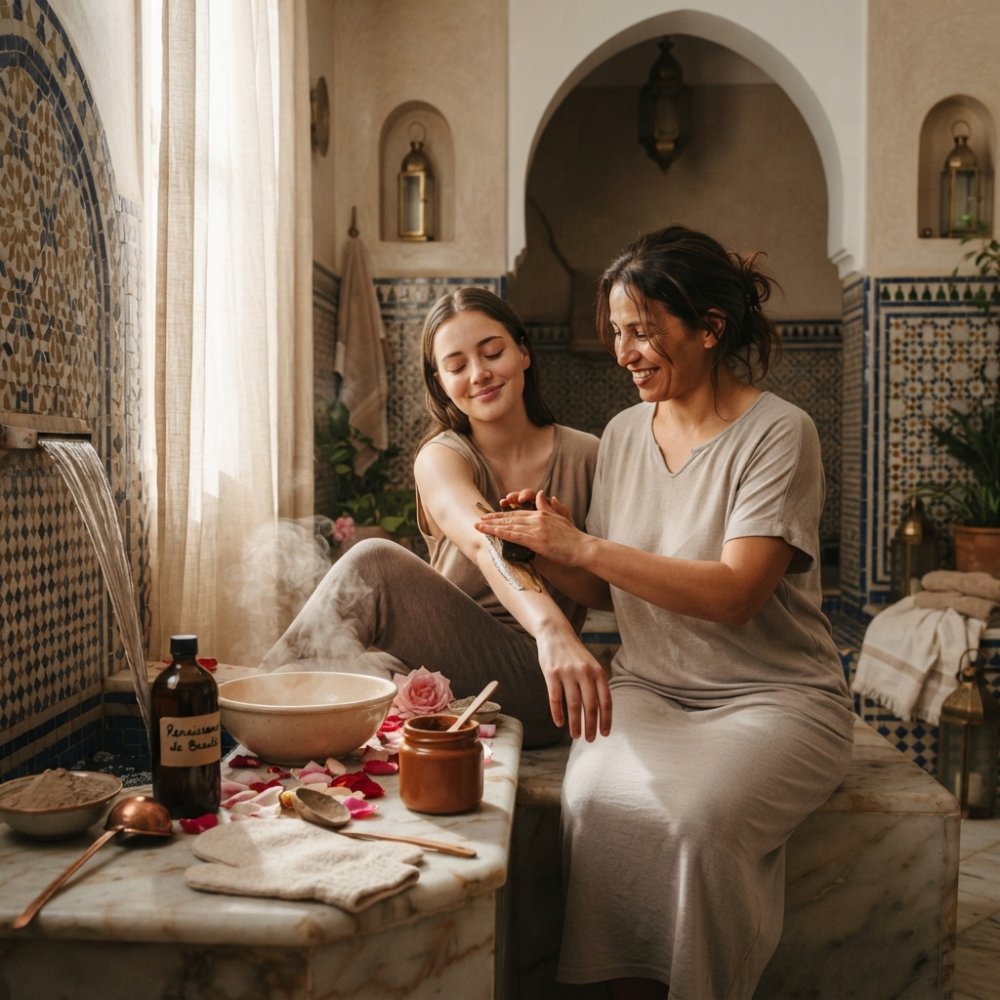
The hammam ritual is more than a skincare routine, it's a practice that transforms how your skin looks and feels while creating a space for genuine self-care. Recreating this at home requires understanding the ritual's structure and committing to consistency.
Choosing Products for Your Skin Type
Not all moroccan beauty products work equally well for every skin type, and mismatched products waste money and can trigger irritation. Understanding your skin type and matching it to the right formulations ensures you get results instead of frustration.
| Moroccan Product | Best For | Primary Benefit | Frequency |
|---|---|---|---|
| Pure Argan Oil | All skin types | Anti-aging, hydration, elasticity | Daily |
| Beldi Black Soap | Oily, combination skin | Deep cleansing, exfoliation | 2-3x weekly |
| Ghassoul Clay | Oily, sensitive skin | Mineral absorption, gentle purification | 1x weekly |
| Prickly Pear Seed Oil | Mature, dry skin | Fine line reduction, antioxidant protection | Daily or 3-4x weekly |
Frequently Asked Questions
How can I tell if argan oil is 100% pure and authentic?
Authentic cold-pressed argan oil should have a rich golden-amber color and a slightly nutty aroma. Check the label for 'cold-pressed' and 'unrefined' designation. Verify that the ingredient list contains only argan oil with no additives or synthetic fillers. Reputable suppliers provide third-party testing certificates and transparent sourcing information. Genuine argan oil costs more than suspiciously cheap alternatives, reflecting fair-trade practices and quality standards.
What is the difference between traditional and industrial beldi black soap?
Traditional beldi black soap is handmade, resulting in a nutrient-rich product with deep cleansing properties. Industrial versions often contain synthetic additives, preservatives, and fillers that reduce effectiveness and may irritate sensitive skin. Authentic beldi black soap should feel smooth and creamy. Look for products labeled as traditionally made or artisanal to ensure you're getting genuine formulations.
Can Moroccan beauty products work alongside professional dermatological treatments?
Most traditional Moroccan products like argan oil and ghassoul clay complement professional skincare without interference. However, always consult your dermatologist before introducing new products, especially if you're using prescription treatments or have sensitive skin conditions. Pure, botanical-based products are generally non-comedogenic and gentle enough to integrate into prescribed routines. Your dermatologist can advise on timing and compatibility to ensure optimal results.
What skin types benefit most from authentic Moroccan beauty products?
Moroccan beauty products are particularly effective for dry, damaged, and mature skin due to their nourishing fatty acids and antioxidant-rich formulations. Argan oil and rose water hydrate without clogging pores, making them suitable for sensitive and combination skin. Ghassoul clay works well for oily and acne-prone skin through mineral-rich deep cleansing. Those seeking anti-aging benefits find these products especially valuable. However, individual results vary, so patch testing is recommended before full integration into your routine.